Which of the Three Jobs You Actually Have
Almost every driveway project in Prince George is one of three, and they need very different amounts of work and material. Working out which one you have is most of the decision.
A surface refresh. The driveway is firm underfoot in dry weather and just looks tired, or the top has gone loose and greasy after rain. The structure underneath is fine. You are buying 2 to 3 inches of fresh surface material.
A soft or muddy driveway. Gravel keeps disappearing, the same spots go soft every spring, or you have put material on it twice and it is no better. The surface is not the problem. The ground under it is, and the fix is separation and a real base.
A new driveway, or a full rebuild. Bare ground, a new lot, or a driveway that has failed end to end. You are building the whole layer system from the subgrade up.
The Test That Tells You Which
Do it in dry weather, because a driveway that is soft in the rain and firm in August is telling you about water, not about gravel.
Push a screwdriver or a length of rebar into the driving surface with hand pressure.
- It stops within an inch or so. The base is sound. A surface refresh will genuinely fix what is bothering you.
- It sinks in easily, or you can rock it side to side. The base is not carrying anything, and surface gravel will disappear into it the same way the last load did.
- It is firm in August and soft every May. That is a drainage problem wearing a base problem's clothes. Read how to fix a muddy driveway before you buy material.
Ruts, potholes, and washboard on an otherwise firm driveway are repairs rather than rebuilds. Gravel driveway repair covers those on their own.
A Driveway, From the Ground Up
A gravel driveway is a system of layers, and each one has a job. From the bottom:
1. The subgrade. The existing ground. It is not a building material and you do not fix it by adding gravel to it. What you do is get the soft, organic, and contaminated material off it and expose something firm.
2. Drainage and shape. Where water goes, decided before anything is spread. Crown, ditches, culverts. This is the layer with no material cost and the largest effect.
3. Separation fabric. A nonwoven geotextile between soil and stone, on ground soft enough to need it. It stops the two from mixing.
4. The base. 4 to 6 inches of compacted minus gravel. This is the layer that carries the vehicle.
5. The surface. 2 to 3 inches of the material you actually want to look at and drive on.
A surface refresh replaces layer 5. A rebuild builds 1 through 5. Skipping layer 2 is why driveways get built twice.
Drainage and Crown, Before Anything Is Spread
The single highest-value thing you can do to a gravel driveway costs nothing but attention.
Crown it. The centre should sit higher than the edges, about a quarter inch of fall per foot of width. On a 12 foot driveway that is roughly an inch and a half of crown. Water then runs off the sides instead of standing in the wheel tracks, and standing water in the wheel tracks is how ruts and potholes start.
Give the water somewhere to go. A crowned driveway draining into a plugged ditch has not solved anything. Check that the ditch lines run, that the culvert is clear, and that the low end of the driveway is not the low point of the yard.
Deal with springs separately. Where groundwater surfaces in one persistent spot, a trench of washed drain rock around perforated pipe, wrapped in fabric, running to a real outlet, is the fix. Building over it is not.
When Fabric Is Worth It
Nonwoven driveway fabric does one job extremely well: it keeps stone and soft ground from mixing. Stone stays up, mud stays down, and the base you paid for stays the thickness you built it.
Use it when:
- The ground is soft, wet, or clay, and a boot leaves a print in it
- Gravel has disappeared into this driveway before
- You are building over old lawn or a field
- Heavy vehicles, a delivery truck, or an RV will use it
You can skip it on genuinely firm, well-drained ground, or on a surface refresh over a base that is already working.
What fabric does not do is drain water or replace depth. It is a separator, not a rescue. Do you need landscape fabric under gravel, rock, or mulch goes through the two different fabrics and where each belongs.
Base Material
The base is structure, so it is chosen for how it behaves rather than how it looks. You want a minus product, which means it contains everything from the top stone size down to dust. Those fines are what let the layer lock together.
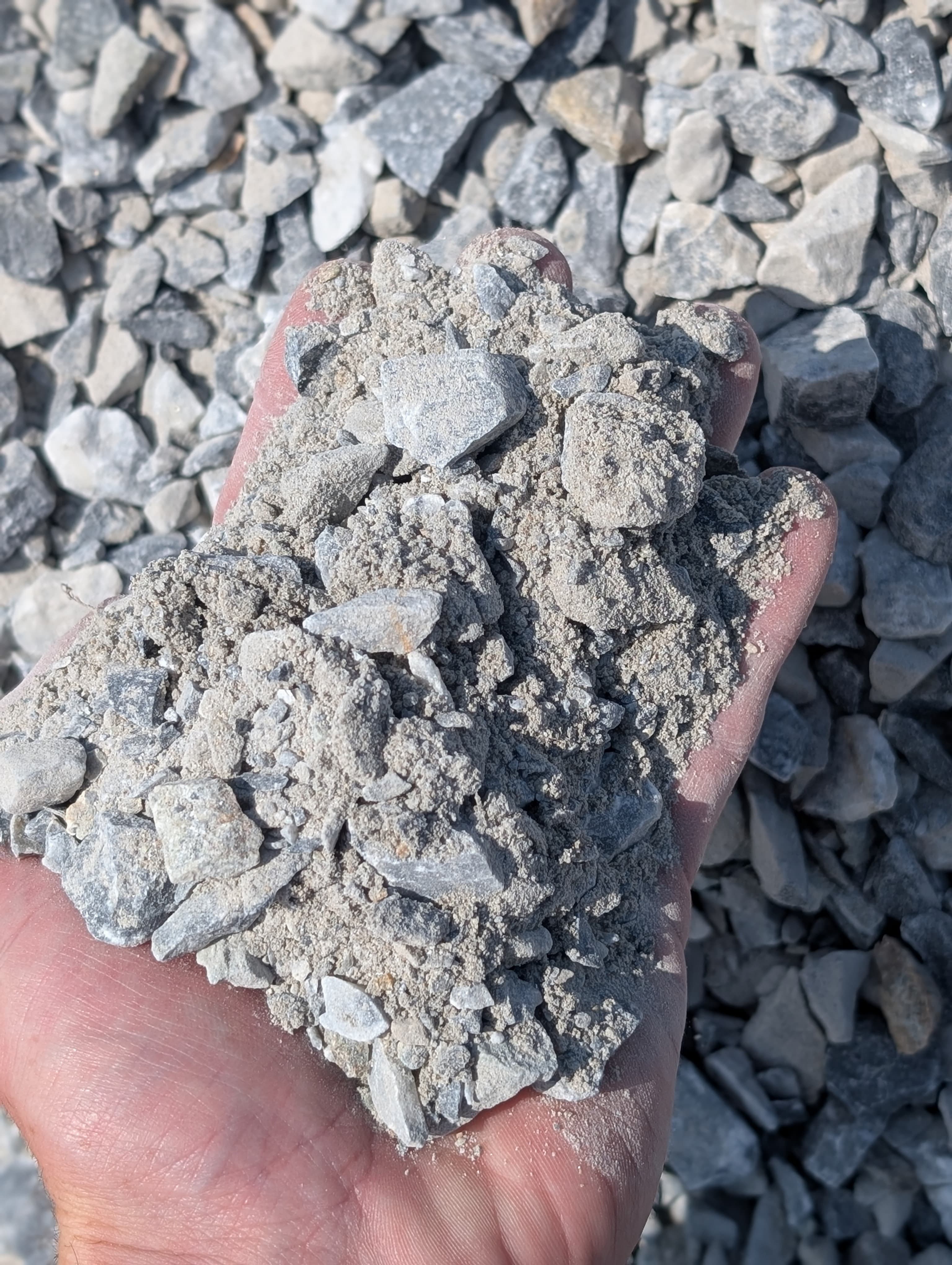
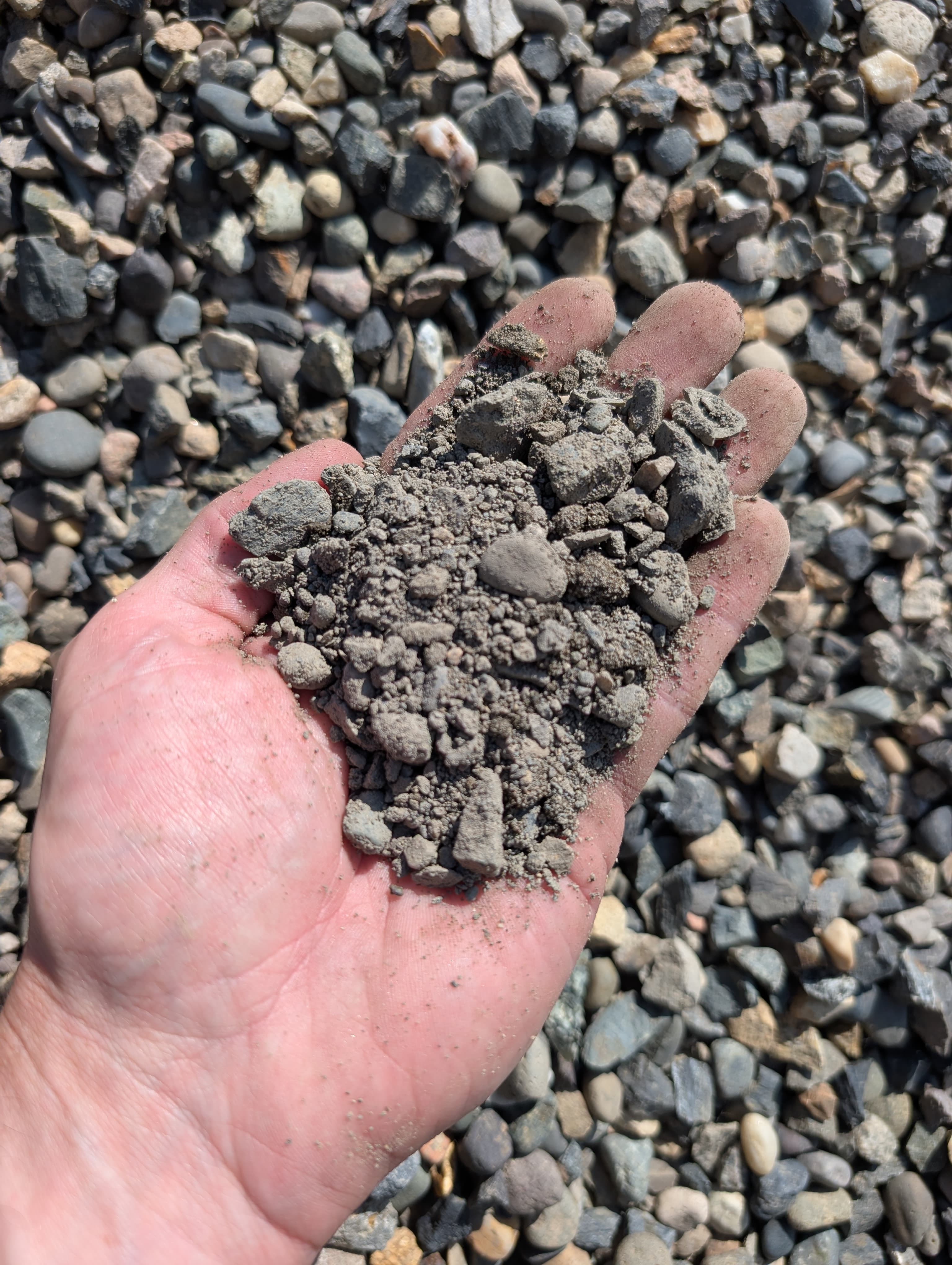
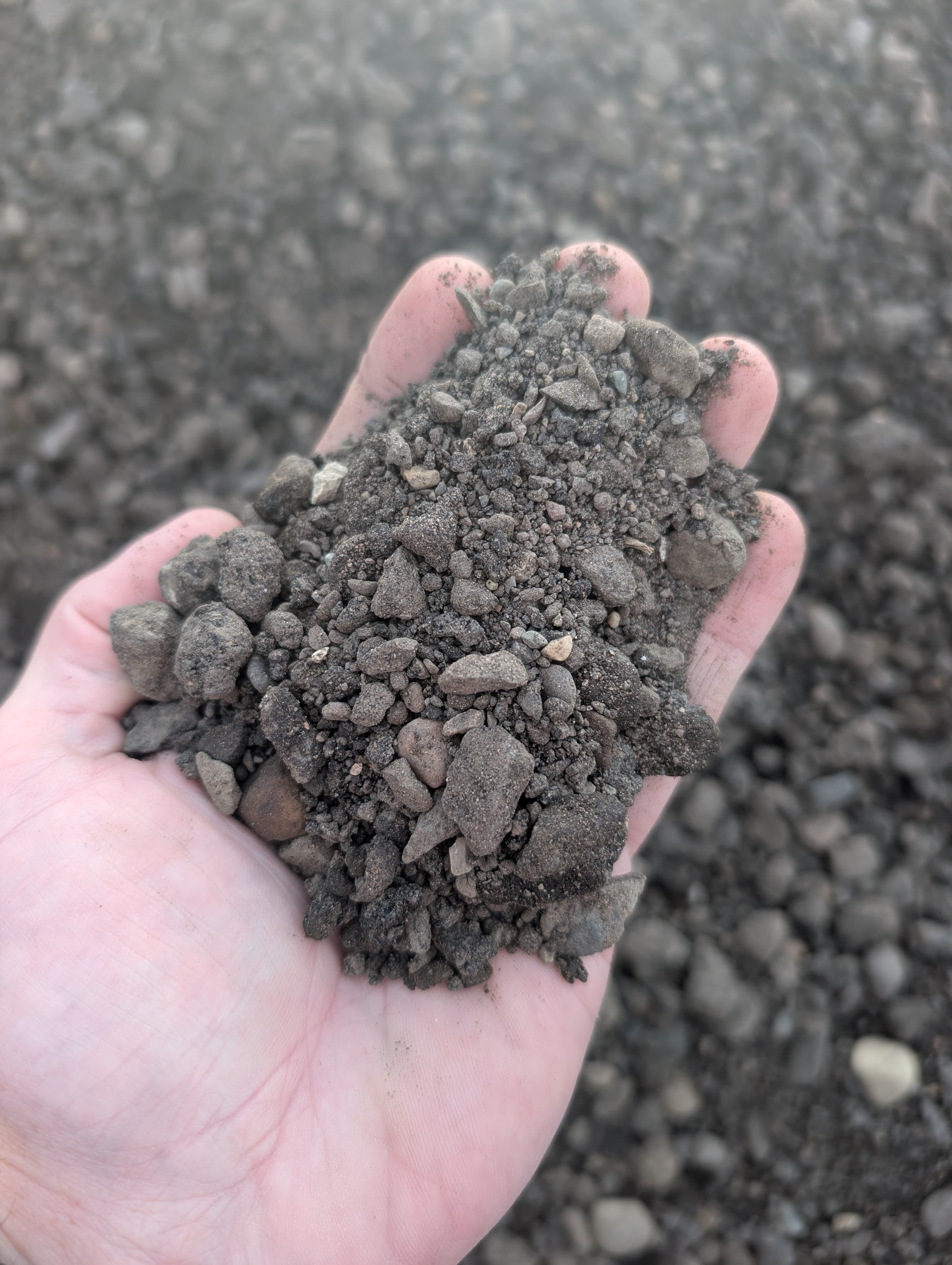
Road Crush 3/4 inch minus is the usual base here, and it is also the honest answer for a whole driveway when the finish does not matter. Limestone driveway gravel 3/4 inch minus does the same job in a lighter colour, and Recycled Asphalt Base works as base or as a darker finished surface.
Surface Material
Once the base is right, the surface choice is mostly about what you want to look at. All of these compact.
| Product | What it brings |
|---|---|
| Road Crush 3/4 minus | The practical base, and a working surface where finish is not the point |
| Limestone 3/4 minus | A lighter, brighter surface that also works as base |
| Limestone 1/2 minus | The smoothest finish of the group, over a sound base |
| Recycled Asphalt Base | A darker driveway or parking area that tightens over time |
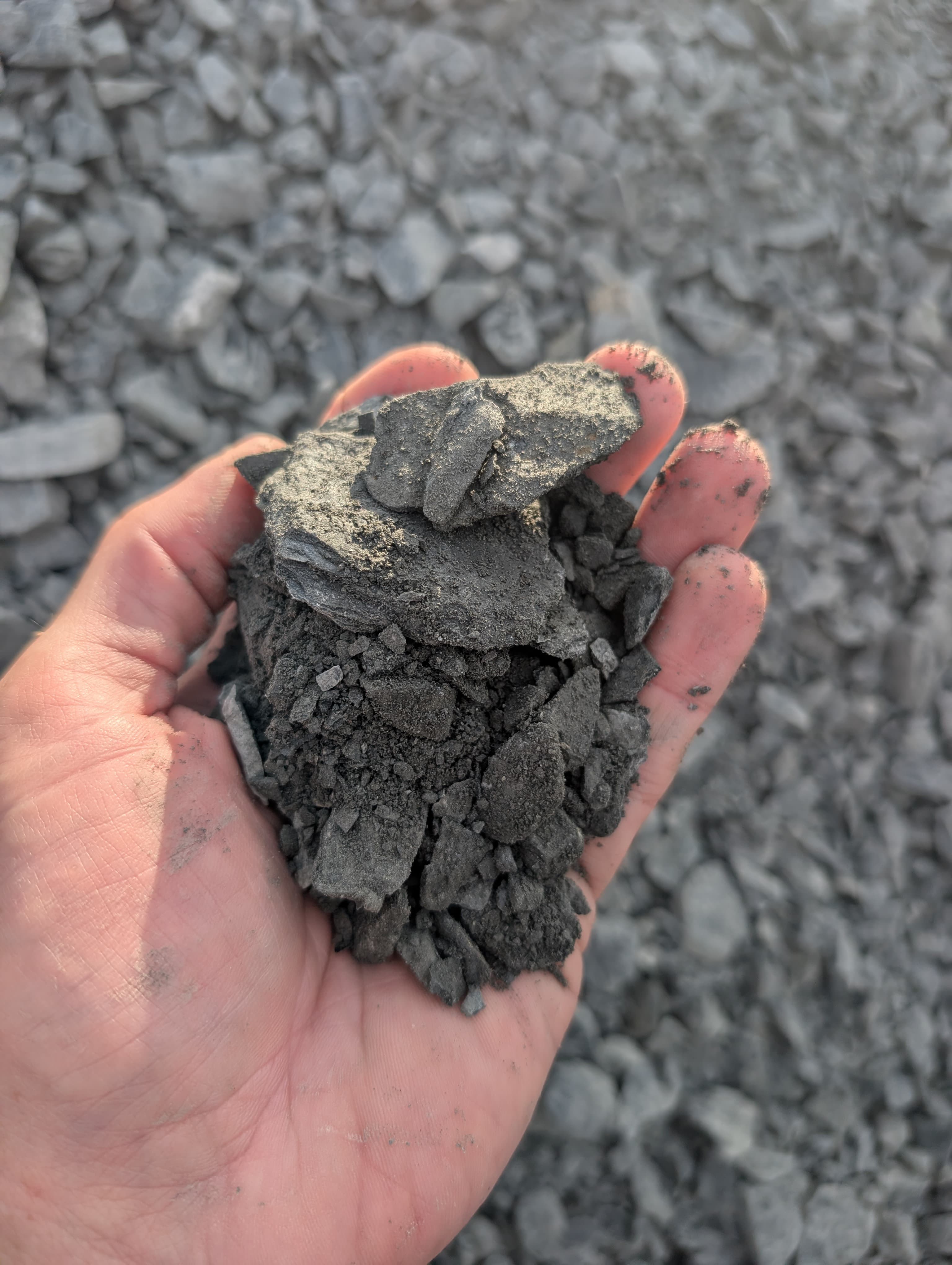
| Striker Driveway Gravel | Dark blue-grey shale, a firm and distinctive finished surface |
| Green/Blue Driveway | The most colour of the driveway gravels, and it still packs down |
Limestone: driveway gravel vs landscape rock is worth reading if you are choosing between limestone products, because the same stone comes in sizes that behave nothing alike.
What Not to Use
Washed or clear rock. Drain rock, pea gravel, and river rock have had the fines washed out so that water moves through them. That is exactly why they never firm up under a tire. A driveway surfaced in clear rock stays loose forever and pushes into ridges. It is the most common expensive mistake in this whole subject.
Sand. It does not bind, and on clay it makes a layer that holds water at the boundary.
Landscape rock of any size. Same problem as washed rock, with a bigger stone and a worse ride.
Soil or unscreened fill under the base. Anything organic keeps settling after you have finished.
Depth, by Project
| Project | Base | Surface |
|---|---|---|
| Surface refresh over a sound base | none | 2 to 3 inches |
| New driveway on firm, well-drained ground | 4 inches compacted | 2 to 3 inches |
| New driveway on soft ground | 6 inches compacted, over fabric | 2 to 3 inches |
| Parking pad or RV pad | 4 to 6 inches compacted | 2 to 3 inches |
| Rural lane | 6 inches compacted, over fabric | 2 to 3 inches |
Spread It in Lifts
Depth only counts if it is compacted, and a deep layer cannot be compacted from the top.
Spread no more than about 4 inches at a time, compact that, then spread the next lift. Dump 8 inches in one pass and you get a firm crust over loose stone, which behaves exactly like the loose stone it is. A plate compactor handles a driveway's worth in an afternoon. For a rebuild on soft ground, a roller or a vibratory plate earns its rental.
Shape the crown while the material is still loose, then compact it. Compacting flat and shaping afterwards just moves your good material around.
How Much to Order
Cubic yards = length in feet, times width in feet, times depth in inches, divided by 324.
A 12 by 50 foot driveway, rebuilt with 4 inches of base and 3 inches of surface:
- The area is 12 times 50, which is 600 square feet.
- Base: 600 times 4, divided by 324, is 7.4 cubic yards.
- Surface: 600 times 3, divided by 324, is 5.6 cubic yards.
- Add 10 percent to each for compaction: about 8 yards of base and 6 yards of surface.
That 10 percent is not padding. Minus gravel is meant to be packed down, and packing it down removes air. Order the measured number and you finish shallower than you planned.
The gravel calculator does this for as many areas as you have, and how much gravel do I need goes deeper into the arithmetic. If you are hauling it yourself, check what fits in your vehicle first, because gravel runs out of weight long before it runs out of space.
What Makes a Driveway Last
Nobody can honestly tell you how many years a driveway will last, and anybody who does is guessing on your behalf.
The material is our half of it. Drainage, base preparation, depth, and compaction are the other half, and they are the half that decides. A modest gravel over a drained, compacted, separated base outlasts a premium surface poured onto soft ground every time.
Build Your Driveway Load
Work out the amount with the gravel calculator, then take it to the estimator and enter your address. You will see the complete price, delivery and tax included, before you commit to anything. If something about the site makes delivery uncertain, a narrow lane, a steep drive, a gate, get in touch and we will tell you straight whether the truck can do it.
Bottom line: find out whether you have a surface problem or a base problem, get the water off it, use minus gravel, spread it in lifts, and crown it. That order, every time.