Mud Is Not a Gravel Problem
Most muddy driveways in Prince George have had plenty of gravel put on them. The gravel is still there — it has just sunk out of sight.
When loose gravel sits directly on soft native soil, every vehicle that drives over it presses stone down into the subgrade and pumps wet fines up between the stones. Do that through a few spring breakups and the two layers become one layer of gravelly mud. The driveway does not look like it needs gravel. It looks like it needs a driveway.
That is why the honest answer to "how much gravel do I need to fix this?" is usually "it depends what is under it."
Fix 1: Refresh the Surface
Cost: lowest. Lifespan: one to a few seasons.
If the driveway is firm underfoot in dry weather and only gets greasy on the surface after rain, you likely have a good base and a worn-out top. A fresh lift of driveway gravel will genuinely fix that.
- Grade or rake out the ruts and potholes first. Adding gravel over a rutted surface just makes deeper ruts with more gravel in them.
- Spread 2 to 3 inches of a minus gravel — one that contains fines and locks together.
- Shape a crown while it is loose, so the middle sits higher than the edges.
- Compact it, or let traffic do the work over a couple of weeks.
Use a minus product here, not a washed one. See the material table below.
Fix 2: Separation Fabric and a Real Base
Cost: highest. Lifespan: this is the one that lasts.
If soft spots keep coming back in the same places, or fresh gravel disappears within a year, the subgrade is the problem and no amount of surface gravel will fix it.
The permanent repair is a layer of nonwoven geotextile between the soil and the gravel. The fabric does one job extremely well: it keeps the two materials from mixing. Stone stays up, mud stays down, and the base you build stays the thickness you built it.
- Strip the soft, contaminated material out of the failing area down to firmer ground.
- Roll out Driveway Fabric across the full width, overlapping adjacent rolls generously.
- Place 4 to 6 inches of Road Crush 3/4 inch Minus as a compacted base. Go thicker where the ground is very soft or heavy trucks use the driveway.
- Compact in lifts rather than dumping the full depth at once.
- Finish with 2 to 3 inches of your chosen surface gravel.
This is more work than topping up. It is also the difference between fixing the driveway and renting it another year.
Fix 3: Get the Water Off It
Cost: low to moderate. Often the missing piece.
Gravel that stays saturated will fail no matter how good the base is. Water has to leave the driveway somewhere.
- Crown the surface. The centre should sit higher than the edges so water sheds sideways. About a quarter inch of fall per foot is a good target — roughly an inch and a half of crown on a twelve-foot driveway.
- Keep the ditches and culverts open. A plugged culvert turns the whole driveway into the low point.
- Deal with the springs. Where groundwater surfaces in one persistent spot, a trench of washed Drain Rock around perforated pipe, wrapped in fabric, gives it somewhere to go. Washed rock is used here precisely because it has no fines to plug it up.
Which Gravel for Which Job
The single most useful distinction in this whole guide: minus gravel contains fine material and packs into a firm surface. Washed or clear gravel has the fines removed, so it drains freely and never locks up. Using a washed rock as a driveway surface is the classic expensive mistake — it stays loose forever.
| Material | Use it for | Packs down |
|---|---|---|
| Road Crush 3/4 inch Minus | Structural base under everything else | Yes |
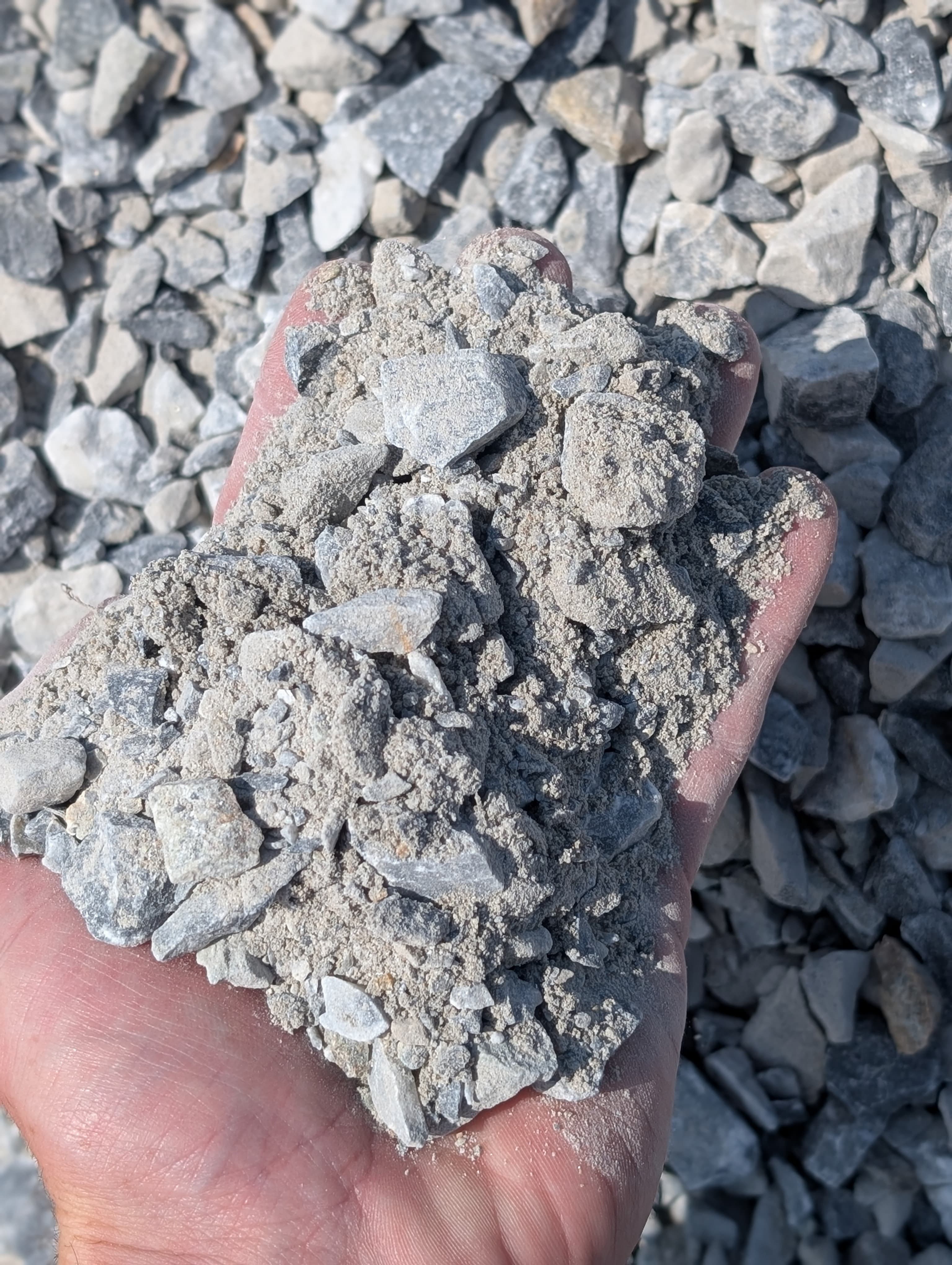
| Limestone Driveway Gravel 3/4 inch Minus | Base or surface, lighter grey finish | Yes |
| Limestone Driveway Gravel 1/2 inch Minus | Smoother finished surface | Yes |
| Striker Driveway Gravel | Firm dark blue-grey finished surface | Yes |
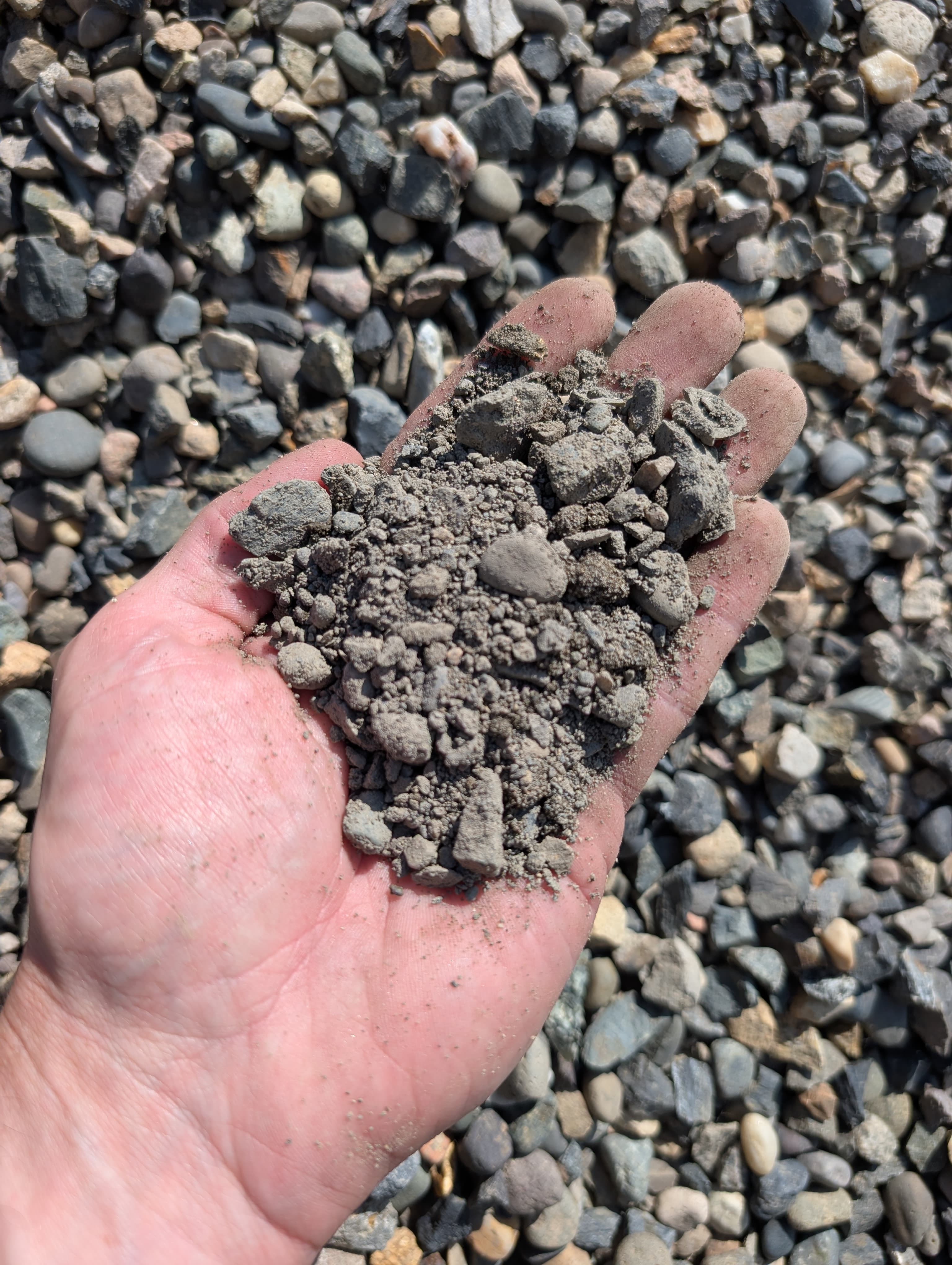
| Recycled Asphalt Base | Driveways and rural lanes, tightens over time | Yes |
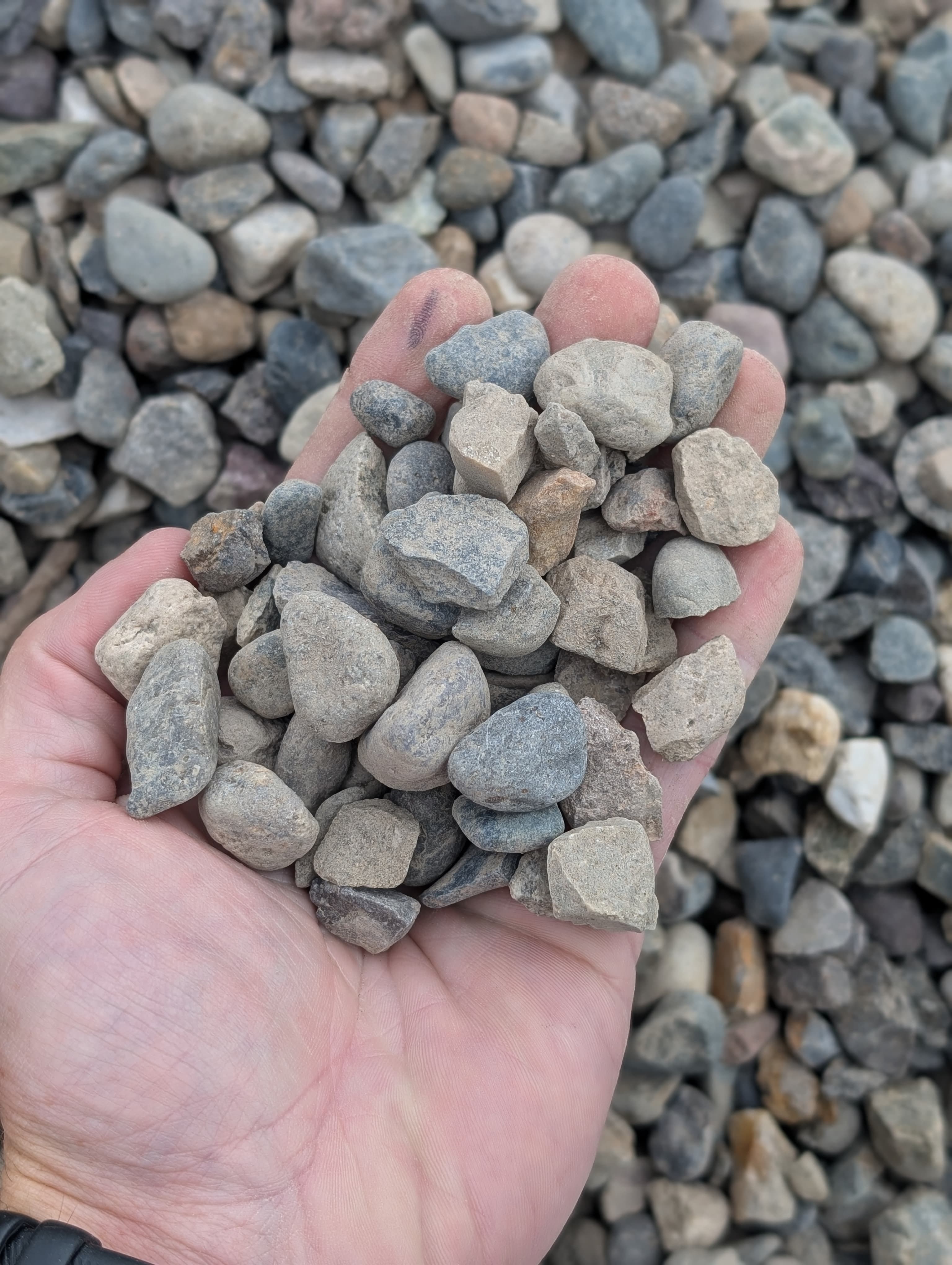
| Washed Drain Rock 3/4 inch | French drains and wet spots only | No |
How Much to Order
Cubic yards = length in feet, times width in feet, times depth in inches, divided by 324.
A 60 foot by 12 foot driveway getting a 4 inch lift:
60 times 12 times 4 equals 2,880. Divided by 324 equals 8.9 cubic yards.
Two things people forget. Minus gravel compacts, so order roughly twenty percent more than the finished measurement if you want the full depth after packing. And a driveway that has ruts in it needs more than the average depth suggests, because you are filling holes before you build depth.
You can price any of this instantly on the product pages or with the estimator on our home page — enter the area and it does the arithmetic for you.
When to Stop DIYing
Call for help when soft spots return in the same place after two attempts, when water sits on the driveway with nowhere to drain, or when the area needing repair is large enough that hand-spreading is not realistic. Those are subgrade and drainage problems, and they are worth solving once instead of gravelling annually.
We deliver anywhere in the Prince George area. If you would rather it was spread and compacted than left in a pile, get in touch and we will tell you straight what we can do.
Bottom line: if fresh gravel disappears within a season, you do not need more gravel. You need fabric, a proper base, and water going somewhere else.