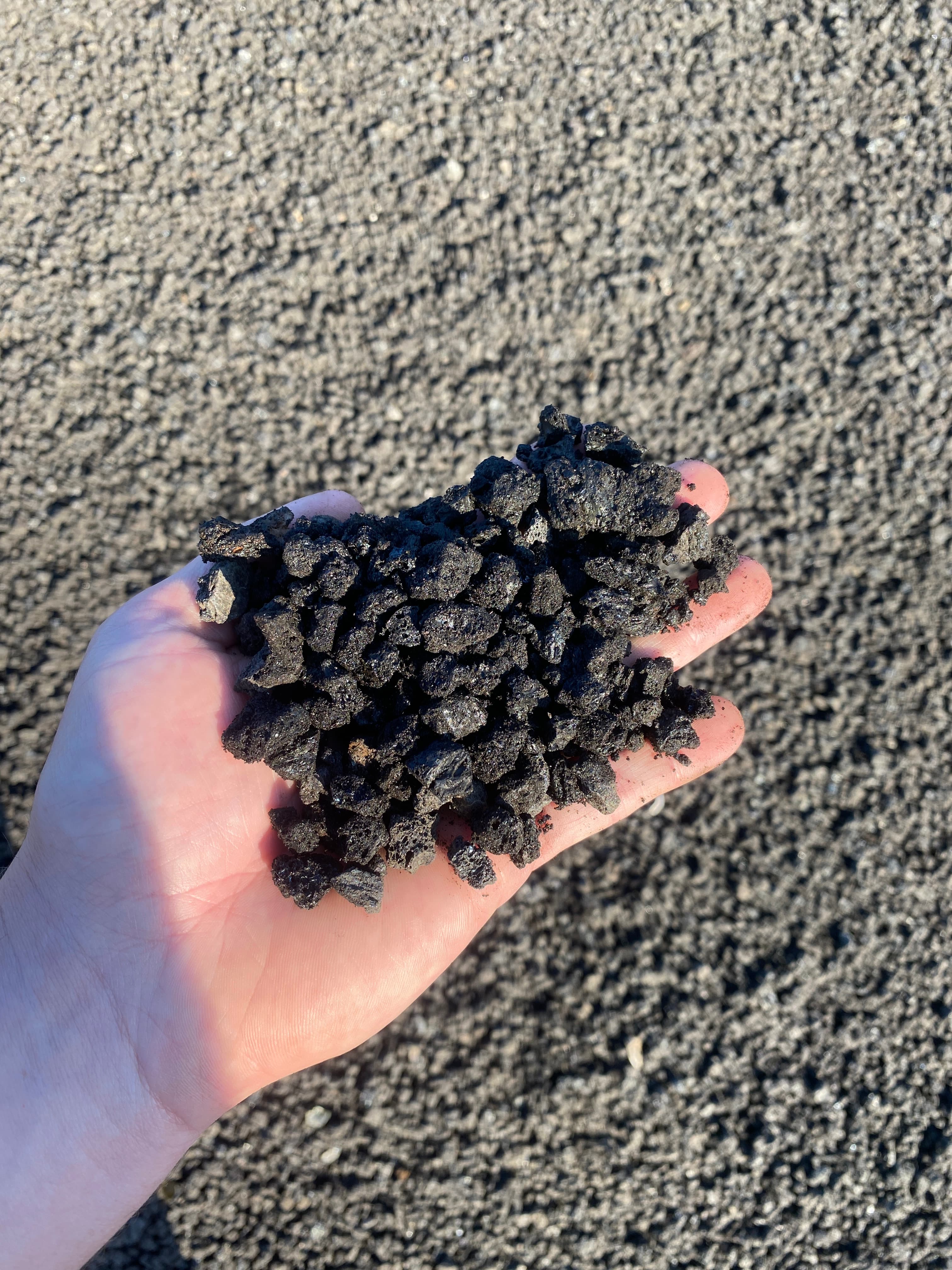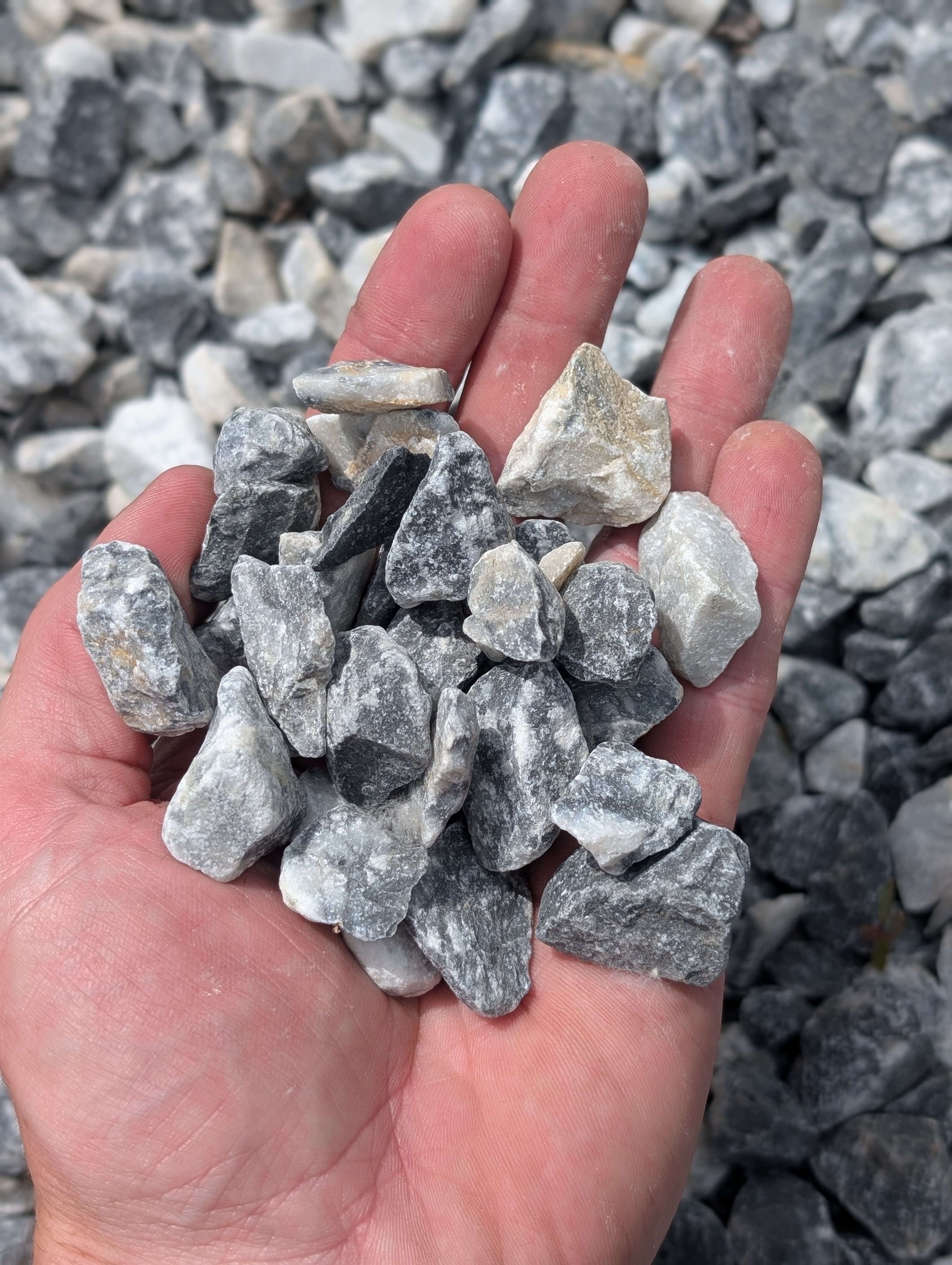
Two Fabrics, Two Jobs
"Landscape fabric" gets used for both of these, which is how people end up with the wrong one under an expensive project.
Weed separation. A woven ground cover that goes under decorative rock. Its job is to keep the stone sitting on top of the soil instead of sinking into it, and to keep most weeds from coming up through. That is DeWitt Sunbelt. It is not a separate item in the catalogue: it is added to the order alongside the rock or mulch it is going under.
Ground separation and stabilization. A nonwoven geotextile that goes under a driveway or a base. Its job is to keep gravel and soft ground from mixing under load. That is driveway fabric, an Armtec 200 nonwoven, added to the order alongside the gravel going on top of it.
They are not interchangeable in either direction. Weed barrier under a driveway tears and does nothing structural. Driveway fabric under a rock bed is heavier and more expensive than the job needs.
Where Fabric Helps, and Where It Does Not
| Project | What to do |
|---|---|
| Decorative rock bed | Sunbelt weed barrier. Rock laid straight on soil sinks into it and you buy it twice. |
| Lava rock bed | Same. Strip the sod, level, fabric, edging, then 3 inches of rock. |
| Gravel pathway | Loose decorative rock over Sunbelt. A compacted pathway wants a base, and fabric only if the ground is soft. |
| New driveway | Nonwoven driveway fabric on soft or wet ground, none needed on firm well-drained ground. |
| Muddy parking area | Driveway fabric, then a proper compacted base. Fabric alone is not the fix. |
| Wood mulch bed | Usually nothing. Mulch is supposed to break down into the soil, and fabric stops that. |
| Raised bed | Not for weeds. Hardware cloth for burrowing animals is a different product and a different problem. |
| Drainage trench | Nonwoven, wrapped around the drain rock so silt cannot fill the voids. |
Under Decorative Rock: Yes
Rock does not stop weeds by itself, and loose stone laid on bare soil slowly works its way down into it. That is the same mixing problem that ruins gravel driveways, just slower and prettier.
A ground cover under the rock keeps the stone where you put it and blocks most of what tries to grow up from below. It is the cheapest part of a rock bed and the part people skip.
Under Wood Mulch: Usually Not
This is the one that surprises people, because the fabric is sold next to the mulch.
Bark mulch is supposed to break down. That is the advantage wood has over rock: it feeds the soil as it goes. Put fabric underneath and the mulch composts on top of a plastic sheet instead of into the bed. Meanwhile the mulch layer itself is the weed barrier, and it is a good one at 3 inches.
Fabric under mulch also makes future planting miserable. Every new perennial means cutting another hole, and the cuts are where weeds get in anyway.
If a bed has a serious perennial weed problem, deal with the weeds first. Fabric over couch grass is a delaying tactic.
What Fabric Does Not Do
It does not fix drainage. Water still has to leave. Fabric under gravel on ground that holds water gives you a firmer wet spot, which is not the same as a dry one. How to fix a muddy yard covers finding out where the water is going first.
It does not stop weeds forever. Dust, leaf litter, and grass clippings collect between stones over the years and turn into a thin layer of soil sitting on top of your fabric. Seeds blow in and germinate in that. It is normal, it takes a few seasons, and it is a rake-and-pull job rather than a fabric failure.
It is not plastic sheeting. Landscape fabric is permeable: water and air pass through it and soil underneath stays alive. Solid poly does neither. Sheet plastic under a bed drowns the roots of everything you planted and pushes water sideways to somewhere you did not choose.
It does not replace base depth or compaction. Under a driveway, the fabric makes the base you build behave like a base. It does not reduce how much base you need.
Installing It So It Actually Works
The failures are nearly always installation, not product.
- Clear the area properly. Remove sod, weeds, roots, and loose organic soil. Perennial weeds through a seam will find the seam.
- Level and shape before the fabric goes down. Fabric follows what is under it, and a dip under the fabric is a puddle in the finished bed.
- Roll it out flat, no wrinkles. A wrinkle under rock becomes a ridge you can see for years.
- Overlap the seams by a foot. Our fabric is quoted with a 1 foot side and end overlap for exactly this reason. Butt joints open up.
- Pin it. Landscape staples every few feet along the seams and edges, more on a slope.
- Cut plant openings small, in an X. Fold the flaps under rather than cutting a circle out. Every extra inch of open soil is a weed seat.
- Take it right to the edging. Fabric that stops short of the border lets the rock migrate out under the edge.
- Cover it quickly. Sunlight breaks down exposed fabric, and it is not meant to be the finished surface.
Under a driveway, the same rules apply with more overlap. Do not stretch it tight into a stripped area, let it lie into the shape, and never drive on bare fabric before the base is on it.
How Much Fabric, and in What Width
Fabric is not a cubic yard product, so the arithmetic is different: it is about strips, widths, and overlaps rather than volume.
Both fabrics come in more than one roll width, and both can be bought by the linear foot or as a full roll, whichever works out better for the amount you need. The calculator knows the current widths and roll lengths, so it can compare the two ways of buying for your exact project.
The fabric calculator sits on the product page of the material the fabric is going under, and in the estimator when you add that material. Add rock or mulch and the weed barrier is offered; add driveway gravel and the driveway fabric is. It does the layout for you:
- Enter the length and width of each area. Not the square footage, because a roll layout depends on the shape.
- It lays out the strips both ways round and picks the direction that needs less fabric.
- It includes the 1 foot overlaps on sides and ends, and rounds each strip up to a full foot rather than rounding the total.
- There is an optional 10 percent allowance for cuts and awkward corners.
- It shows the linear feet, whether full rolls work out better, and adds the result to your order alongside the material.
Narrow beds are where the width choice matters most. A 4 foot border laid with a wide roll wastes most of what you buy, so the calculator compares the available widths and picks the one that suits the shape.
Getting It
Both fabrics are stocked here and go on the same order as the material, so a rock bed does not need two trips. Work out the rock or mulch with the material calculator, and the fabric follows from the same measurements.
Bottom line: weed barrier under decorative rock, nonwoven under driveways and drains, and usually nothing under wood mulch. Overlap the seams, pin it down, and remember it is a separator, not a drainage fix.