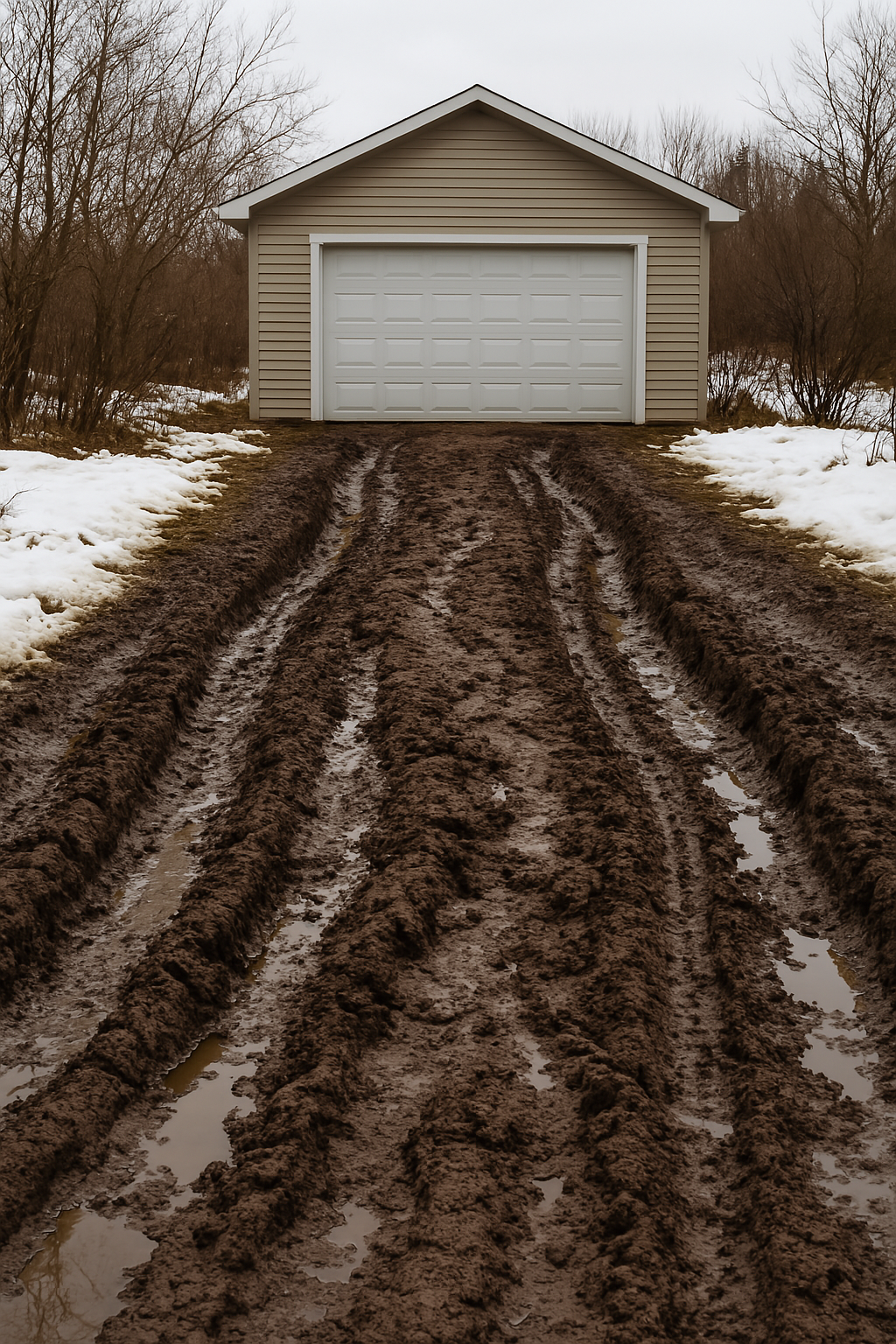
Find Out Why It Is Wet First
Dumping gravel on a wet spot is the most common yard repair in Prince George and the one most likely to be done twice. Gravel does not remove water. It just gives the water somewhere to sit while the mud comes up between the stones.
Walk the area after a rain and work out which of these you have. The fix follows from the answer.
It is the low point. Water runs there and stops. Very common on lots that were graded once, thirty years ago.
The soil is heavy clay. Water cannot soak in fast enough, so it sits on top. The patch is often not especially low.
Something is discharging into it. A downspout, a sump line, a driveway that sheds toward the yard. Usually obvious once you look for it after a rain.
It is a spring or a high water table. The spot is wet in dry weather too. This is the one where you stop and get advice rather than buying material.
Fix 1: It Is Just Low
Raise it. This is the most common case and the least dramatic fix.
- Strip the sod off the low area and set it aside if it is worth keeping.
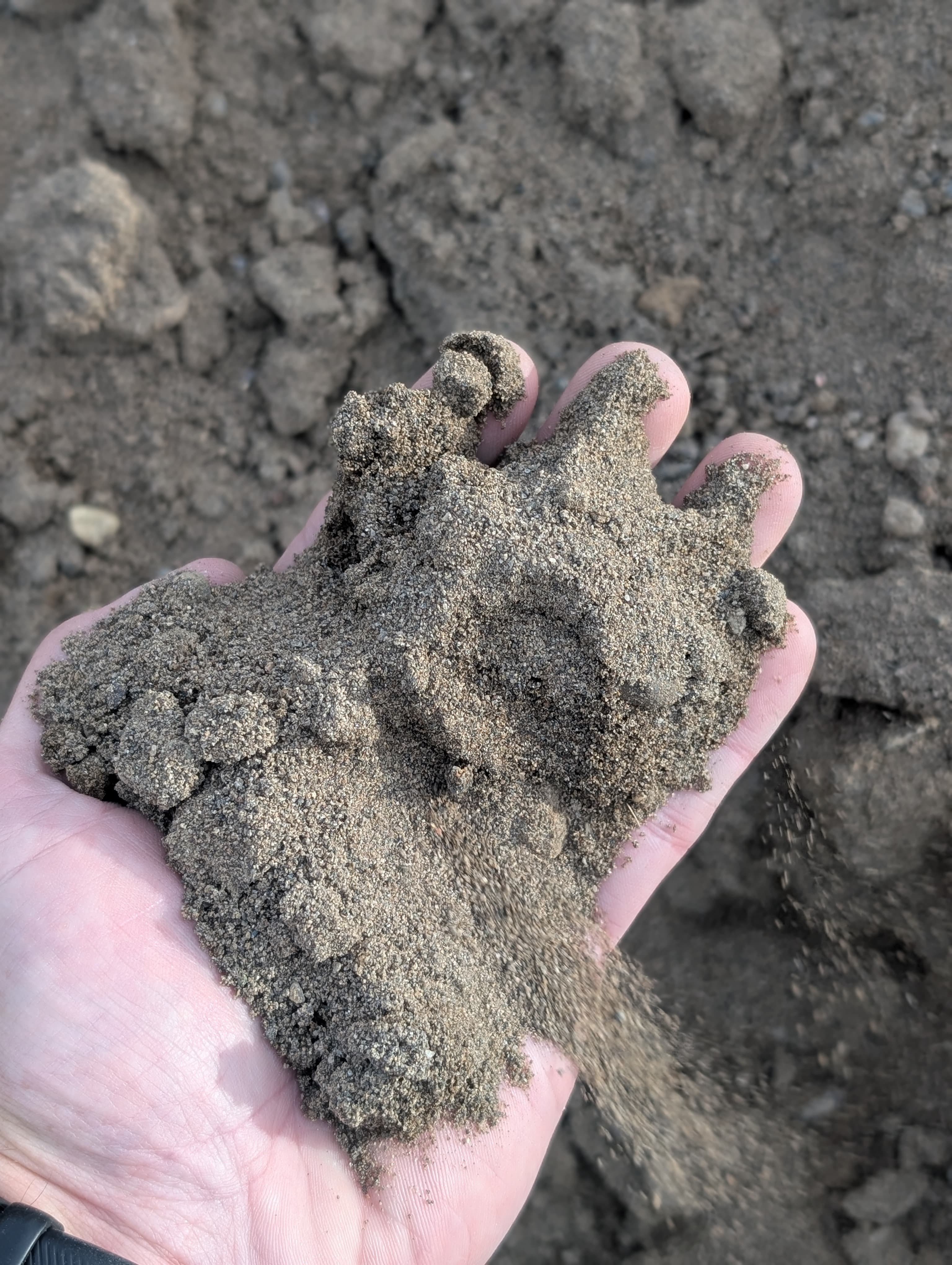
- Fill with Sandy Fill to within about 4 inches of the finished level. Fill is the cheap material that does the volume work.
- Top with 4 inches of Lawn Soil Mix.
- Grade so it runs away from the house at roughly a quarter inch per foot, then seed or lay sod.
The mistake here is filling the whole depth with good soil. Only the top few inches grow anything.
Fix 2: Heavy Clay, Nothing Draining
Water needs somewhere to go, and clay will not let it go down. So take it sideways.
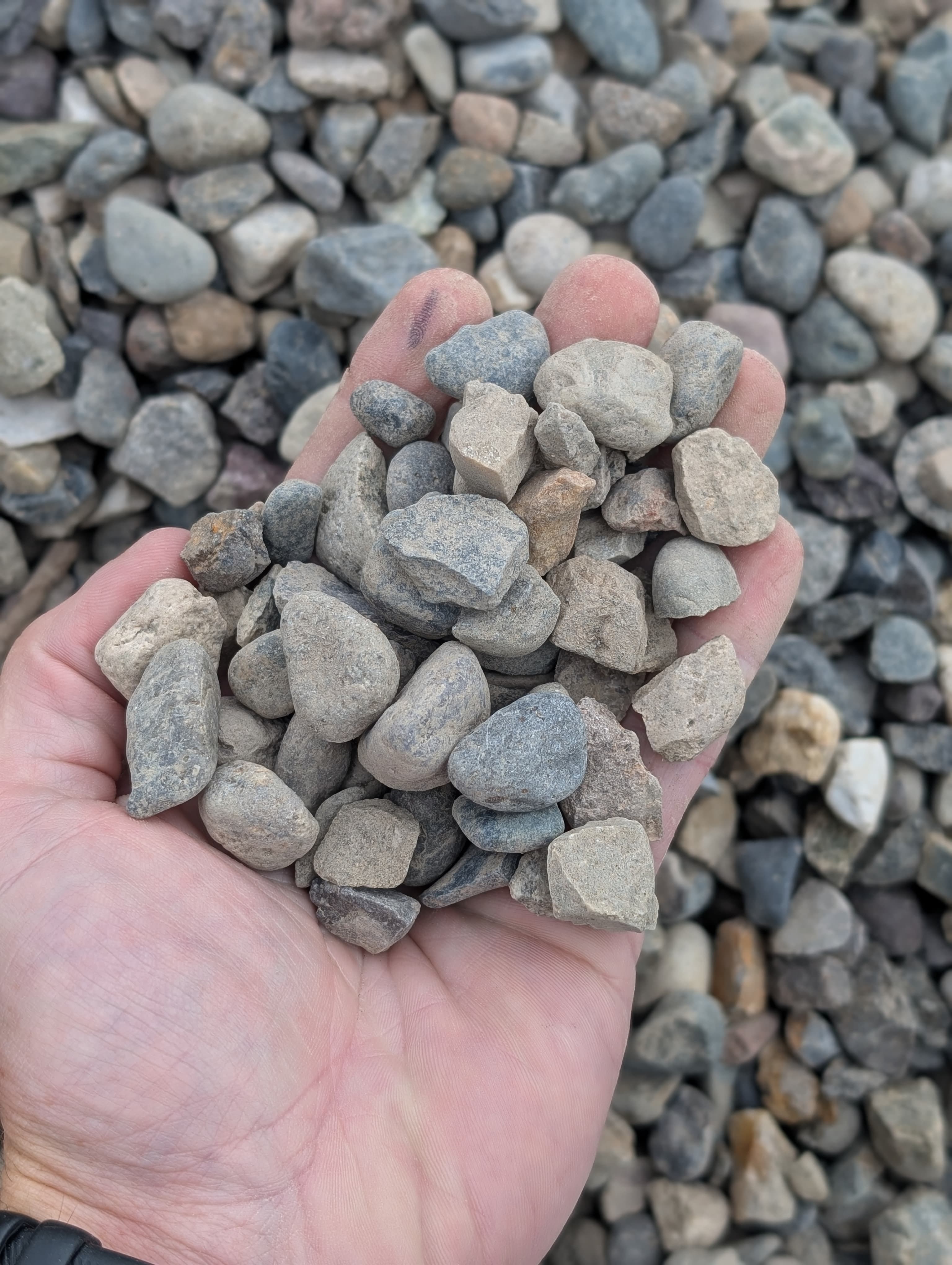
A French drain is a trench with a perforated pipe in it, surrounded by washed drain rock, running from the wet area to somewhere lower that can take the water. Wrap the rock in a nonwoven fabric so silt does not fill the voids in a few years.
The part that matters more than the materials: the pipe has to fall continuously toward the outlet, and the outlet has to be real. A drain that ends in a buried hole is a bucket.
Use washed rock here, not driveway gravel. The fines in a minus product are exactly what you do not want around a drain.
Fix 3: Something Is Discharging Into It
Move the water before you build anything.
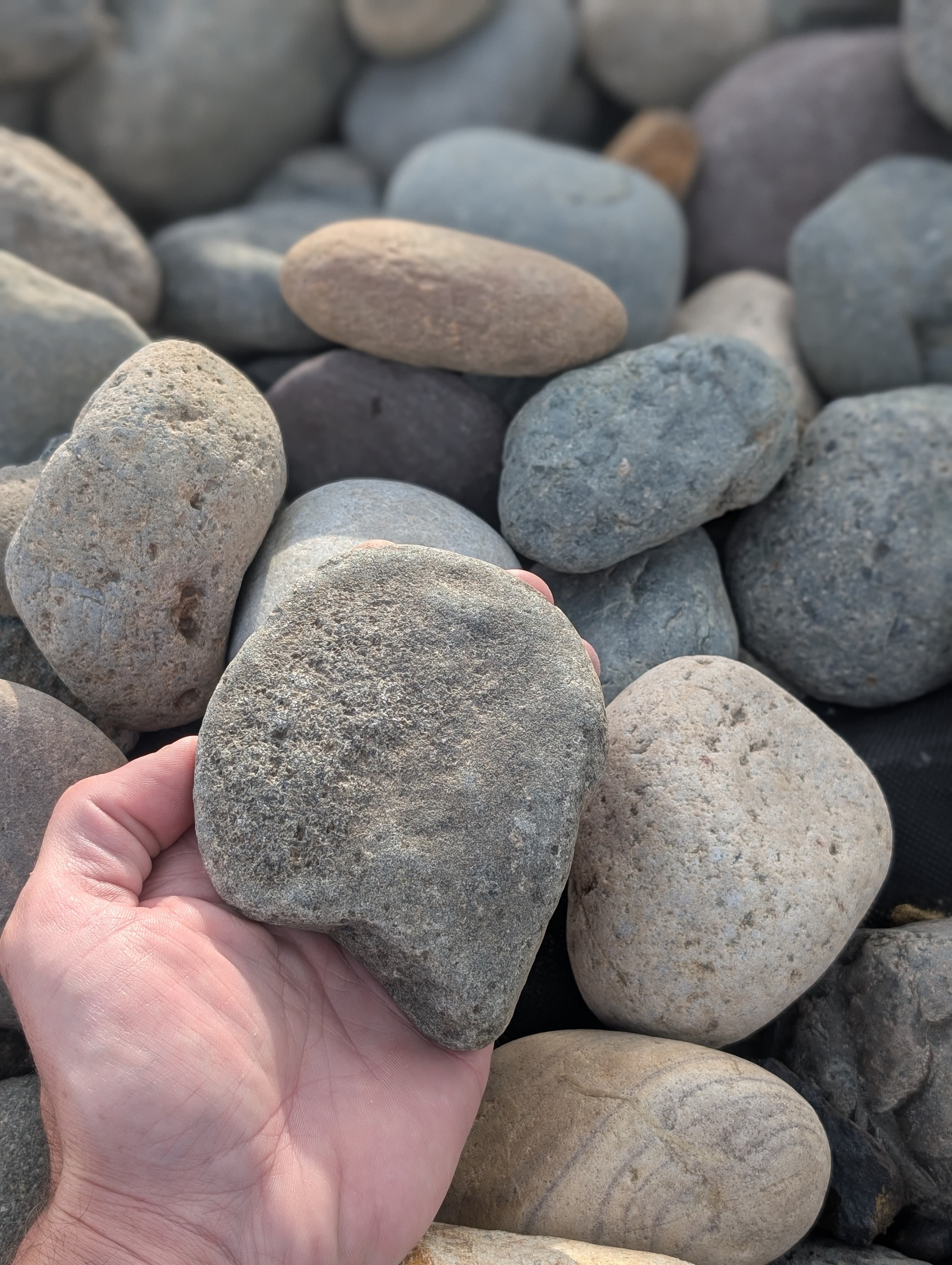
Extend downspouts well clear of the area. Run sump discharge somewhere it can actually leave. If a driveway is shedding into the yard, a shallow swale or a rock-lined channel of river rock can carry it somewhere useful, and it looks intentional rather than like a repair.
This fix is often free, and it is regularly the whole answer.
Fix 4: A Path or Pad Through the Wet Bit
Sometimes you do not need the area to be lawn. You need to walk or park on it without wearing boots.
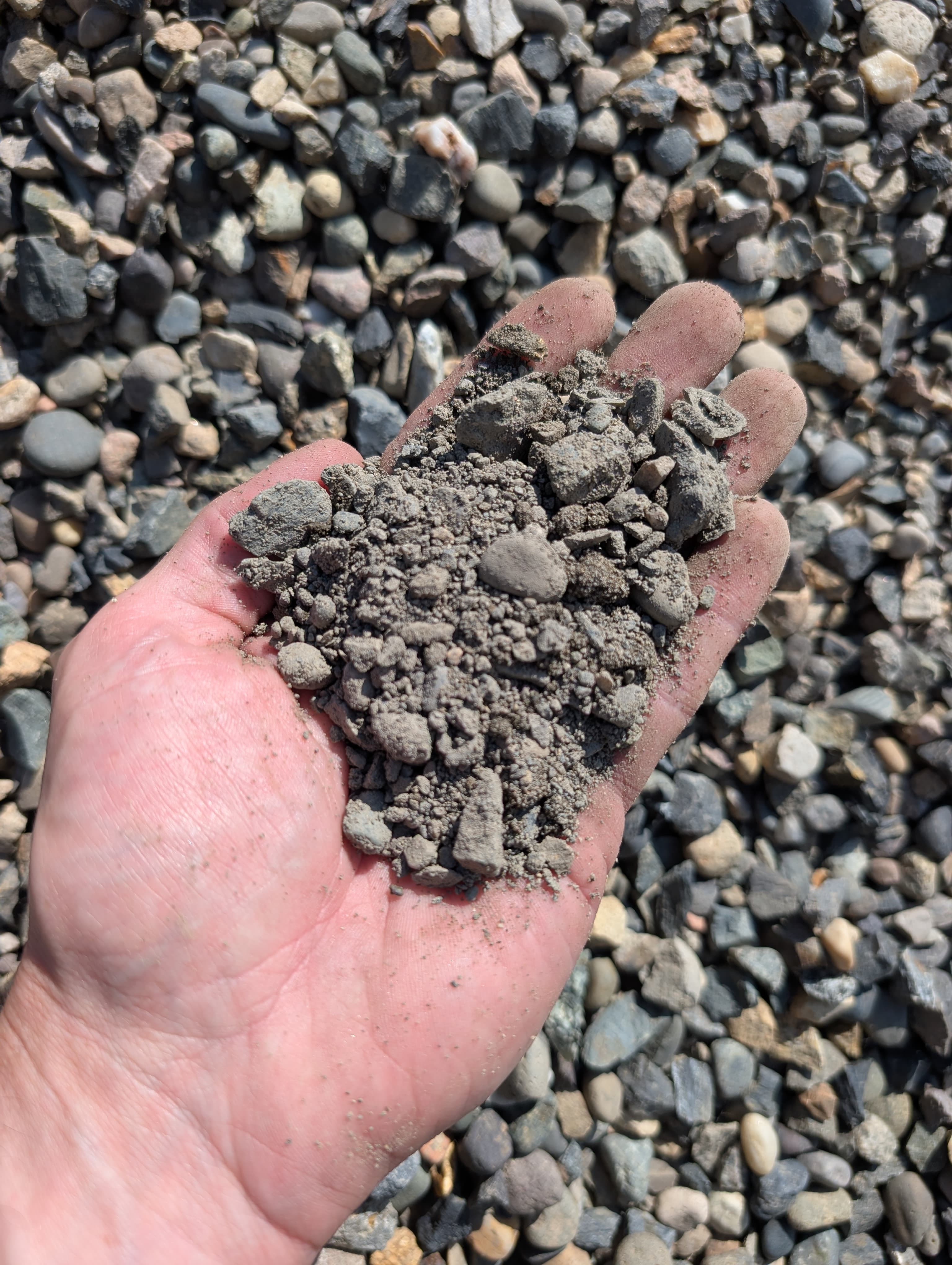
That is a different job with a different material. Put a driveway fabric down on the soft ground first, then 4 to 6 inches of Road Crush 3/4 minus, compacted in two lifts.
The fabric is the part people skip and the reason gravel sinks. It keeps the stone and the soft ground from mixing, which is what turns a gravel pad into a gravelly mud pad over two springs.
What Not to Do
- Do not put sand on clay. It does not improve drainage, it makes a layer that holds water at the boundary.
- Do not fill a wet spot with topsoil and reseed. You will be doing it again next spring.
- Do not run a drain to a hole in the ground. Water has to leave, not relocate.
- Do not bury the problem under 6 inches of gravel without fabric under it.
Working Out the Amounts
Measure the wet area, decide the depth, and use the material calculator for the yards. For a fill-and-topsoil repair, calculate the two layers separately, because they are different depths and different materials.
For anything deeper than about a foot, or anything that stays wet in August, get eyes on it before you buy material. That is a drainage design question, not a shopping question.
Bottom line: find out where the water comes from and where it can go. Then pick the material. Gravel on a wet spot with nowhere to drain is just a firmer wet spot.