Fixing a Pothole So It Stays Fixed
A pothole that keeps coming back was not repaired, it was topped up. There is a real difference and it takes about ten extra minutes.
- Square out the hole. Cut the edges back to firm material with a shovel or a mattock. A pothole has soft, undercut edges, and gravel dumped against them washes straight back out. You want clean vertical sides.
- Get the water out. Bail or sweep out standing water and muck. New gravel packed onto mud will not bond to anything.
- Fill with a minus gravel, in layers. Road Crush 3/4 minus or limestone driveway gravel. Fill about halfway, compact it, then fill the rest.
- Overfill by an inch, then compact. It will settle to level. Filling flush leaves you a fresh dip after the first week of traffic.
- Compact it properly. A hand tamper is fine for one hole. For a driveway's worth, rent a plate compactor for an afternoon.
Do not use washed or clear rock. It has no fines to bind it and it will be out of the hole within a month.
Ruts and Washboard
Ruts are a grading problem. Adding gravel on top of a rutted driveway gives you deeper ruts with more gravel in them, because the tires keep tracking the same line.
Rake or drag the high material back into the low tracks first, so the surface is flat, then add the new lift on top of a flat surface. If the ruts are deep enough to catch a shovel, a box blade or a landscape rake behind an ATV makes short work of it.
Washboard, that regular ripple across the surface, usually means either a shortage of fines or people accelerating on the same stretch. A fresh lift of minus gravel and a compaction pass generally sorts it.
When a Top-Up Is Worth It
A top-up works when the base is sound. Test it in dry weather: walk the driveway and push a screwdriver or a rebar pin into the surface. If it stops within an inch or so, the base is firm and 2 to 3 inches of fresh material will genuinely fix the surface.
If the pin goes in easily, or the driveway is firm in August and soft every May, the base is the problem. More surface gravel buys you a season. How to fix a muddy driveway covers rebuilding it properly with fabric and a real base.
The Best Gravel for a Northern BC Driveway
Two properties matter here, and both come down to one word: minus.
It has to bind. Minus material includes the fines, all the way down to dust. Those fines fill the gaps between stones and lock the layer together. Clear or washed rock has had the fines removed so that it drains, which is exactly why it stays loose forever under a tire.
It has to survive freeze and thaw. Our problem is not one hard winter, it is dozens of freeze and thaw cycles a year, and the spring breakup at the end of them. A well-compacted minus layer over a drained base handles that. A loose layer over saturated ground does not, whatever the stone is.
The practical choices:
| Product | Where it fits |
|---|---|
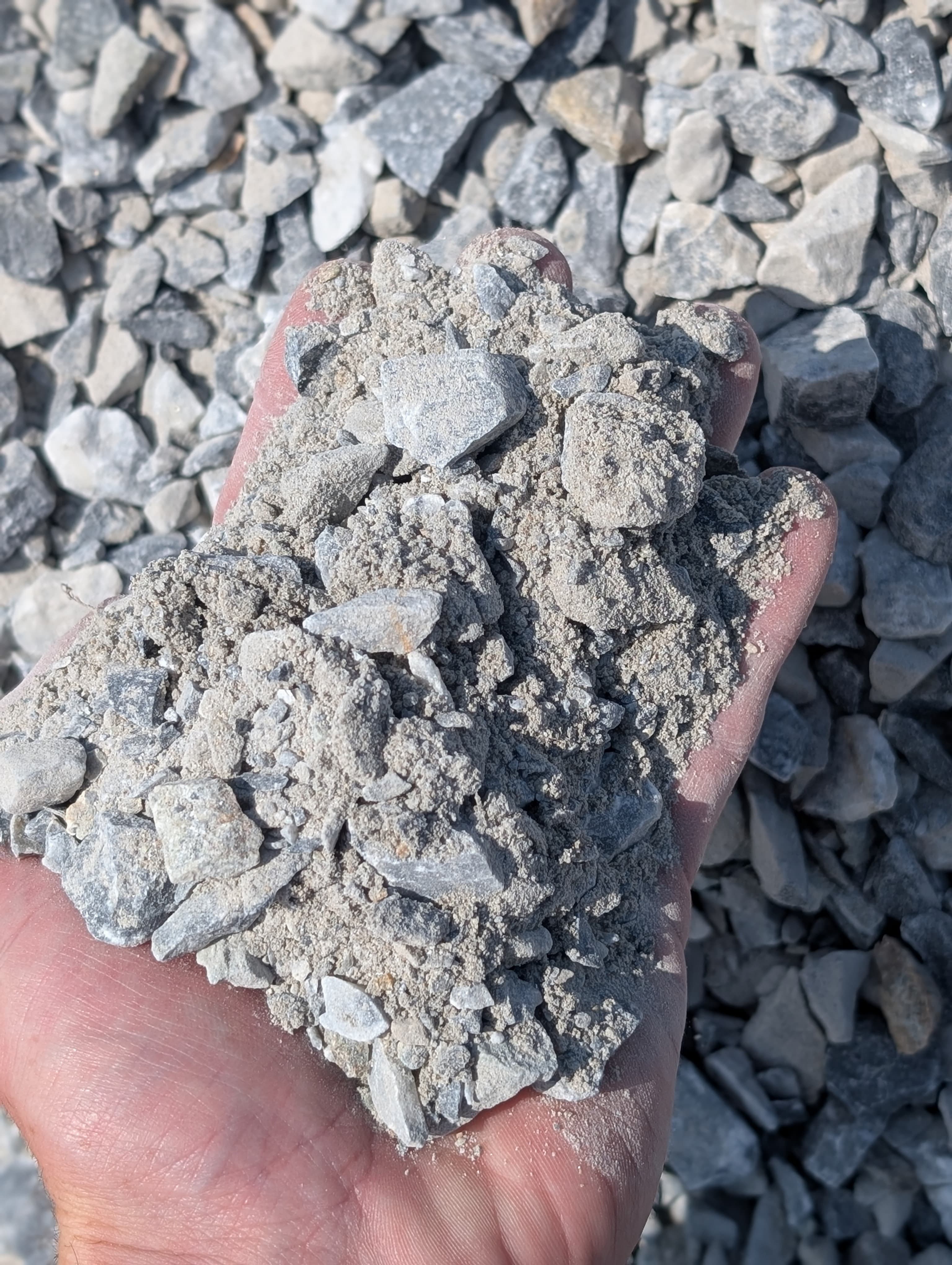
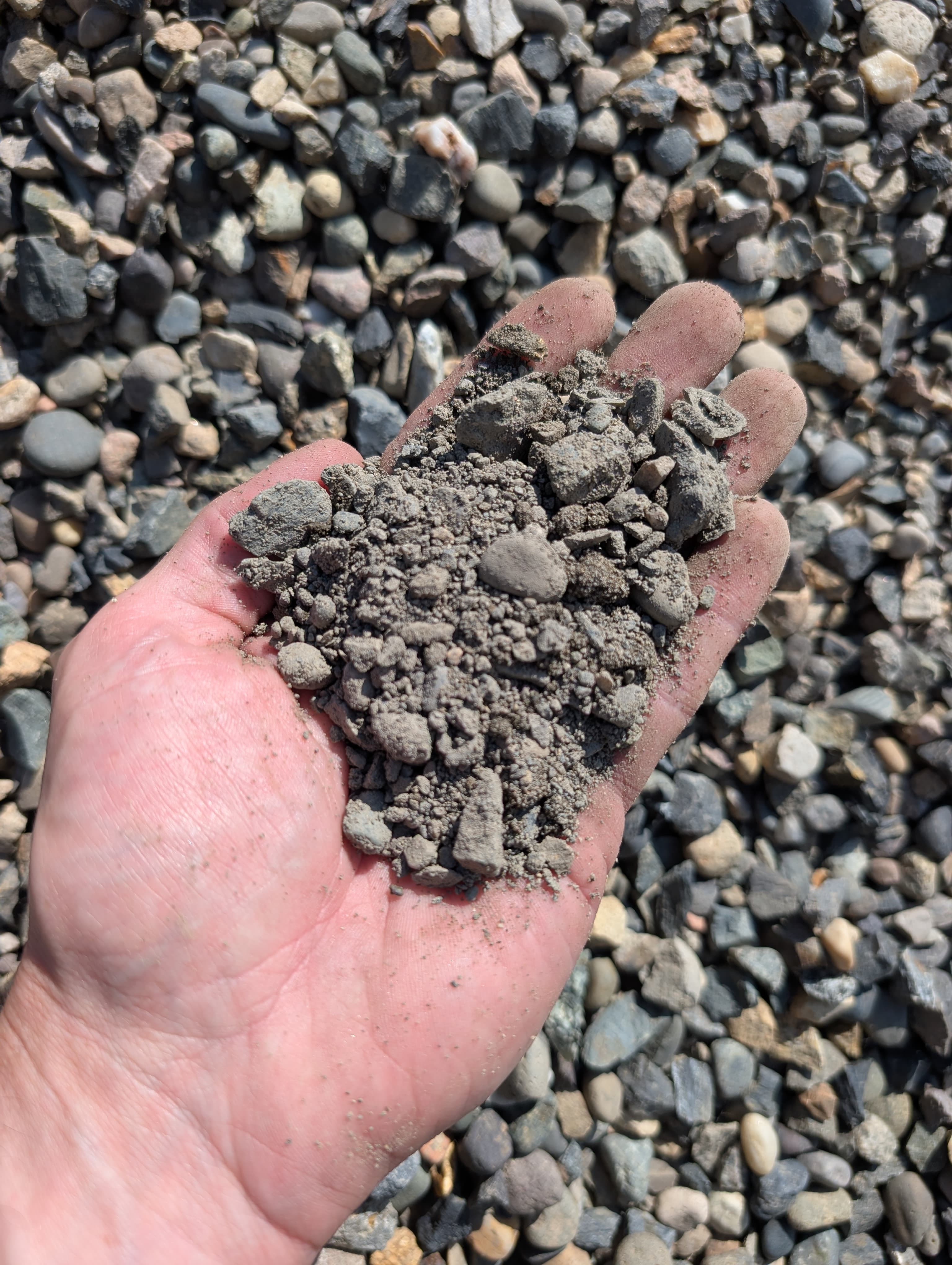
| Road Crush 3/4 minus | The base layer, and the value option for a whole driveway |
| Limestone 3/4 minus | Base or surface, lighter colour |
| Limestone 1/2 minus | A smoother finished surface over a good base |
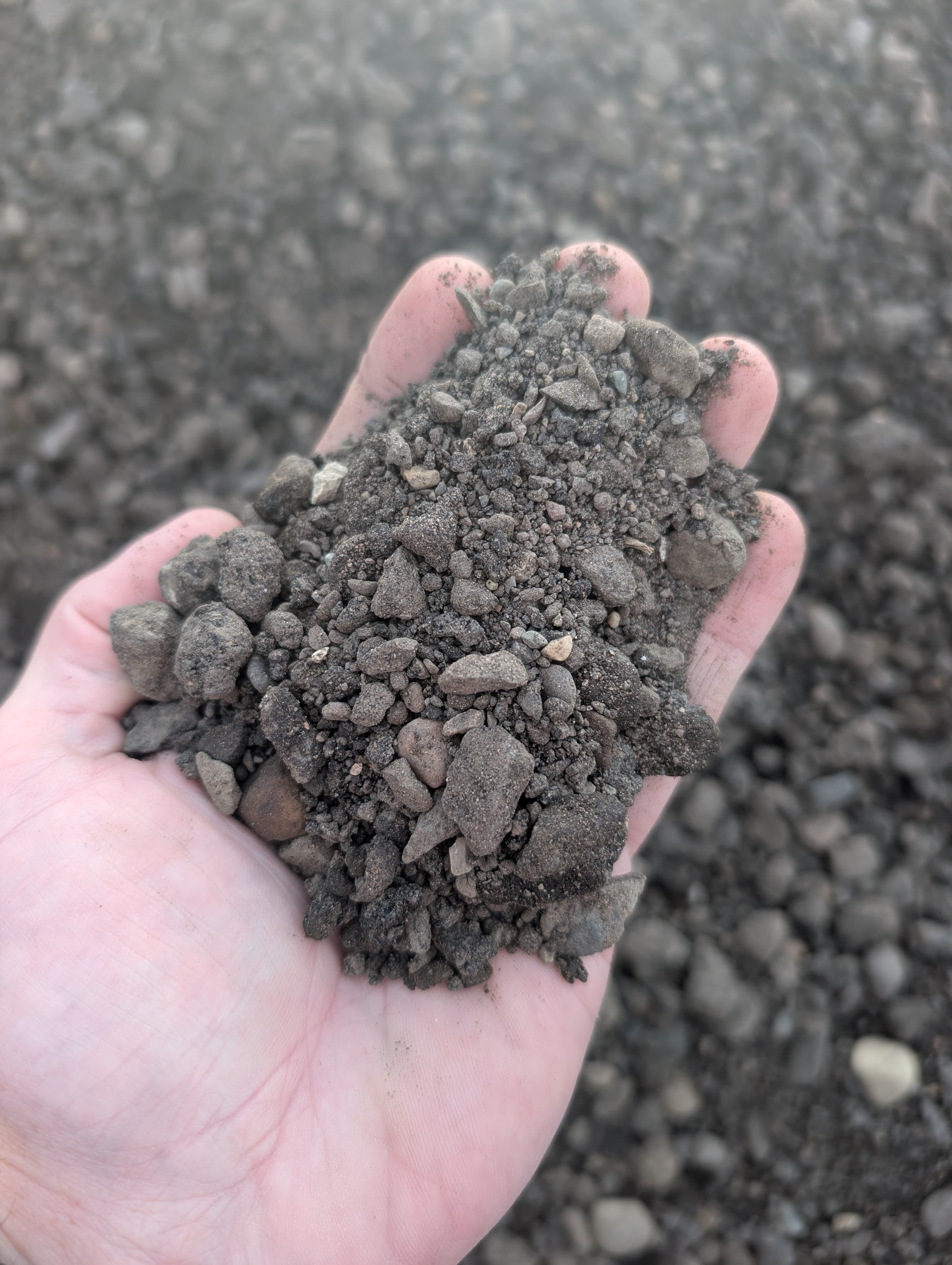
| Striker | A finished surface with a firm pack |
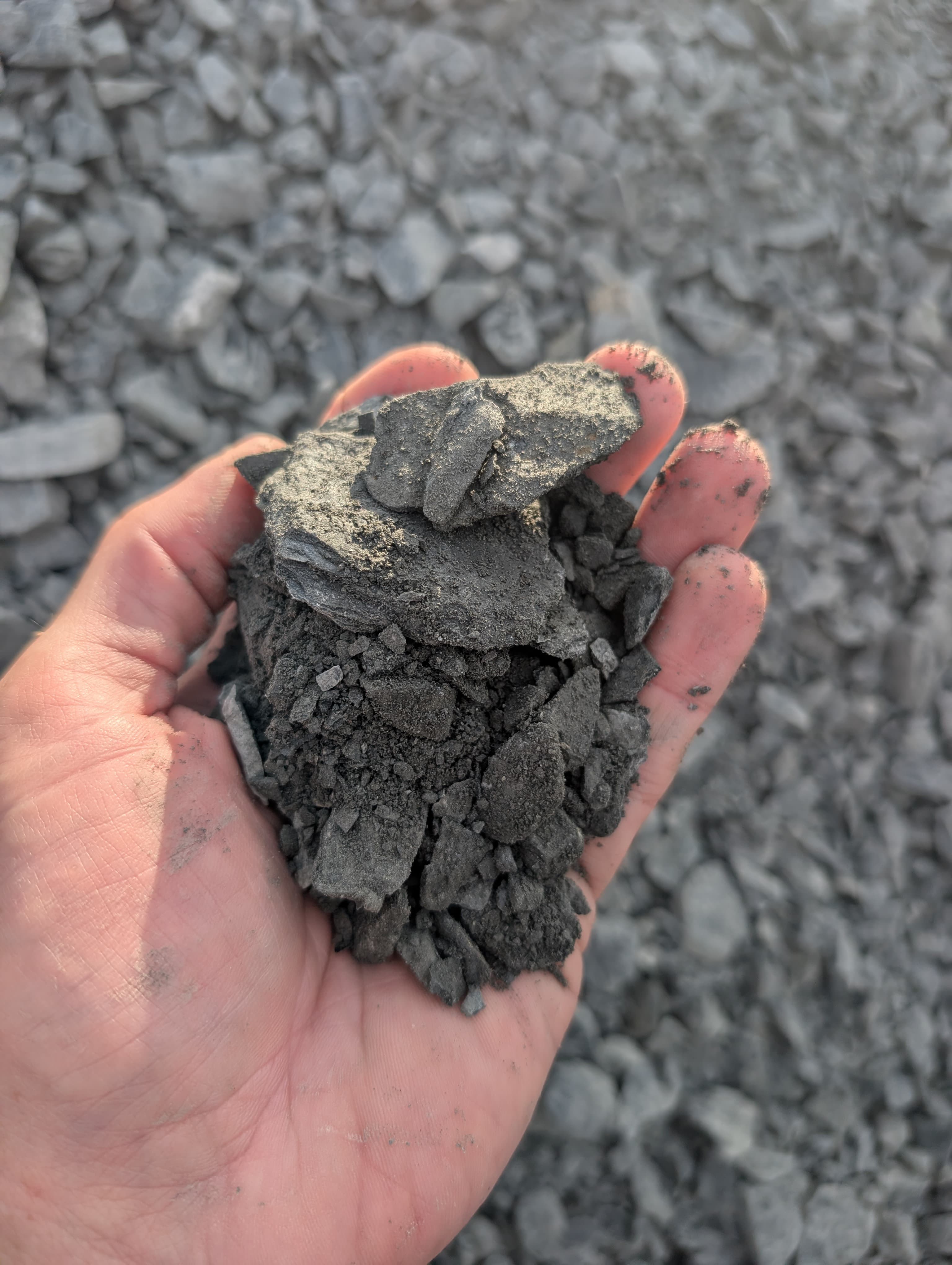
| Recycled Asphalt Base | Driveways, lanes, and yards where a darker surface suits |
Colour and finish are the only real difference between the surface options once the base is right. Pick the one you want to look at.
Grading and Crown
The single highest-value thing you can do for a gravel driveway costs nothing: give it a crown.
The middle should sit slightly higher than the edges, about a quarter inch of fall per foot of width. On a 12 foot driveway that is roughly an inch and a half higher in the centre. Water runs off the sides instead of standing in the wheel tracks, and standing water is what makes ruts and potholes in the first place.
Check that the ditches or the edges can actually take the water away, and that any culvert is clear. A crowned driveway draining into a blocked ditch has not solved anything.
How Much to Order
For a top-up, 2 to 3 inches over the driveway area. Work out the yards with the gravel calculator, and add 10 percent for compaction.
For potholes only, a yard or two goes a long way. That is a pickup load, and quarter and half yard amounts are available at the yard if it is a small job. Check what fits in your vehicle before you come.
Bottom line: square the hole, use minus gravel, overfill and compact, and give the driveway a crown. Then the repair lasts and there are fewer of them next year.