
The Formula
There is one calculation, and it fits on a napkin.
Length in feet, times width in feet, times depth in inches, divided by 324.
That gives you cubic yards. The 324 is not arbitrary: a cubic yard is 27 cubic feet, and 27 times 12 inches is 324. Nothing else is going on.
A 12 by 40 foot driveway at 4 inches deep works out like this:
- 12 times 40 is 480 square feet.
- 480 times 4 inches is 1,920.
- 1,920 divided by 324 is 5.9 cubic yards.
If you would rather not do it by hand, the gravel calculator does the same arithmetic and lets you add several areas at once.
Then Add for Compaction
Driveway gravel is meant to be packed down, and packing it down removes air. Order exactly what you measured and you will finish a little shallower than you planned.
Add about 10 percent. On the 5.9 yard example above, that is 6.5 yards, and the practical order is 6 or 7 depending on whether you would rather have a little left over or a little bare ground.
This applies to minus products and to bulk soil. It does not apply to washed rock or mulch, which do not compact.
How Deep
Depth drives the cost far more than area does, so it is worth getting right rather than guessing high.
| Depth | Use |
|---|---|
| 2 to 3 inches | Refreshing a driveway that is still firm underfoot |
| 4 inches | A new driveway or parking pad on decent ground |
| 4 to 6 inches | A base layer on soft ground, compacted in lifts |
| 6 inches or more | Heavy vehicles, or ground that has never been built up |
Two things people get wrong here. The first is spreading more than about 4 inches in a single pass. The bottom of a deep lift never compacts, so you end up with a firm crust over loose stone. Spread it in two lifts and pack each one.
The second is treating depth as the fix for a soft driveway. If gravel keeps disappearing into the ground, the problem is underneath it, and more gravel just gives the ground more to swallow. That is a separate job, covered in how to fix a muddy driveway.
What a Real Driveway Comes To
Rough sizes we see week to week, so you have something to sanity-check your own number against:
- A single car driveway getting a surface refresh: 4 to 8 cubic yards.
- A double driveway or a parking pad refresh: 8 to 15 cubic yards.
- A new driveway built from bare ground: often 15 to 30 cubic yards, because the base layer is deeper than the surface layer and you are paying for both.
- A rural lane: measure it. Length is where the yards hide, and a 300 foot lane is a different order of magnitude from a driveway.
Which Gravel to Measure For
The amount is the same whichever product you pick, but the product matters for whether the job works.
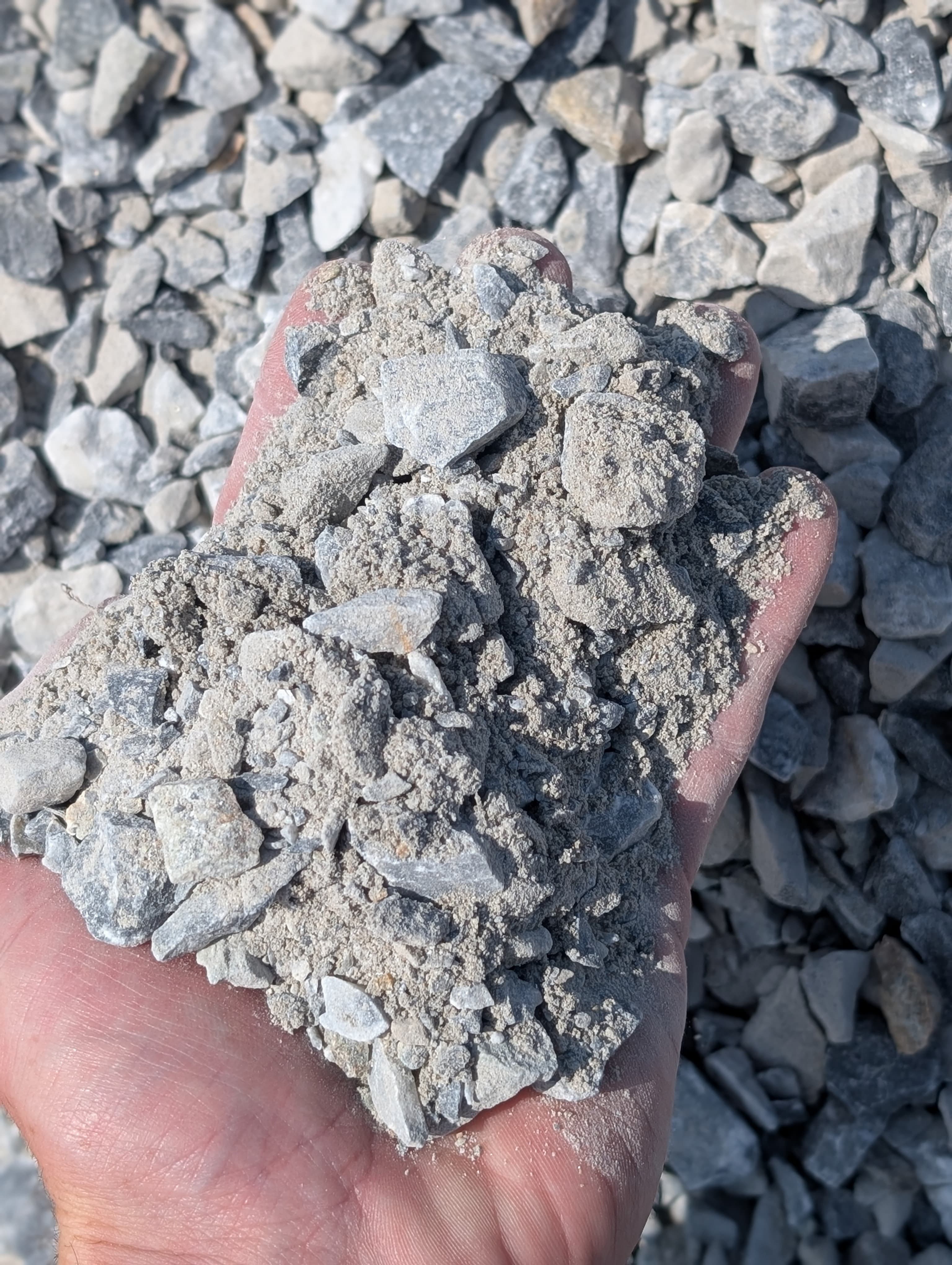
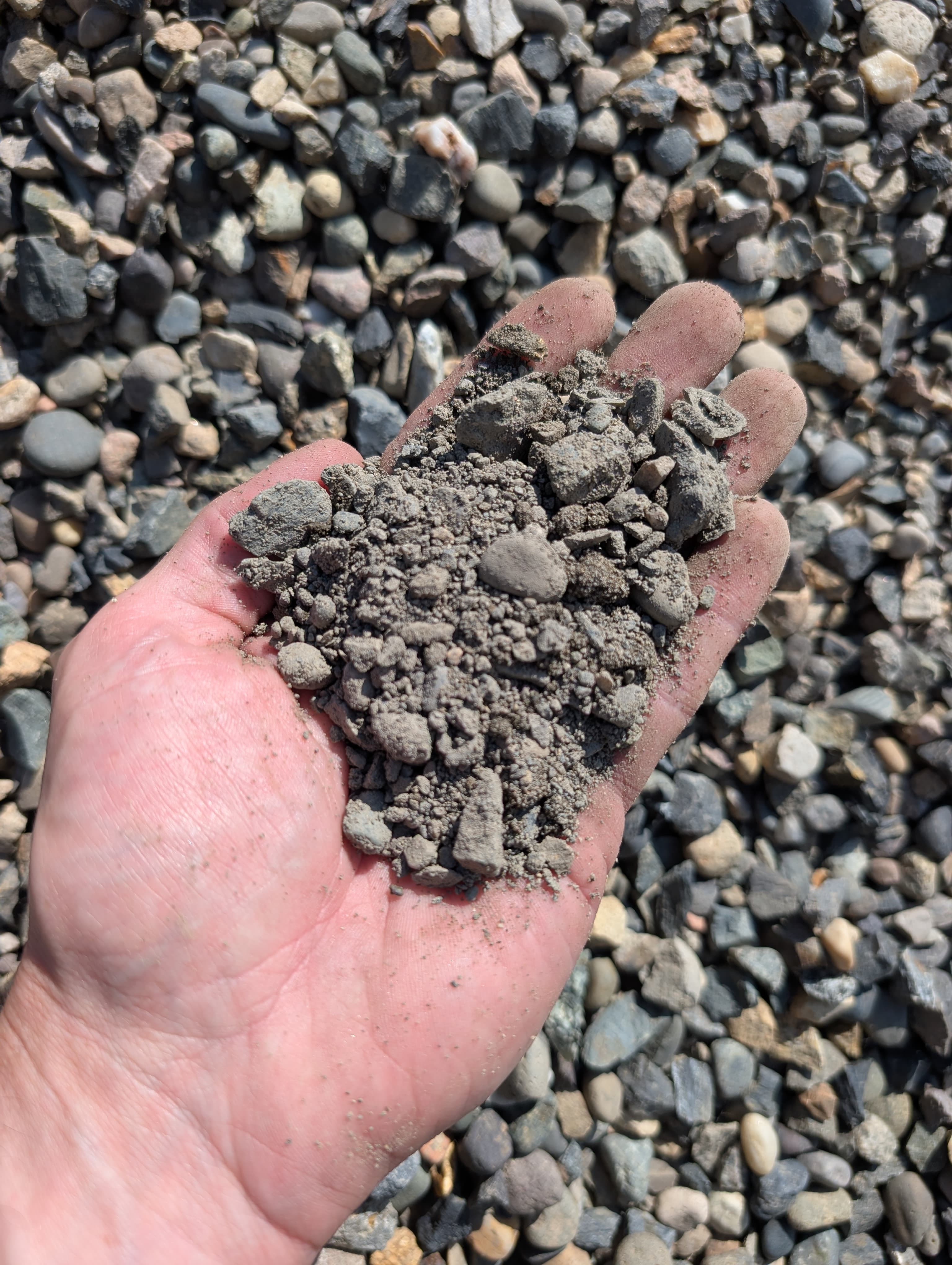
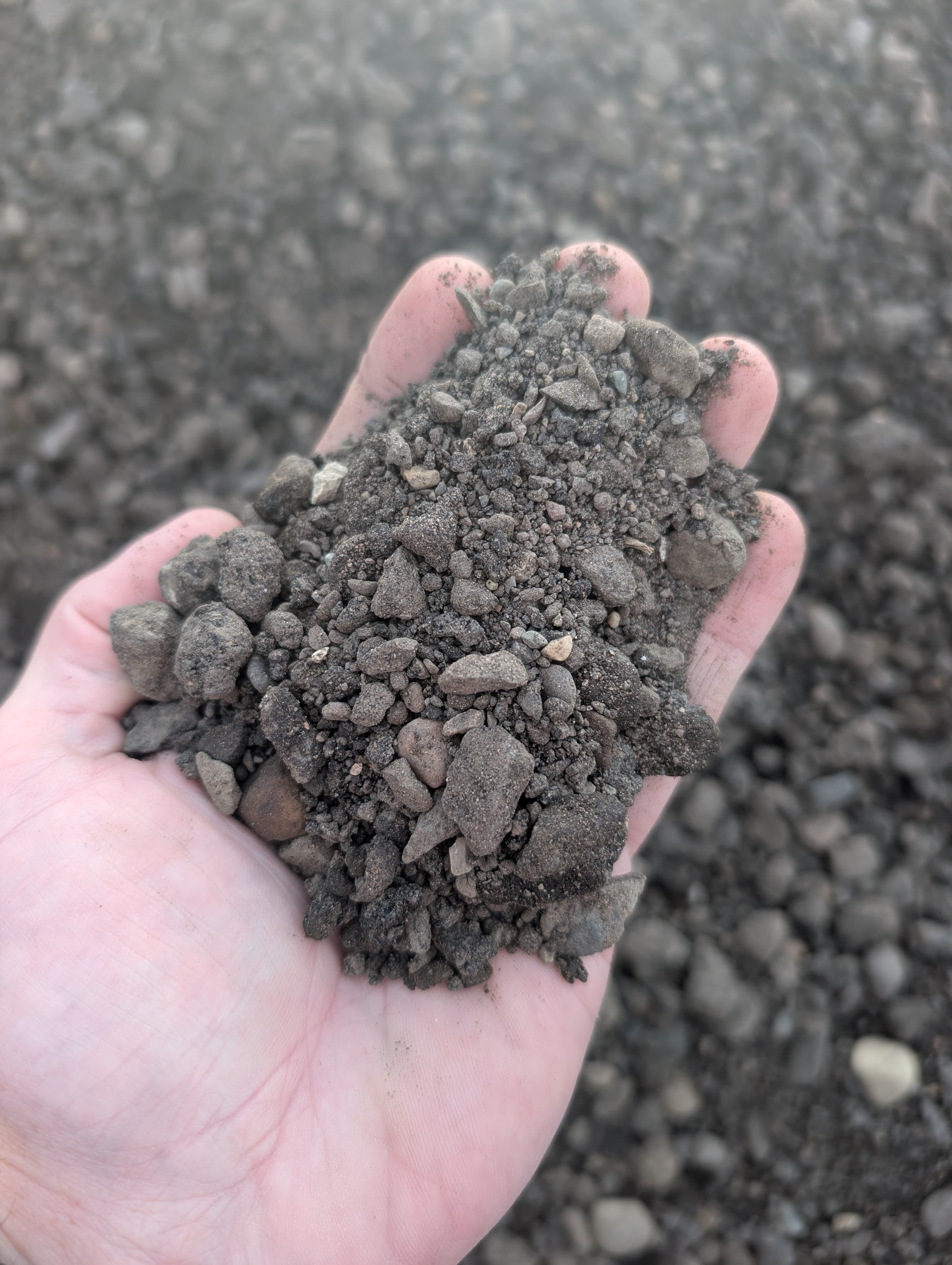
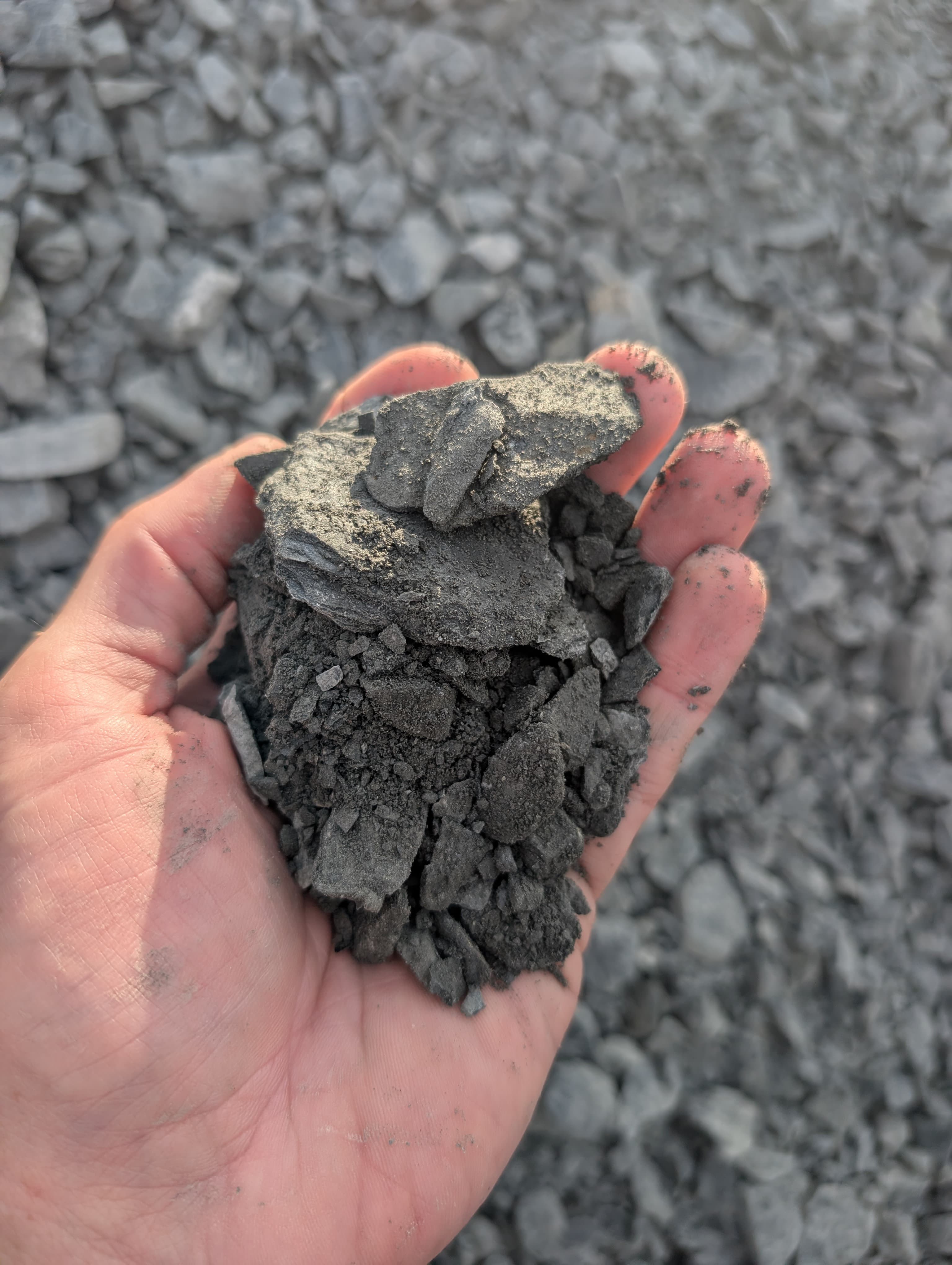
You want a minus product for anything you drive on. Minus means the material includes everything down to dust, and those fines are what let the stone lock together and stay put. Road Crush 3/4 minus is the usual base. Limestone driveway gravel and Striker are the usual finished surfaces.
You do not want washed or clear rock on a driveway. It has had the fines removed so that it drains, which is exactly why it never firms up under a tire.
Getting the Amount to the Yard
Once you have a number, the estimator on our home page shows the complete price for it, including delivery and tax, before you commit to anything.
If you are picking it up yourself, check what fits in your vehicle first. Gravel runs out of weight long before it runs out of space, and a half ton pickup is safely carrying about 1 cubic yard of it.
Bottom line: square feet, times depth in inches, divided by 324, plus 10 percent. That is the order.