Start With the Depth
Mulch is sold by the cubic yard, but the number you need comes from the depth, and the depth comes from what the bed is doing.
- A bare bed, or one with a weed problem: 3 inches. This is the working number for most projects. Under 2 inches, weeds come straight through. Over 4, water and air struggle to reach the roots.
- A bed that still has mulch on it: 1 to 2 inches. You are restoring colour and topping up what has broken down, not starting again.
- A sloped or uneven bed: 3 inches, and expect to buy a little more. Depth is never as even as the plan says.
Two rules that matter more than the depth. Keep mulch off tree trunks and plant stems, because a mound against bark holds moisture where you do not want it. And keep bark and wood mulch away from siding, fire pits, and anything else that throws sparks.
What a Cubic Yard Covers
| Depth | One cubic yard covers |
|---|---|
| 1 inch | 324 sq ft |
| 2 inches | 162 sq ft |
| 3 inches | 108 sq ft |
| 4 inches | 81 sq ft |
The formula, for any shape: square feet, times depth in inches, divided by 324. The mulch calculator does it for as many beds as you have and totals them.
Real Projects, Real Numbers
All at 3 inches deep.
| Project | Area | Mulch |
|---|---|---|
| A narrow bed across the front of a house, 3 by 30 ft | 90 sq ft | 0.8 yd³ |
| Six tree rings, 5 ft across each | about 120 sq ft | 1.1 yd³ |
| A 500 sq ft garden bed | 500 sq ft | 4.6 yd³ |
| A fence-line bed, 3 by 80 ft | 240 sq ft | 2.2 yd³ |
| A property with 1,600 sq ft of beds | 1,600 sq ft | 14.8 yd³ |
The last row is the one where a bale starts to make sense. More on that below.
No Compaction Allowance
Gravel and bulk soil both need a little extra ordered, because they settle. Mulch does not compact meaningfully, so it does not get an allowance, and a padded number here is just mulch you did not need.
Round up to the next quarter yard and stop there. Small quantities are available for pickup, so mulching one bed does not mean buying a truckload.
Measuring an Awkward Bed
Beds are rarely rectangles, and precision is not the point. You are buying by the quarter yard, not the litre.
- Curved bed: break it into two or three rectangles in your head, measure those, and add them up. Round generously at the curves.
- Circle or tree ring: radius times radius times 3.14. A 5 foot ring is about 20 square feet.
- Long border: average width times length. Pace it if you have to.
Subtract the hard things: a patio, steps, a shed pad, a path through the bed. Do not bother subtracting plants. A shrub takes up almost no ground area at mulch depth, and the mulch has to go around it anyway. The exception is a large established evergreen whose skirt sits on the ground, which genuinely takes a bite out of the area.
Which Mulch
Keep this part quick. The full comparison is in why choose cedar mulch.
| Product | The decision point |
|---|---|
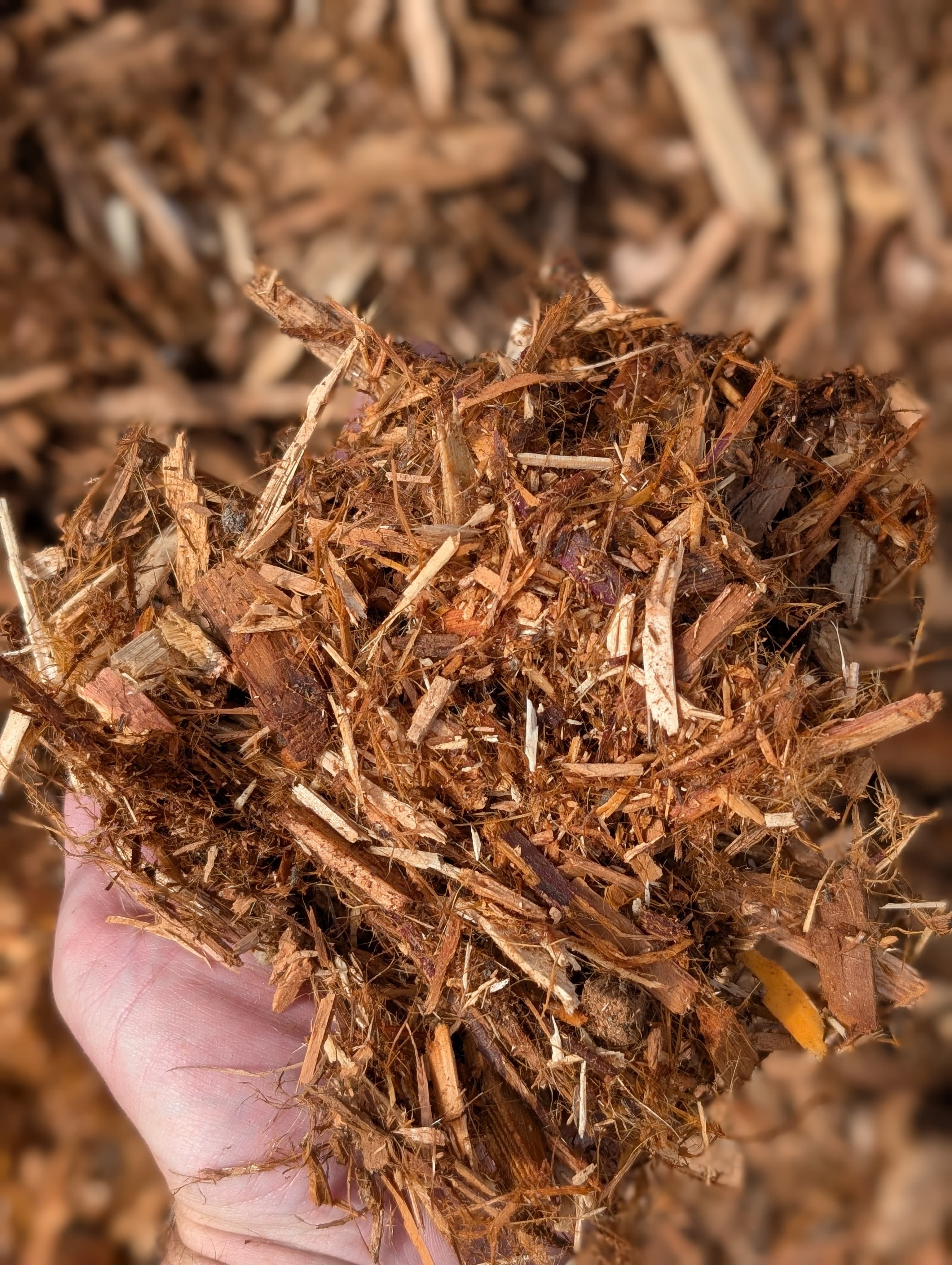
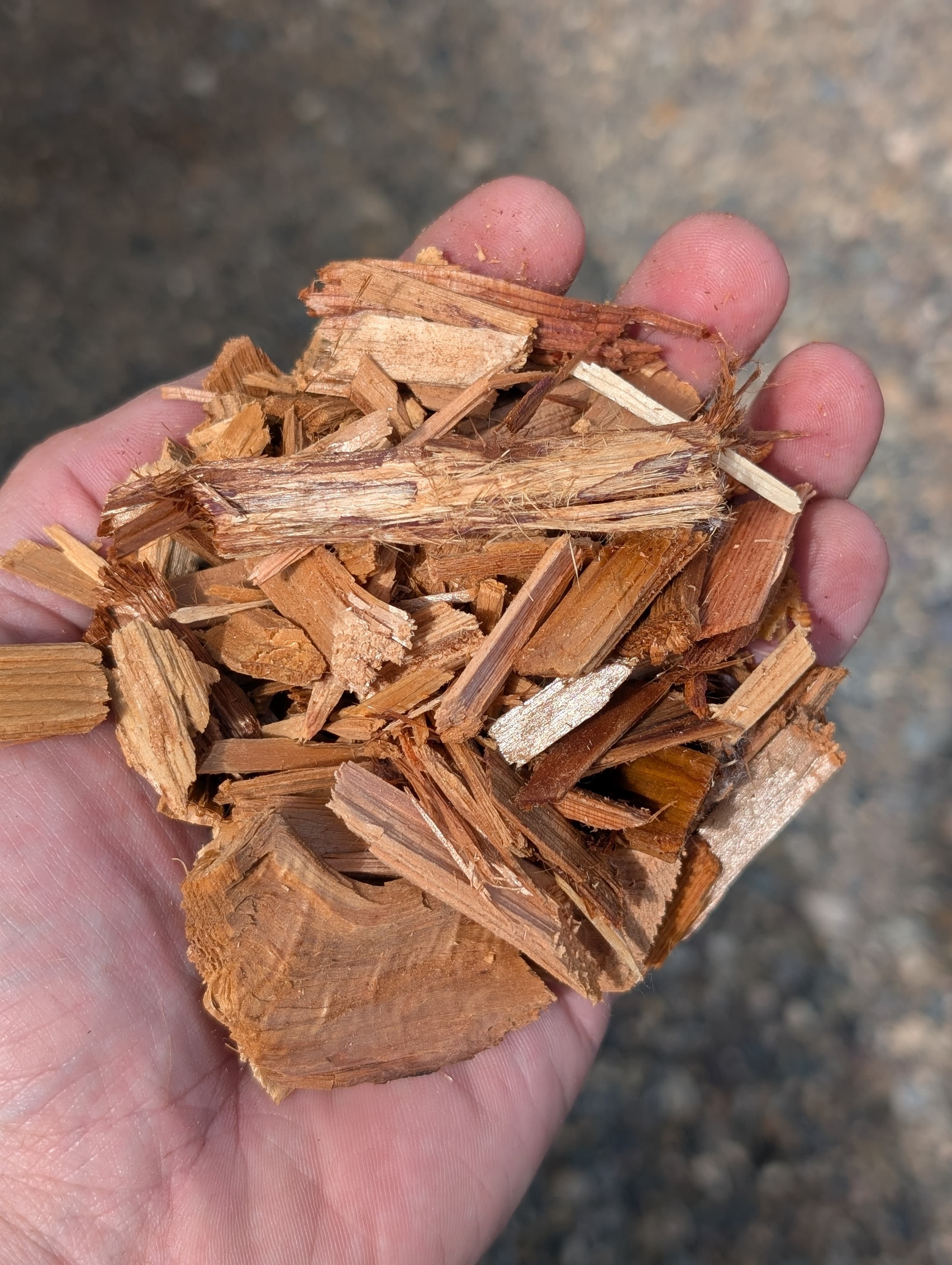
| Western Red Cedar Mulch | Finer texture, breaks down slowest of the wood mulches |
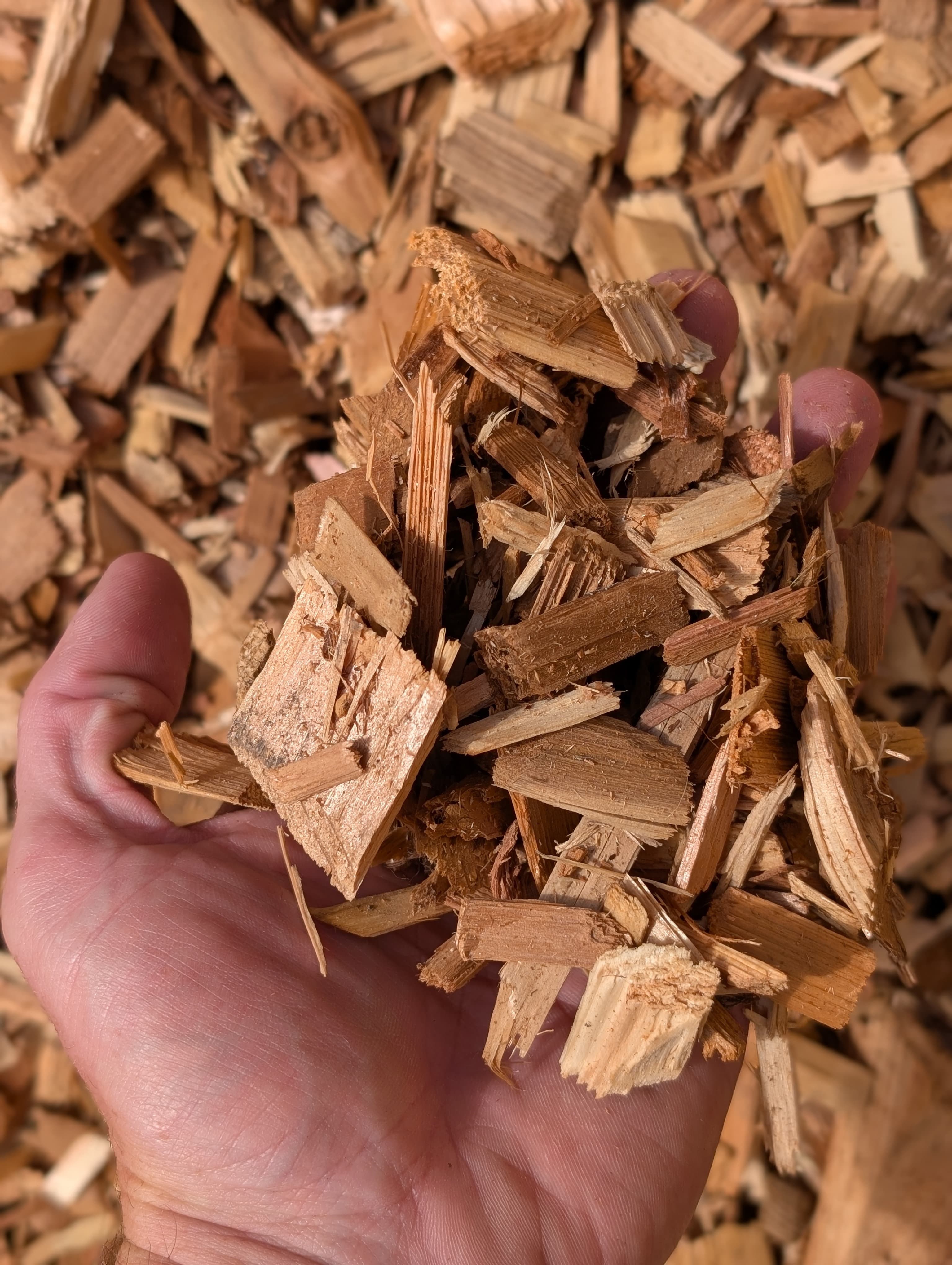
| Western Red Cedar Chips | Larger pieces, more open and rustic |
| Douglas Fir Bark Mulch | Darker look, shorter life than cedar |
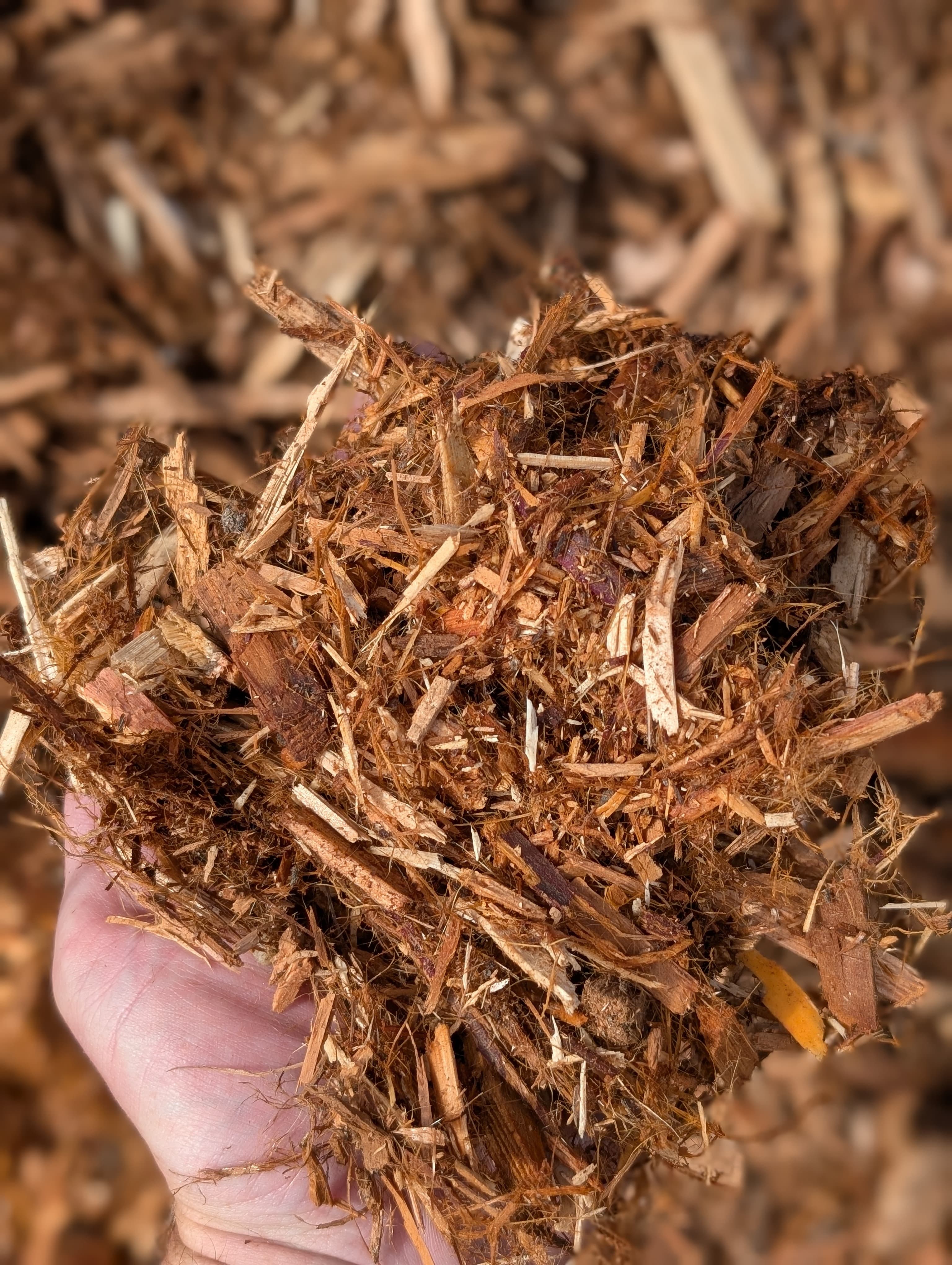
| Shredded Bark | Strands knit together, so it holds a slope |
| Cedar Chip Bale | One compressed 4.8 yd³ quantity for large projects |
Bags, Bulk, or a Bale
The dividing line is about handling, not just price. A cubic yard is 27 cubic feet, which is a lot of bags to carry, open, and put in the recycling.
Bags suit one small area. A single tree ring, a planter, a bed by the door. Nothing to shovel and nothing left over.
Bulk by the cubic yard suits everything from a couple of beds upward. It arrives as a pile and you move it with a wheelbarrow, which is the honest trade-off. It is also how you buy 2.6 yards instead of choosing between two and three.
A compressed bale suits a large project that can use the whole thing. The Cedar Chip Bale holds 4.8 cubic yards, enough for roughly 500 square feet at 3 inches. Shredded Bark comes as a bale of about 5.5 cubic yards. A bale is one complete quantity, so it only makes sense if your project is that size or larger. If you need less than a bale, buy loose by the yard.
Pickup or delivery follows from the amount and the vehicle. Mulch is much lighter than gravel or soil per yard, so a pickup truck goes further with it, but it is bulky and it will need a tarp. What fits in your vehicle has the real capacities, and delivered or picked up has the comparison.
The Annual Top-Up
Most beds want 1 to 2 inches once a year, usually in spring. That is between a third and two thirds of what a bare bed took, so a property that needed 6 yards to start needs 2 or 3 a year to keep.
If the mulch has gone grey but the depth is still there, you may only need an inch. Rake it first and see what you have before you order.
One Place Mulch Does Not Go
Bark, chips, and shredded mulch are combustible, and so is rubber mulch. FireSmart guidance for the immediate zone around a building, roughly the first 1.5 metres, is non-combustible ground cover only. The same goes for the area around a fire pit.
Rock does that job. Which landscape rock is right for your yard covers the options, and gravel around a fire pit covers that specific area.
Calculate Your Mulch Load
Measure the beds, total them in the mulch calculator, and take the number to the estimator for the complete price. If the total lands near 5 cubic yards, compare it against a bale before you order, because that is exactly where the two ways of buying cross over.
Bottom line: 3 inches on bare beds, 1 to 2 inches on top-ups, square feet times inches divided by 324, no compaction allowance, and a bale only if the project can use all of it.