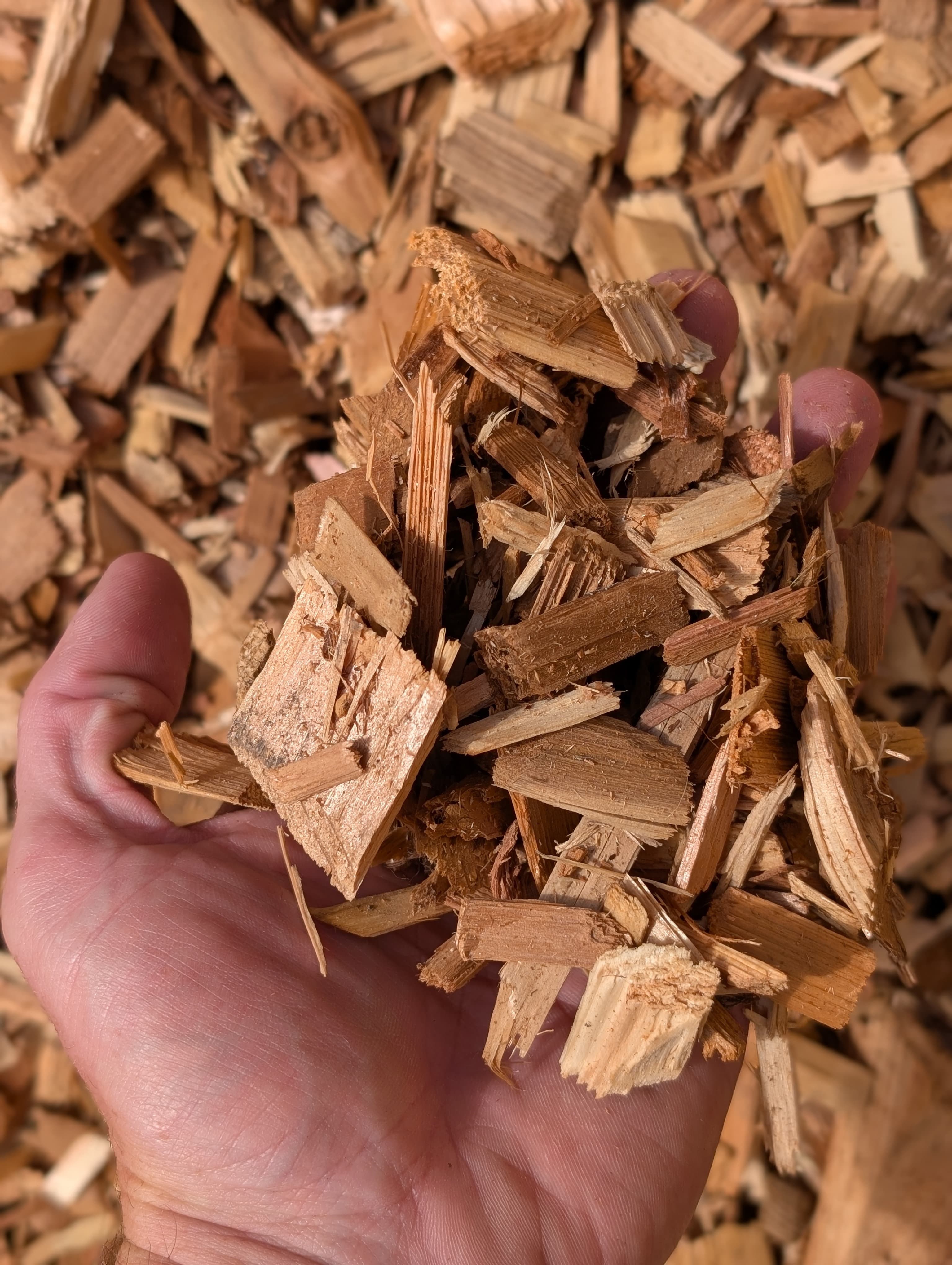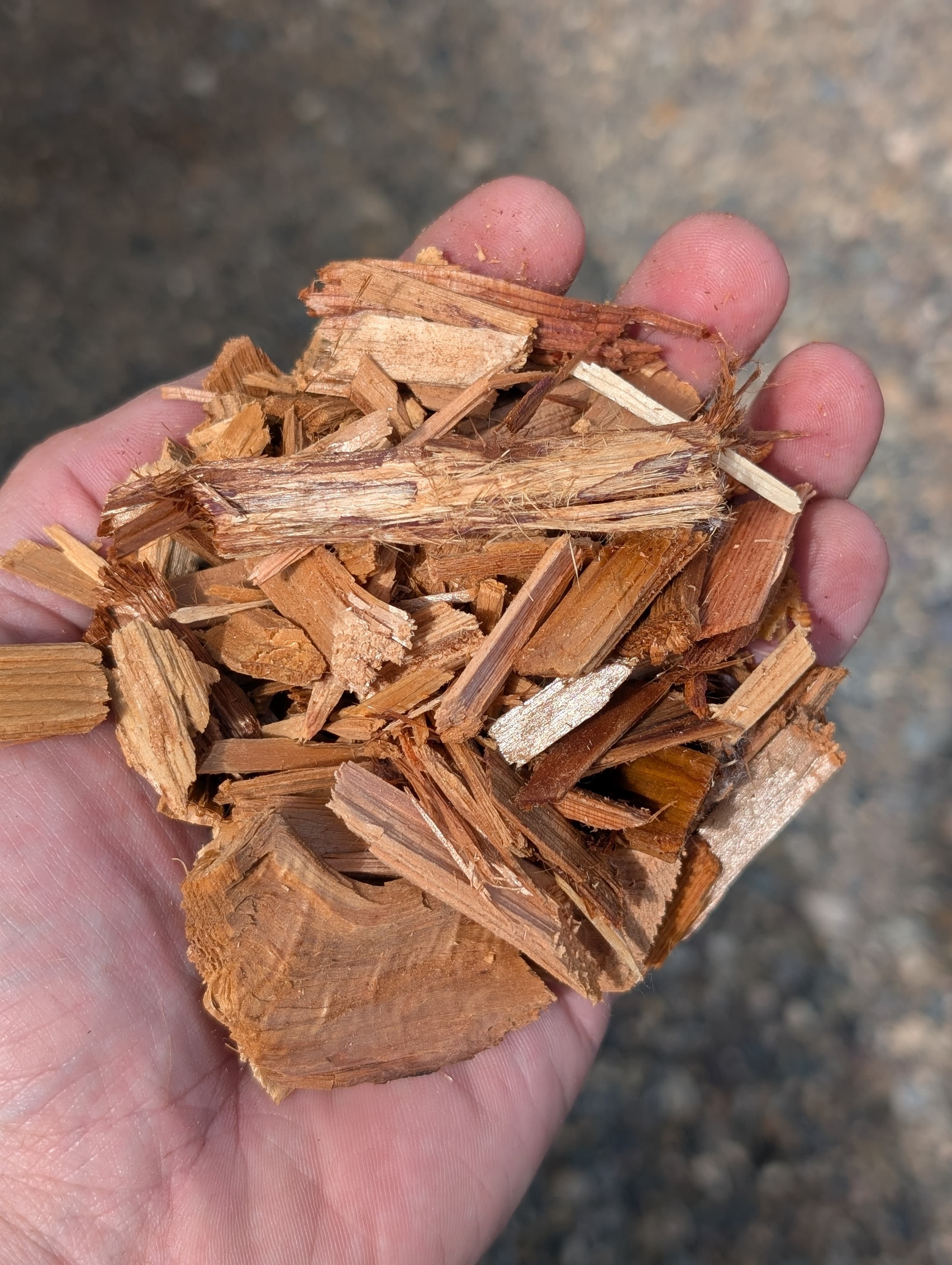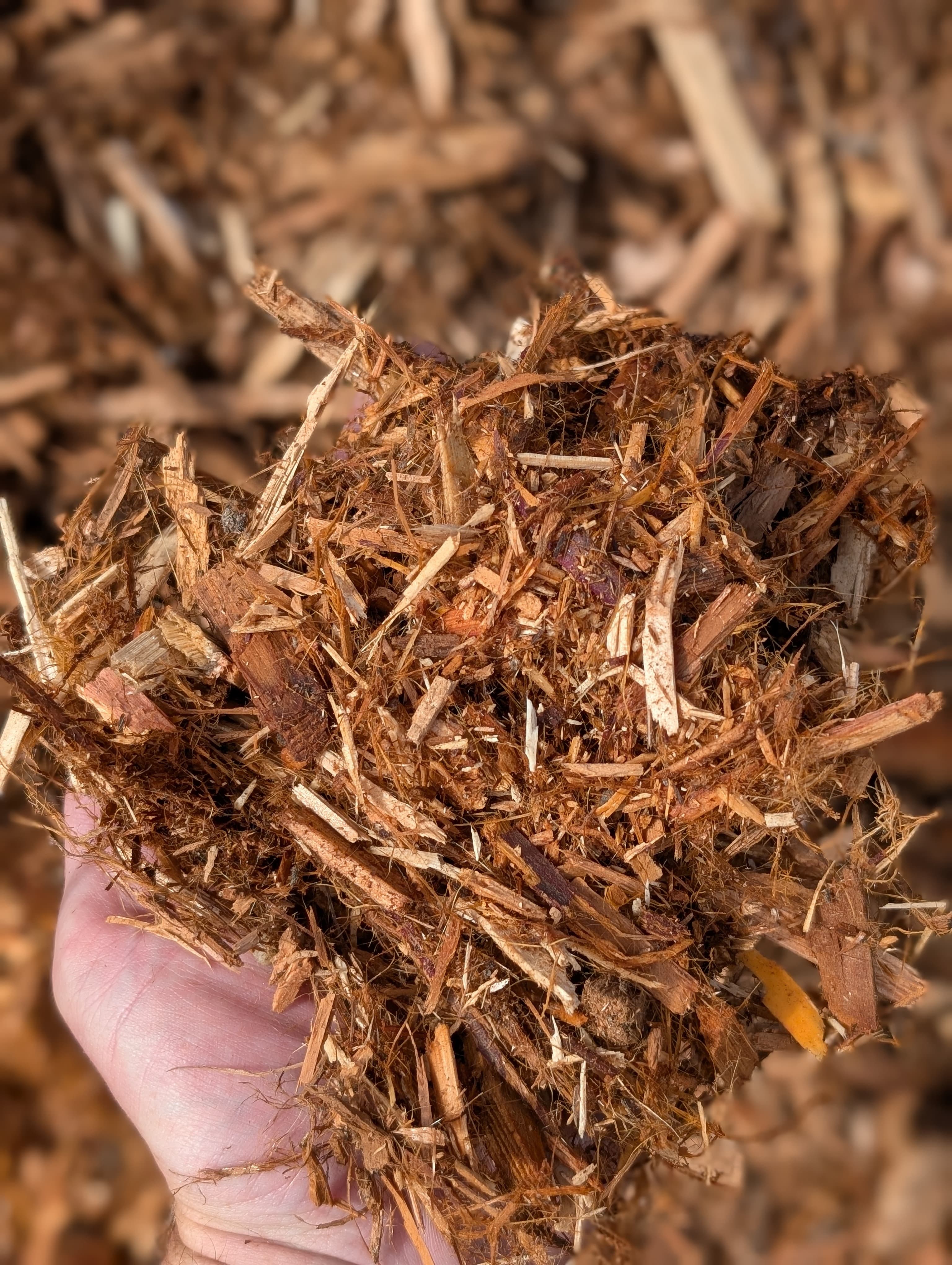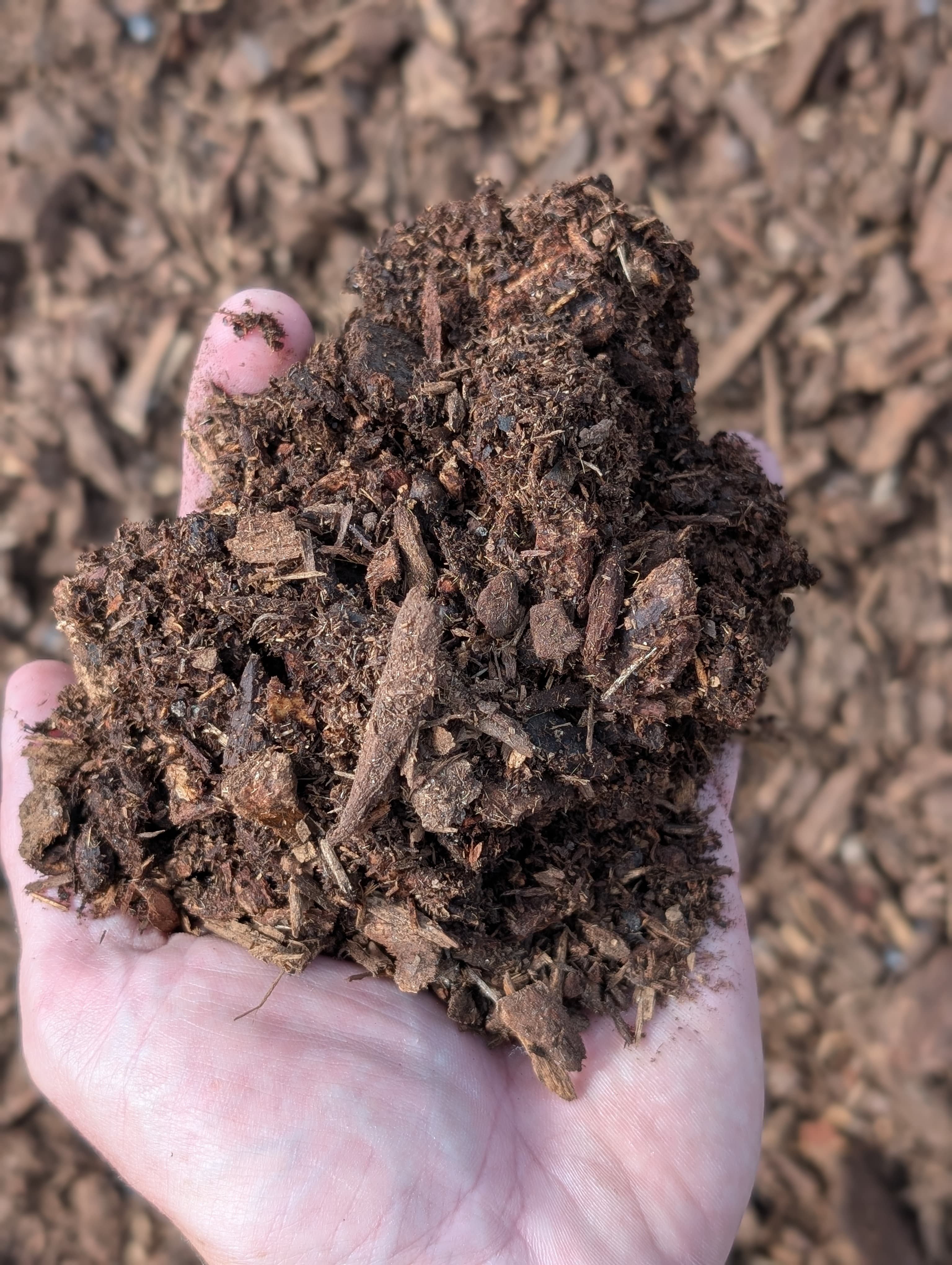
What Makes Cedar Different
Western red cedar contains natural oils that make the wood resistant to rot. That is the same property that makes it the standard choice for fence boards and deck framing in this province, and it carries over when the wood is chipped for mulch.
In a garden bed that means one practical thing: cedar breaks down more slowly than most other wood mulches. You top it up less often. The scent is a by-product of the same oils, and it fades over the first few weeks.
One honest caveat, because it gets oversold: cedar oil is often described as an insect repellent. Cedar mulch is not an insecticide and should not be bought as pest control. Buy it because it lasts, looks good, and stays where you put it.
What Any Mulch Does For You
Whichever material you choose, a proper layer earns its keep:
- Holds moisture in the soil through the dry stretch of a Prince George summer, so beds need watering less often
- Suppresses weeds by keeping light off the soil surface
- Moderates soil temperature, which established shrubs and perennials appreciate on both ends of the season
- Feeds the soil slowly as the wood breaks down, which is the one advantage wood mulch has over rock
How Deep, and How Much
Two to three inches is the target. Thinner than two and weeds come through. Thicker than four and you can starve roots of air and hold too much water against them.
One cubic yard covers about 108 square feet at 3 inches deep, or about 162 square feet at 2 inches.
The formula, if you would rather do it yourself: square feet times depth in inches, divided by 324, equals cubic yards.
Two rules that matter more than the depth:
- Keep mulch off the trunk. Piling mulch against bark holds moisture on it and invites rot. Leave a few inches of clear ground around trunks and stems — no mulch volcanoes.
- Do not bury the crowns of perennials. Mulch goes between plants, not over them.
Cedar, Fir, or Rubber
| Material | Look | Longevity | Best for |
|---|---|---|---|
| Western Red Cedar Mulch | Warm reddish-brown, fine texture | Longest of the wood mulches | Garden beds, around shrubs and trees |
| Western Red Cedar Chips | Chunkier, more rustic | Long | Beds, tree rings, loose pathways |
| Douglas Fir Bark Mulch | Dark brown, richer contrast | Shorter than cedar | Beds where a dark background matters most |
| Shredded Bark | Stringy, knits together | Moderate | Sloped beds, where mulch tends to wash |
| Rubber Nuggets | Uniform, colour-fast | Effectively permanent | Play areas and beds you never want to redo |
Shredded bark deserves a note: because the strands knit together, it holds a slope far better than chips, which tend to migrate downhill. If your bed is on a grade, that matters more than the species.
Buying by the Bale
For large beds, cedar is also sold compressed. One Cedar Chip Bale holds 4.8 cubic yards — enough for roughly 500 square feet at 3 inches. If your project is that size, a bale is usually the better way to buy it. If you need less than a full bale, order loose by the yard instead.
The One Place Wood Mulch Does Not Belong
Combustible mulch against a house is a wildfire risk, and in this part of BC that is not a theoretical concern.
FireSmart guidance for the immediate zone — roughly the first 1.5 metres out from the walls of the building — is non-combustible ground cover only. Bark, chips, and shredded mulch all belong outside that band. Rubber mulch is combustible too, and does not belong there either.
Inside that first 1.5 metres, use rock:
The same applies around fire pits and under anything that throws sparks. Everywhere further out from the building, mulch away.
Getting It Home
All of our mulches are sold by the cubic yard, with pickup at the River Road yard or delivery to your driveway. Small orders are welcome — you do not have to buy a truckload to mulch one bed. Price your exact quantity on any product page.
Bottom line: cedar for beds you would rather not redo every year, fir bark when you want the darkest look for less, shredded bark on slopes — and rock, not mulch, in the first metre and a half around the house.