What This Guide Covers
This is about the seating and landscape area around a fire pit: the surface your chairs sit on and the ground you walk on.
It is not about what goes inside the pit or the burn chamber. That depends on the design of your pit, the manufacturer's instructions, and the fire requirements that apply where you live, and those instructions win over anything an article says.
Start With the Finished Picture
Most people asking this question want the same five things:
- Chairs that sit level and stay level
- No mud, and nothing tracked inside
- A defined area, so the fire pit looks placed rather than parked
- A material that suits the house and the rest of the yard
- Enough room to walk around without stepping into a flower bed
There is no single best fire pit gravel. There is a fork in the road, and once you have taken it the choice is mostly colour.
The Decision That Actually Matters
Do you want a loose rock look, or a firmer surface?
Loose landscape rock shows the stone. You see the individual pieces, the colour reads clearly, and it looks like a landscaped area rather than a driveway. Chair legs sit down into it a little, and it moves underfoot.
Compactable driveway gravel contains fines that let the layer tighten when it is packed. Chairs, benches, and small tables sit noticeably more stable, and it handles frequent foot traffic better. It looks flatter, and more like a surface than like stone.
If you regularly put a table out there, or anyone in the household is unsteady on loose footing, take the firmer option. If the fire pit area is mostly about how it looks from the deck, take the loose one.
The Four That Work
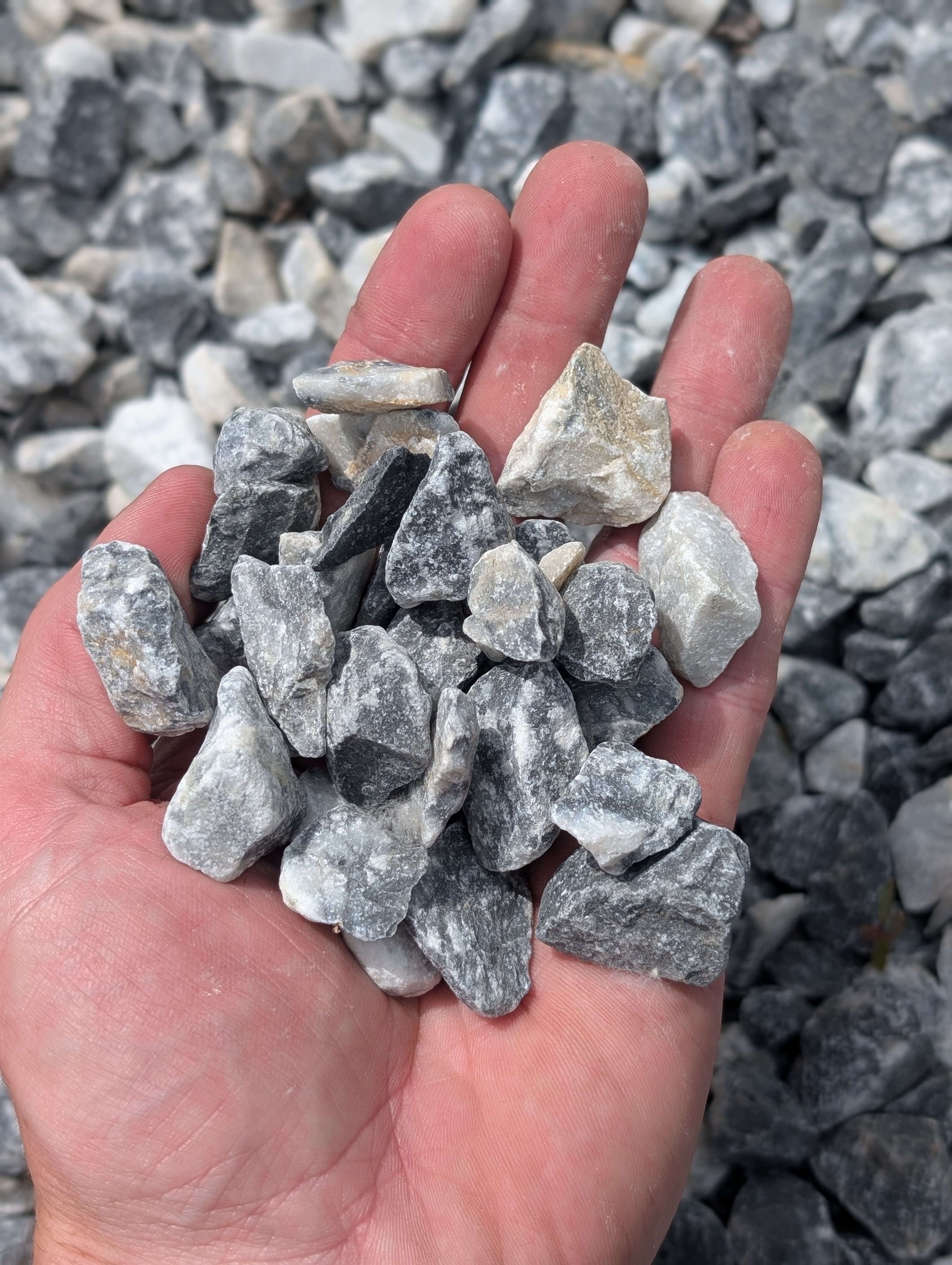
Limestone Landscape Rock 7/8 inch
The one to look at first if you want the area to read as deliberately landscaped.
Light grey to near-white, with visible stone texture, and it defines a space better than anything else on this list. It contrasts sharply with dark furniture, dark edging, and the surrounding soil, which is exactly what makes a fire pit area look finished rather than worn.
It is landscape rock, not a compacting driveway product, so it stays open and textured underfoot. Starting depth: about 3 inches.
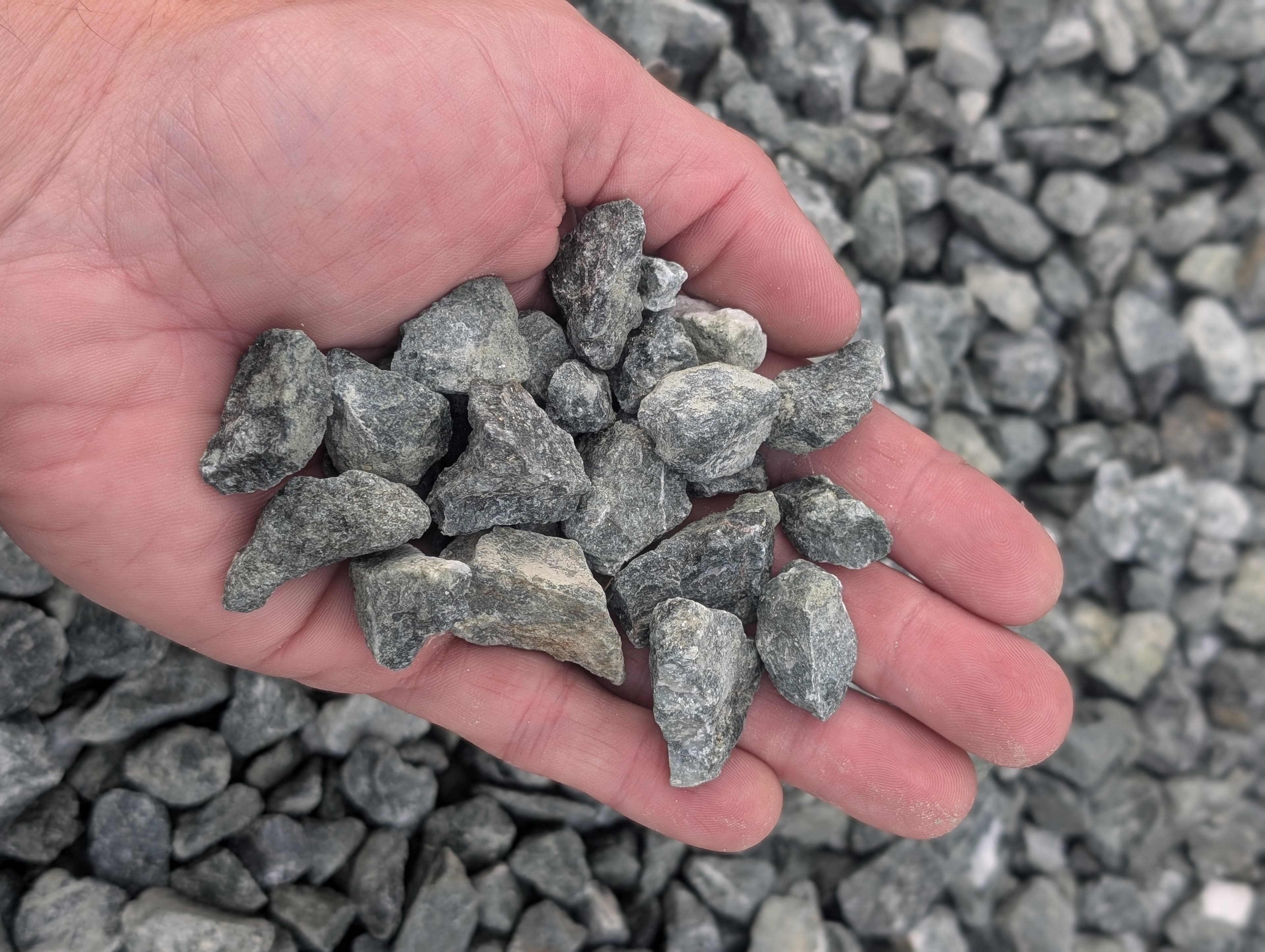
Blue Landscape Rock 3/4 inch
An appearance-led choice. Blue-grey with a subtle green tinge, angular, and a smaller stone than the bold 2½ inch landscape rocks.
It reads as natural against most houses and planting, and it gives you a decorative surface without limestone's brightness. Worth looking at wet as well as dry before you commit, because the colour of any blue-grey rock changes noticeably in the rain. Starting depth: about 3 inches.
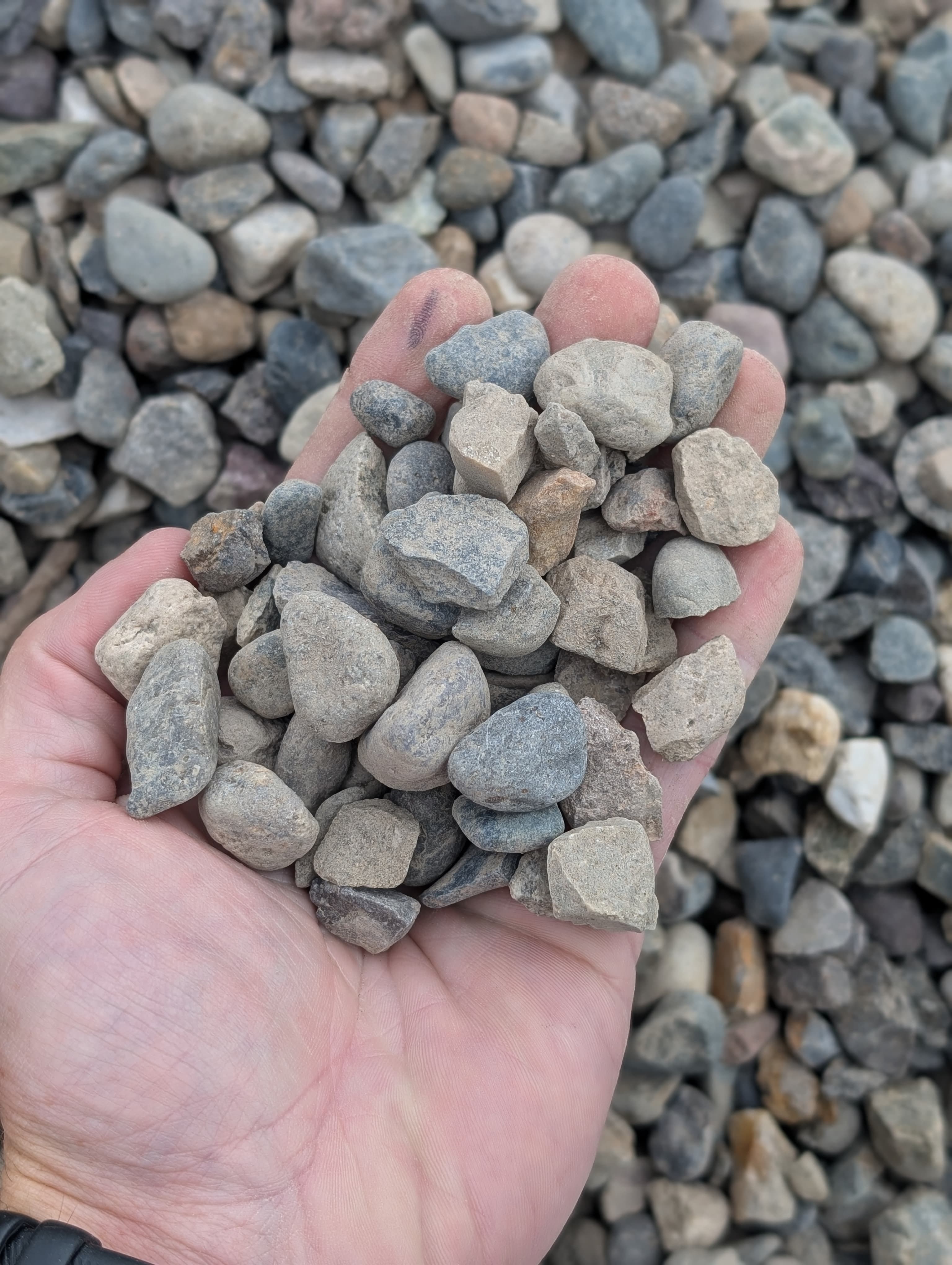
Drain Rock 3/4 inch
Clean washed stone, neutral and practical, and water goes straight through it. If the ground around your fire pit holds water, this is the one that keeps the seating area usable after rain.
It is completely clear stone, so it does not pack at all. Chairs settle and shift in it more than in anything else here, and the deeper it is laid the more they do. The product page suggests about 4 inches for drainage work; around chairs, keep it nearer 3, and put a firm prepared base under it.
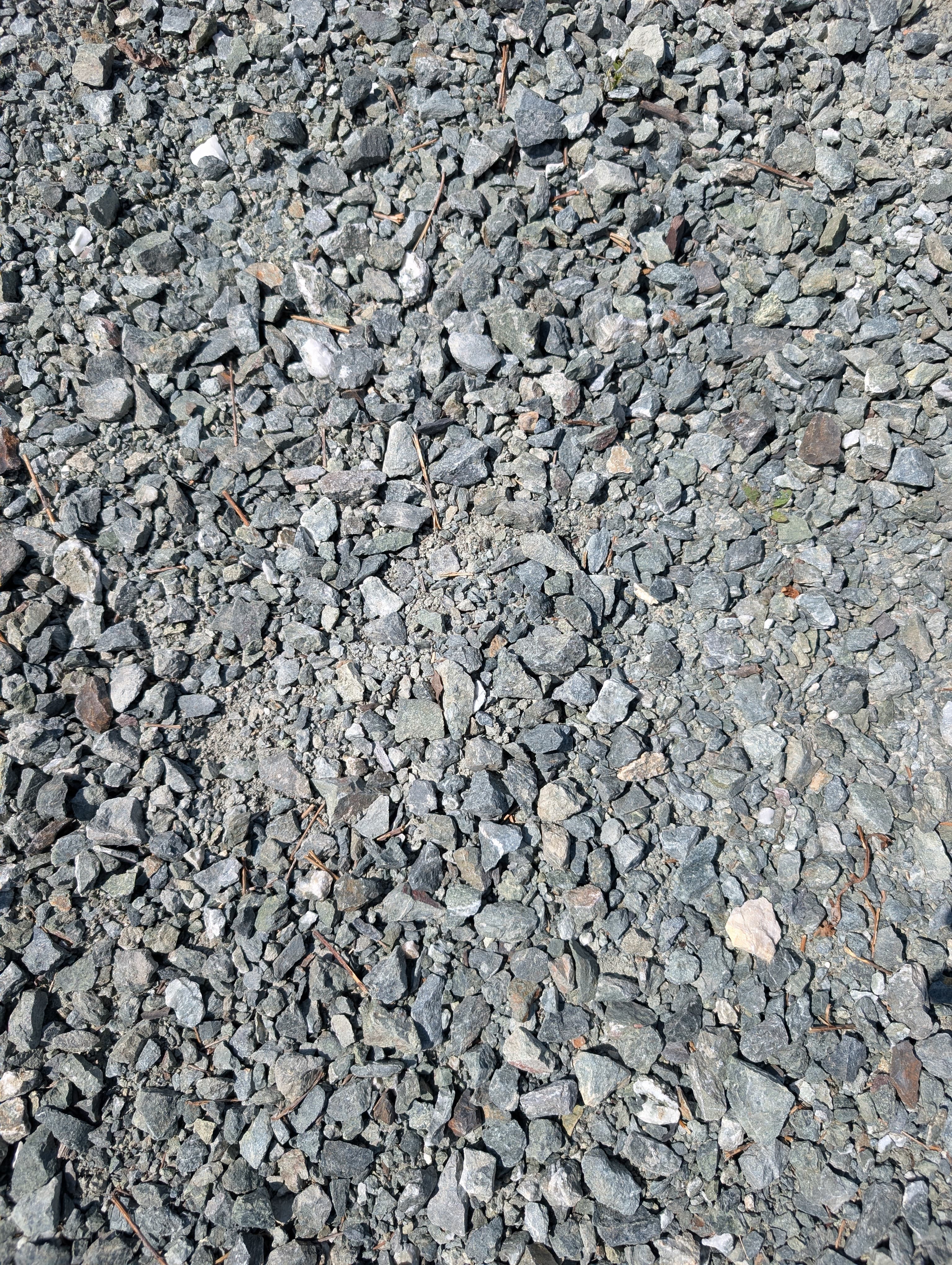
Decorative driveway gravel
If you want the firmest seating surface, use a driveway gravel with a finish you like. Green/Blue Driveway, Limestone Driveway Gravel 1/2 inch minus, and Striker Driveway Gravel all have colour worth looking at, and all contain the fines that let a surface tighten under a compactor.
Expect a flatter, more finished-looking area than loose rock gives you. Starting depth: 3 to 4 inches, compacted.
What We Would Not Put There
Road Crush and Recycled Asphalt Base will both build you a firm, stable surface, and both are cheaper than the decorative options. They are the right answer for a driveway and a fine base layer under something else.
As the finished surface around a fire pit, they look like what they are.
Road Crush and RAP make a firm surface, but they make the area look more like a parking space than a place to sit.
If budget is the reason you were considering them, use one as the base and put 2 inches of the decorative material on top. You get the firm surface and the finish, and most of the depth is the cheap material.
Side by Side
| Material | Choose it for | Surface feel | Look |
|---|---|---|---|
| Limestone 7/8 inch | A bright, clearly landscaped area | Loose and textured | Light grey to near-white |
| Blue 3/4 inch | Natural decorative colour | Loose | Blue-grey with a green tinge |
| Drain Rock 3/4 inch | Drainage and clean washed stone | Loosest of the four | Neutral natural rock |
| Decorative driveway gravel | The firmest seating area | Compacts firm | Depends on the product |
| Road Crush | Base material, not a finish | Firm when compacted | Utilitarian |
| Recycled Asphalt Base | Base or driveway, not a finish | Firm | Dark and road-like |
Picking by Colour
- Light and bright: Limestone Landscape Rock 7/8 inch
- Blue-grey and natural: Blue Landscape Rock 3/4 inch
- Neutral and washed: Drain Rock 3/4 inch
- Firm, with the colour of your choice: a decorative driveway gravel
Two things worth knowing. Light rock shows ash and charcoal more than dark rock does, which matters if the pit gets used every weekend. And every one of these looks different wet, so judge the colour on a rainy day if you can.
Worth a mention: pea gravel is comfortable underfoot and popular for fire pit areas elsewhere, but it is rounded, so chair legs sink into it steadily. The 5/16 inch fractured pea gravel is the angular version and holds a chair far better.
How Big Should the Area Be?
Work out the fire pit layout first, then measure for material. Not the other way round.
The required clear distance around a pit depends on the pit itself and on the rules where you live: the manufacturer's instructions for a manufactured pit, plus your local requirements and any fire restrictions in effect. Those set the size of the area.
Once you know the shape you need, the landscape rock calculator turns it into cubic yards. For a round area, the shortcut is radius times radius times 3.14 for the square footage. A 12 foot circle is about 113 square feet, which at 3 inches deep is roughly 1 cubic yard.
Do You Need Fabric Underneath?
Under loose decorative rock, yes. Rock laid straight onto soil works its way down into it, and you end up buying it twice.
Under a compacted seating area, the fabric question is the same one a driveway asks: if the ground is soft, a nonwoven separation fabric under the base is what keeps the base intact.
What fabric will not do is fix bad grading or trapped water. If the area sits wet, deal with that first. Do you need landscape fabric under gravel, rock, or mulch covers which fabric goes where.
Installing It
- Confirm the fire pit layout and the clear area required.
- Mark the finished shape on the ground and live with the outline for a day before you dig.
- Strip the grass, roots, and soft organic soil out.
- Fix any obvious drainage problem now. Water that pools there will pool there afterwards.
- Lay the appropriate fabric, or build a compacted base first if you are going firm.
- Spread the material to the depth above.
- Compact it if it is a driveway gravel. Rake it level if it is loose rock.
- Set the chairs out and sit in them. Adjust before you order more material, not after.
One Fire Note
Wood mulch does not belong around a fire pit, and it does not belong within about 1.5 metres of the house either. FireSmart guidance for that immediate zone is non-combustible ground cover only, and rubber mulch is combustible too.
Rock is the material for both jobs, which is convenient: the same load that surfaces your fire pit area can do the strip along the house. Why choose cedar mulch has the detail on where wood mulch is fine, which is everywhere further out.
Compare Gravel for Your Fire Pit Area
Measure the area, work out the yards with the landscape rock calculator, then price it in the estimator. Most fire pit areas land between 1 and 3 cubic yards, which is small enough that pickup is worth considering. Check what fits in your vehicle first, because rock is heavy and a yard of it is about all a half ton pickup should carry.
Bottom line: loose landscape rock if you want to see the stone, a decorative driveway gravel if you want chairs to sit still. Both over a prepared surface, both with fabric under them, and neither of them Road Crush.