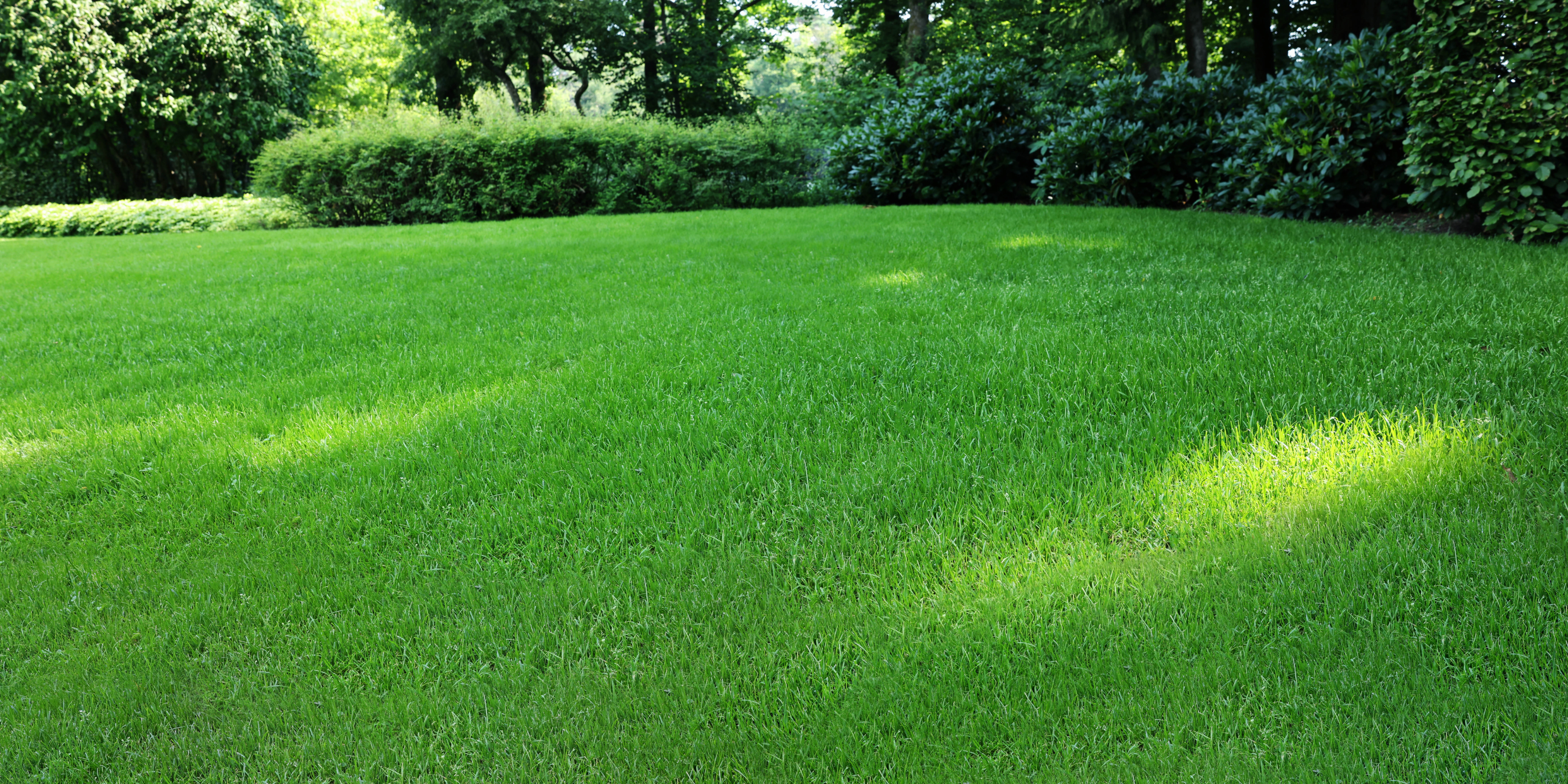
Grass Does Not Want Rich Soil
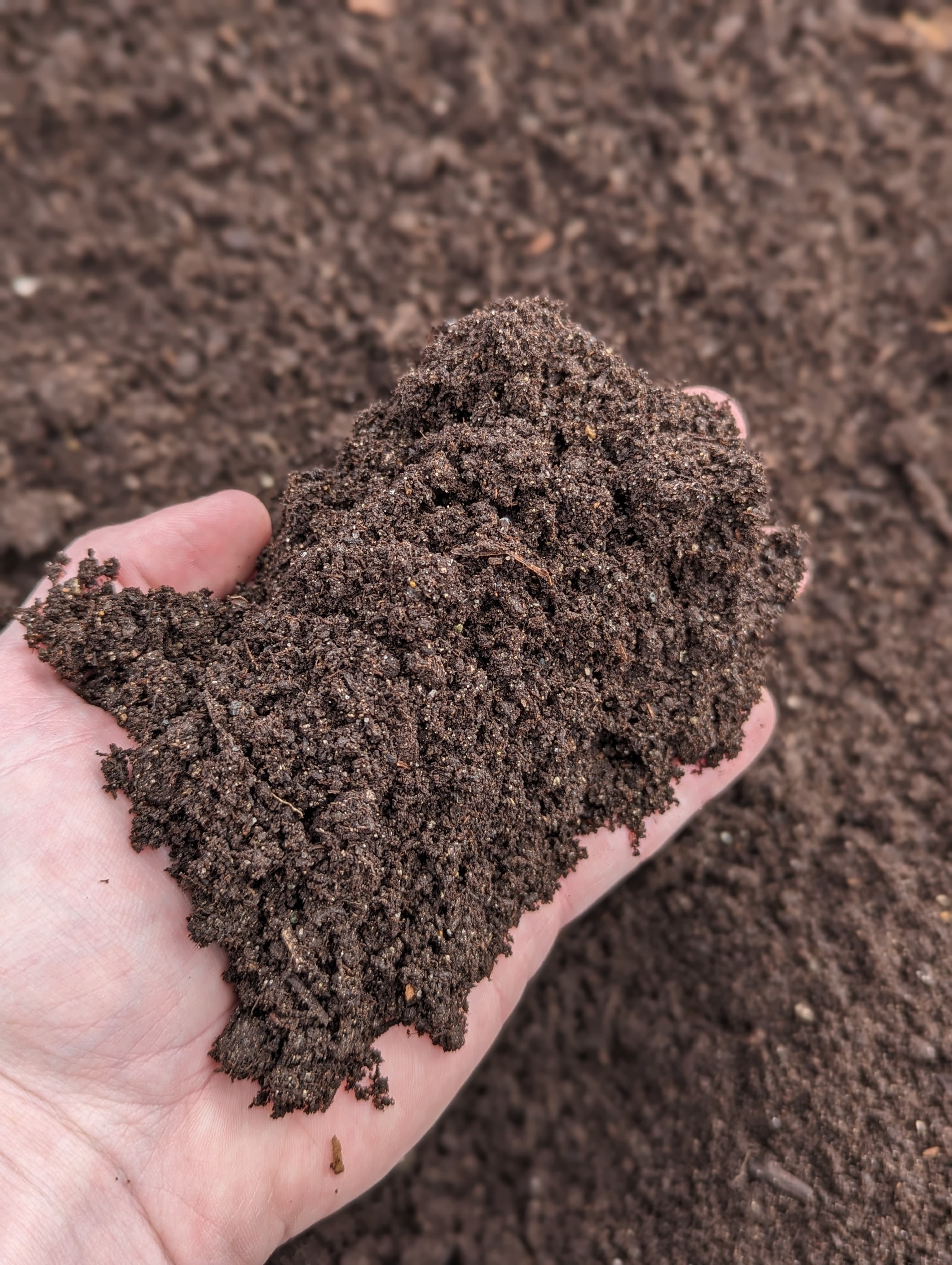
This is the part that surprises people. A garden soil built for vegetables is the wrong thing to put under a lawn.
Grass roots want two things: somewhere to go down into, and drainage. A rich, moisture-holding soil gives them soft lush top growth, shallow roots, and a lawn that goes brown the first week nobody waters it. It also stays wet in spring, which in this climate means it stays wet for a while.
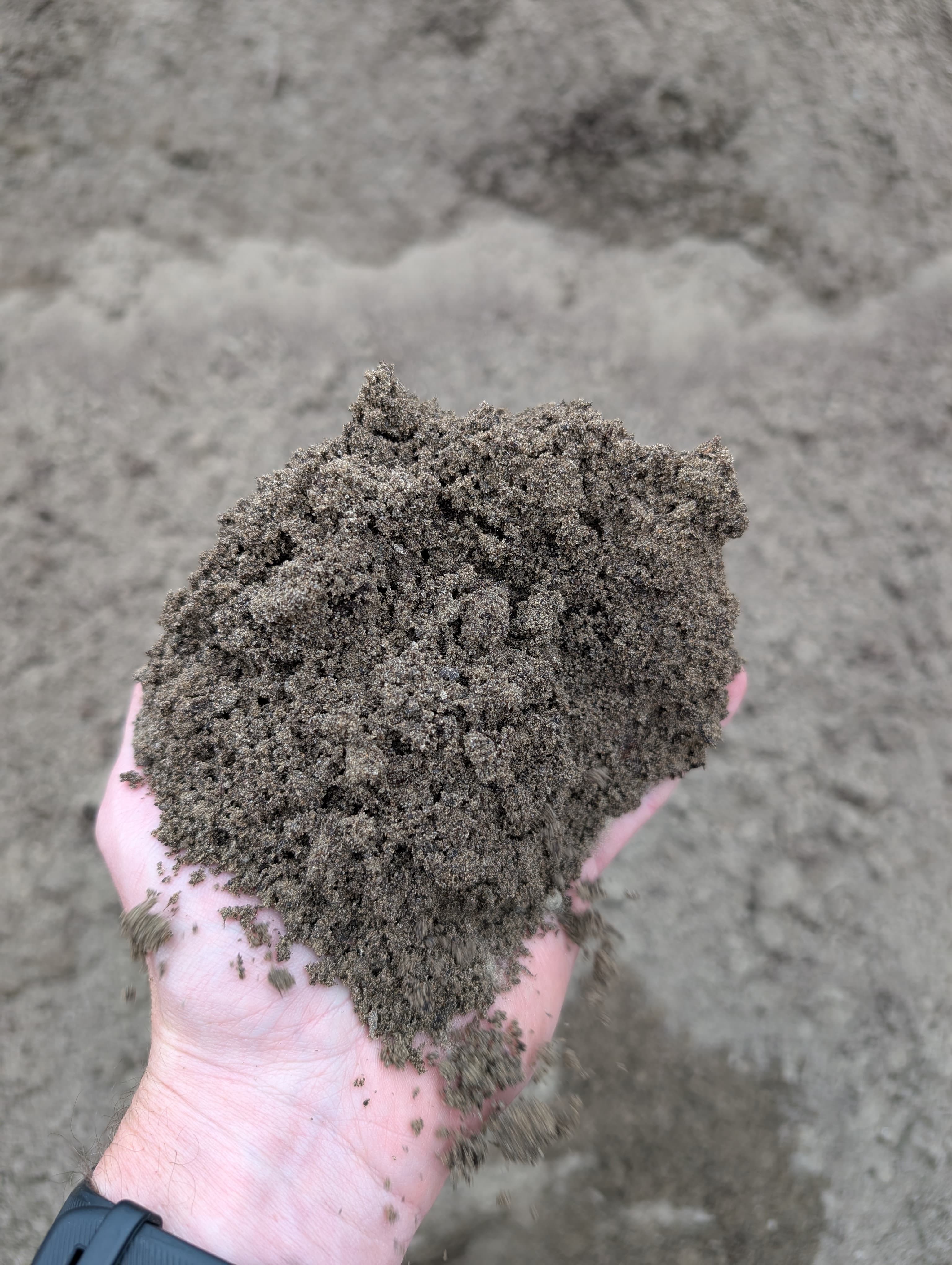
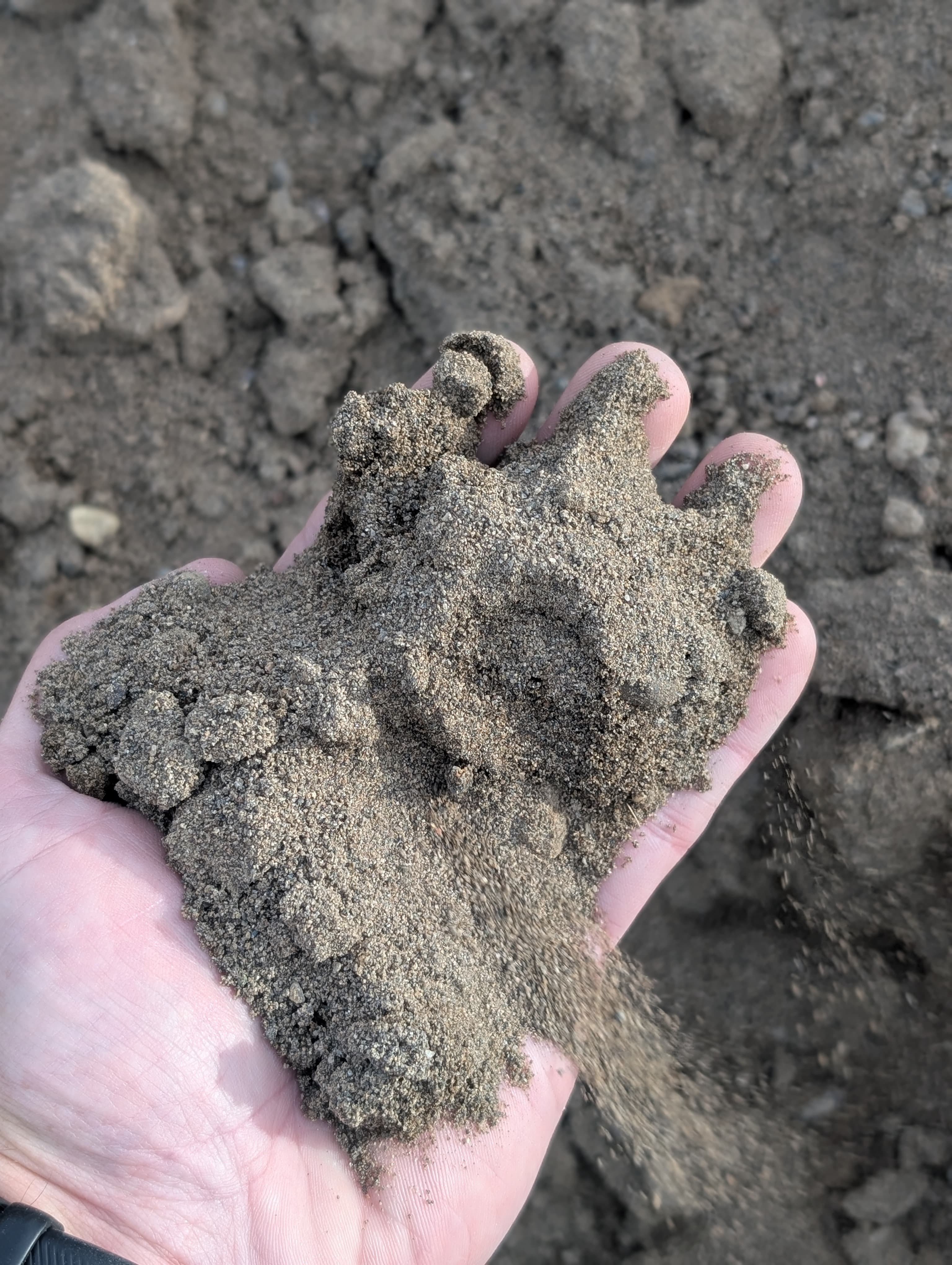
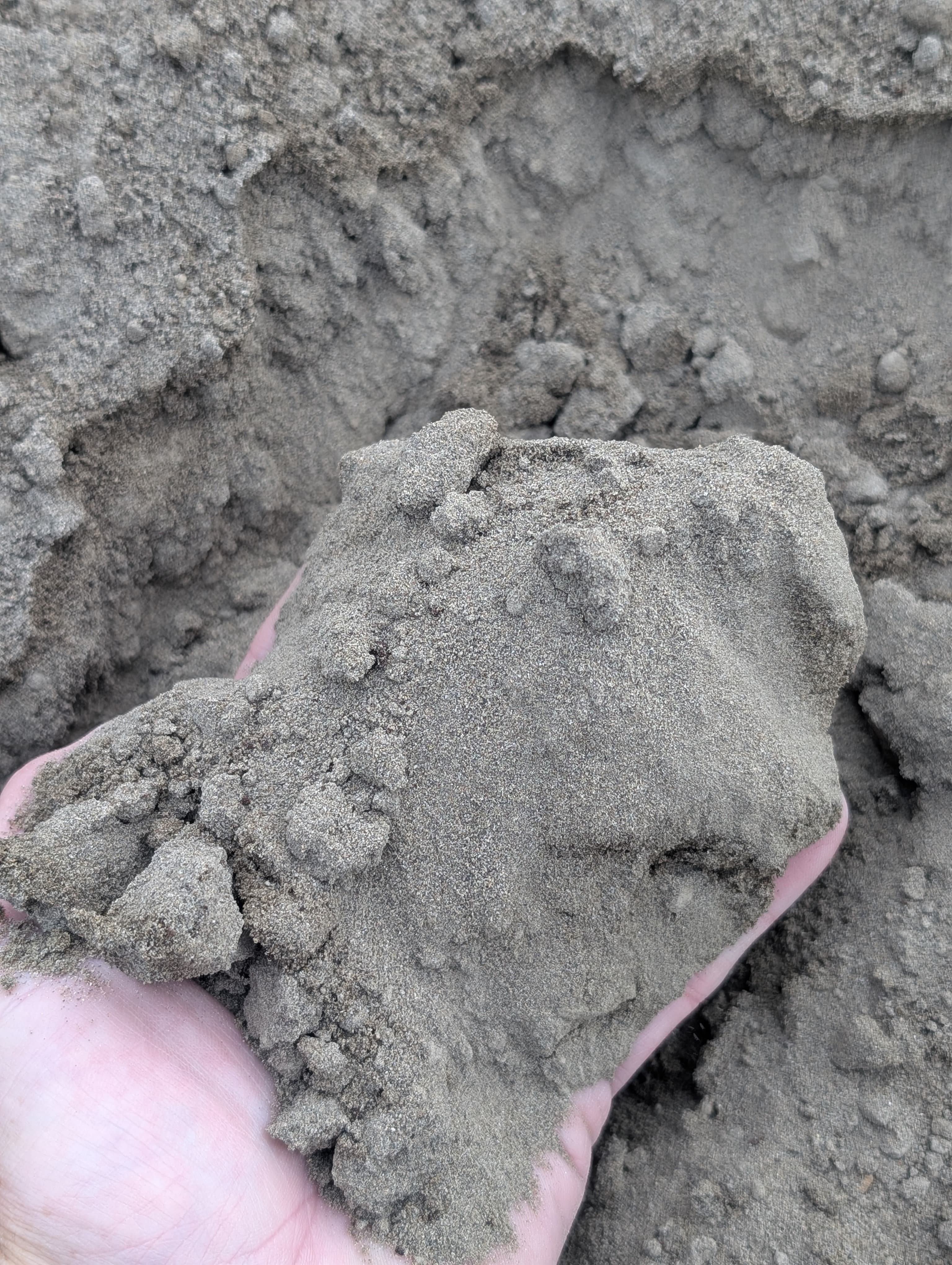
What you want under grass is a sandier, leaner soil. That is what Lawn Soil Mix and Sandy Loam are for.
Which of the Two
[Lawn Soil Mix](/products/lawn-soil-mix) is the blend for a normal residential lawn: enough body to hold moisture between waterings, enough sand to drain and firm up.
[Sandy Loam](/products/sandy-loam-prince-george) is what you use when volume is the main problem. Building up a large area, regrading a yard, correcting a broad shallow low spot. It is the practical choice when you need a lot of material and the finished surface will be grass.
If the area needs to come up more than about 6 inches, do it in two materials: Sandy Fill for the depth, then the lawn soil for the top. Only the top few inches grow anything, and paying lawn-soil prices for structural depth is money that does nothing.
How Deep
4 to 6 inches of soil above whatever is underneath.
Under 3 inches and the lawn dries out every summer, because there is nowhere for the roots to go. Above about 6 inches you are spending money that the grass will not notice.
This is the same whether you are seeding or laying sod. Sod arrives with roughly an inch of soil attached to it, and that inch is not the growing depth. Sod laid on hard subsoil roots into nothing and dies in its first dry August.
Preparing the Ground
The order matters more than the products.
- Clear it. Remove old sod, weeds, roots, and construction debris. Anything buried will show up as a settled dip later.
- Loosen what is underneath. Rip or till the top few inches of the existing ground. New soil laid on a smooth compacted surface creates a boundary that roots and water both struggle to cross.
- Establish the grade. This is the decision you live with. Slope away from the house at about a quarter inch per foot, and make sure water leaving the lawn has somewhere to go. Fix low spots now. Fixing them later means taking the lawn apart.
- Spread the soil to 4 to 6 inches and rake it level.
- Firm it lightly. A half-full lawn roller, or walking it down. You want firm enough to walk on without leaving deep prints, not compacted.
- Seed or sod, then water. New sod wants water every day for the first couple of weeks. New seed wants the surface kept damp until it germinates.
Timing in Prince George
Late spring through early summer, and late August into early September, are the reliable windows. The August window is often the better one: warm soil, cooler air, and less competition from weeds.
Sod can go down any time the ground is not frozen, as long as you can keep water on it. Seed needs soil that is genuinely warm, so seeding too early in the spring usually just feeds birds.
How Much Soil
At 4 inches deep, 1 cubic yard covers about 80 square feet. At 6 inches, about 54.
Some real numbers:
| Lawn area | 4 inches deep | 6 inches deep |
|---|---|---|
| 500 sq ft | 6.2 yd³ | 9.3 yd³ |
| 1,000 sq ft | 12.3 yd³ | 18.5 yd³ |
| 2,000 sq ft | 24.7 yd³ | 37 yd³ |
| 5,000 sq ft | 61.7 yd³ | 92.6 yd³ |
Add about 10 percent for settling. The soil calculator does this for an odd-shaped yard, and handles several areas at once.
At these volumes you are into delivery rather than pickup. A 1,000 square foot lawn at 4 inches is a dozen pickup loads.
Bottom line: lean sandy soil, 4 to 6 inches deep, over loosened ground, graded away from the house. Get the grade right while it is still dirt.