A flat patio starts below the stone
A finished patio should feel steady under every step. No rocking corners. No stones that sink after the first wet spring.
That calm surface starts with two hidden layers: a firm gravel base and a thin, even layer of the right sand. Most of the work disappears when the stones go down. That is usually a good sign.
What the sand layer actually does
The bedding layer sits between the compacted gravel base and the patio stones.
It helps you:
- Create a smooth surface for setting the stones
- Make small height adjustments while you work
- Seat the stones evenly during final compaction
- Keep the finished surface from rocking
The sand is not the main base. The compacted gravel beneath it carries the weight.
If the gravel base has deep dips, fix the base. Do not fill those dips with extra sand. A thick sand layer can settle unevenly and leave the finished patio looking like a small map of the Rocky Mountains.
Which sand should you use?
The right answer depends on the type of stone, the expected traffic, and the product instructions.
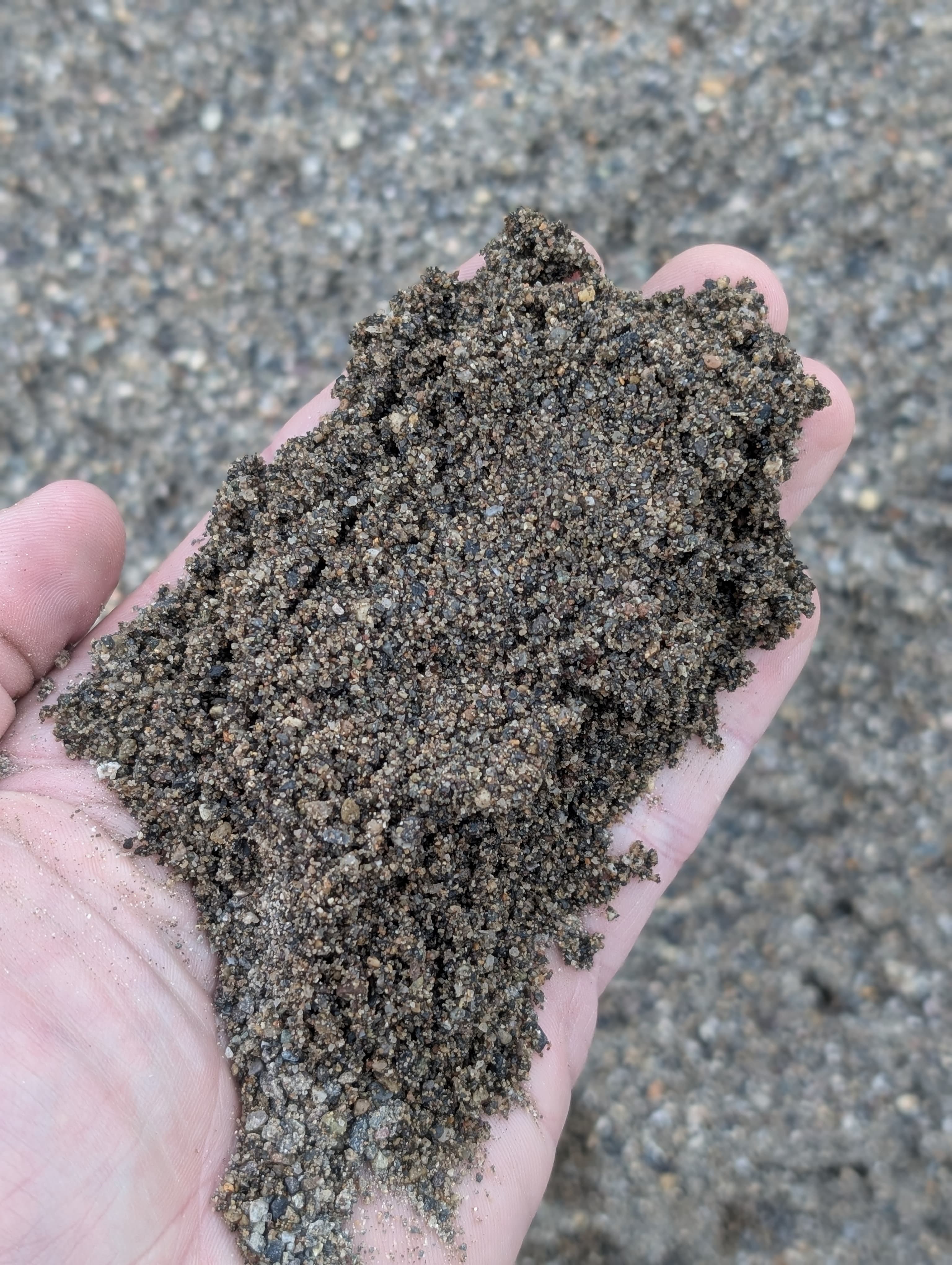
Coarse Washed Concrete Sand
Coarse Washed Concrete Sand is the closest match to the material named in many published interlocking-paver guides.
It is washed and has more fractured particles than our natural Bedding Sand. It can also be used when mixing concrete.
For a formal interlocking concrete paver system, check the paver maker's instructions. If the instructions call for concrete sand meeting a set grading standard, confirm the product specification before ordering.
Often used for:
- Interlocking concrete pavers
- Patios built to a manufacturer specification
- Walkways
- Artificial turf projects
- Concrete mixing
Shale Sand
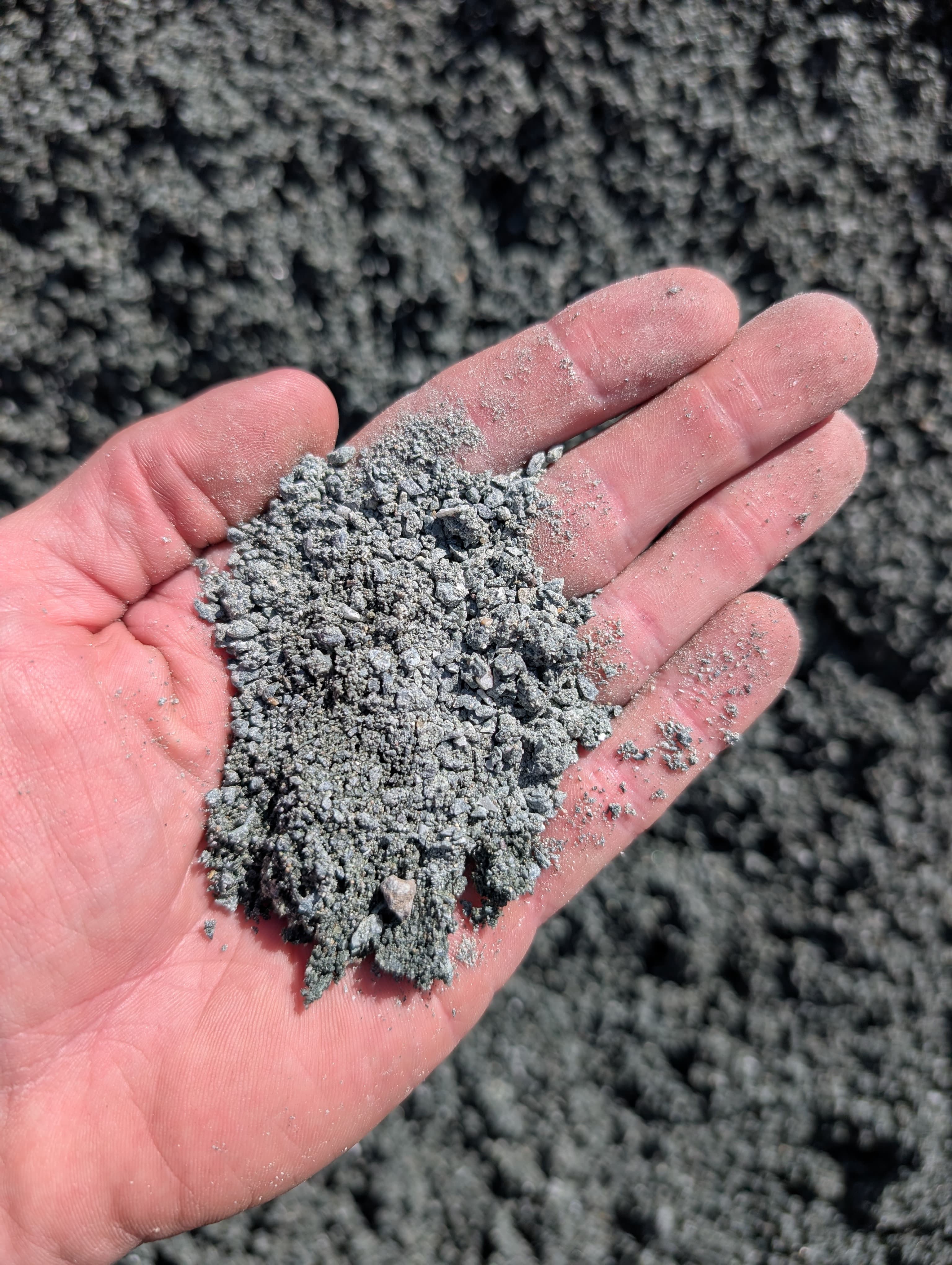
Shale Sand packs more firmly than Bedding Sand. We often recommend it under patio stones and concrete blocks where the project allows it.
It is useful when you want a firm, easy-to-shape bedding layer. Always follow the stone maker's instructions when a certain material is required.
Often used for:
- Patio stones
- Concrete blocks
- Walkways
- Slab bedding where approved
Bedding Sand
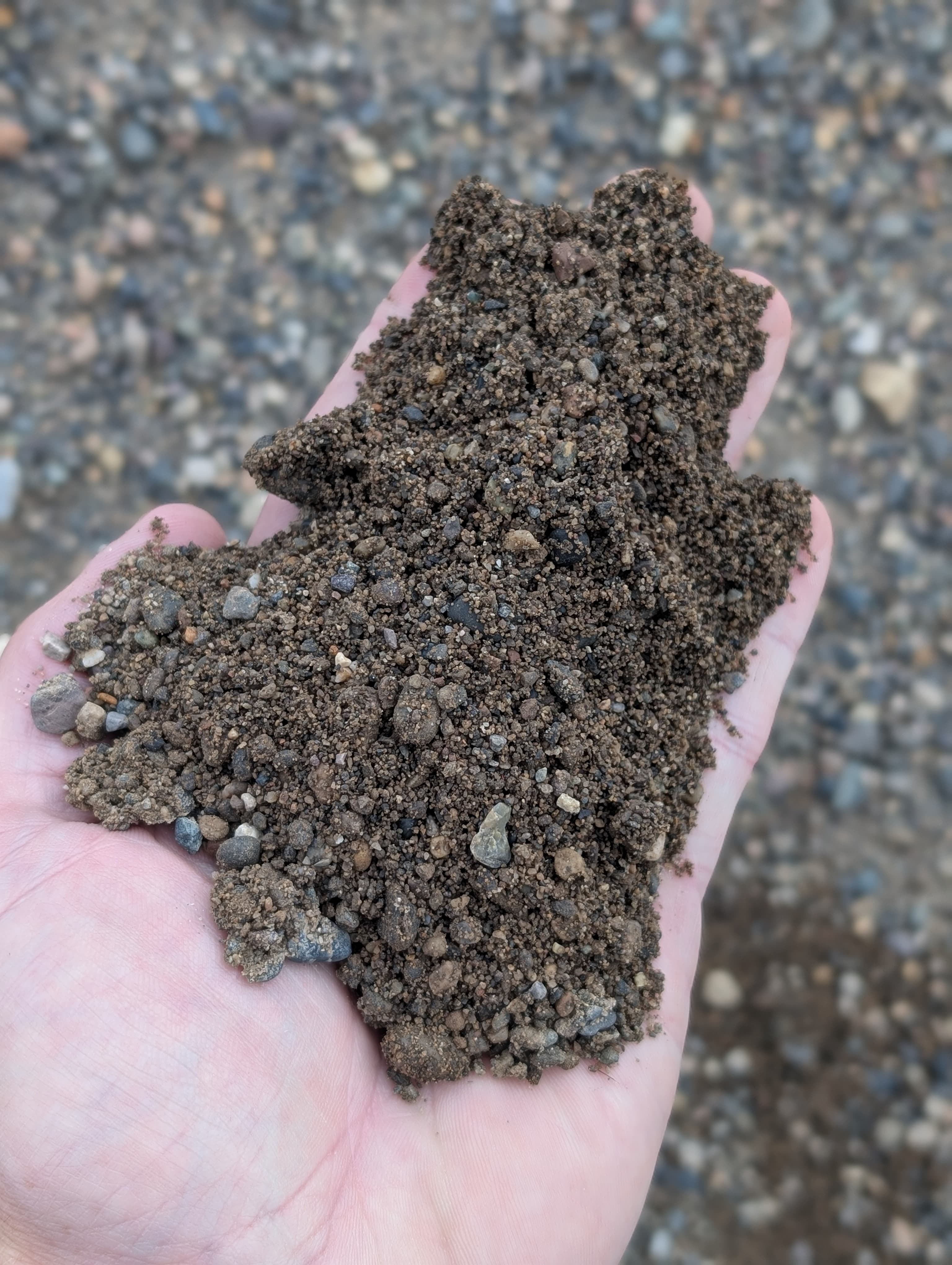
Bedding Sand is natural sand screened to 3/8 inch minus. It contains rounded stone and fine material. It is not washed.
It can be used beneath some patio stones, blocks, and slabs. It does not pack as firmly as Shale Sand, so it is not our first choice for most paver projects.
Its main strength is pipe and utility bedding.
Often used for:
- Pipe bedding
- Utility trenches
- General sand fill
- Some simple patio or block projects
What not to use beneath pavers
Do not use material simply because the word “sand” is on the bag.
Avoid:
- Sandbox Sand or Play Sand
- Fine Mason Sand
- Topsoil or garden soil
- Loose, ungraded fill
- Paver joint sand as the bedding layer
- Any material that conflicts with the paver maker's instructions
Jointing sand and bedding sand do different jobs. The bedding sand goes under the stone. Jointing sand is swept between the stones after they are placed.
How deep should the sand be?
Use about 1 inch as the planning depth for most residential patio and walkway projects.
The full layer should be even. Do not make one section thicker to fix a low gravel base.
Some paver systems require a different depth or a certain bedding product. The manufacturer's instructions always take priority.
Prepare the gravel base first
A good bedding layer cannot rescue a weak base.
Before spreading sand:
- Remove loose soil and organic material.
- Build the base with the required depth of Road Crush or another approved base.
- Compact the base in even layers.
- Set the slope so water moves away from buildings.
- Correct high and low areas in the gravel.
- Spread the bedding sand only after the base is firm and even.
The base carries the project. The sand gives you the final level surface.
How much sand do you need?
At a depth of 1 inch, use this formula:
Cubic yards = length in feet x width in feet x 0.083 / 27
You can also divide the total square footage by 324.
Example
A patio measuring 12 feet by 16 feet covers 192 square feet.
192 / 324 = 0.59 cubic yards
When using Bedding Sand, add about 10 percent for settling and compaction.
0.59 x 1.10 = 0.65 cubic yards
Round the result to the nearest quantity available through the product page.
The quantity calculator can do this part for you. Tell it the length, width, and depth. It will give you the amount in plain terms.
How to screed the sand
Screeding means pulling the sand into one flat layer.
- Set two straight rails at the required height.
- Spread sand loosely between them.
- Pull a straight board across the rails.
- Fill any small gaps and screed them again.
- Remove the rails and carefully fill their channels.
- Do not walk across the finished surface.
- Set the patio stones directly onto the level sand.
Follow the paver maker's instructions for final compaction and joint sand.
The simple answer
For formal interlocking concrete pavers, begin with the product instructions. Coarse Washed Concrete Sand is the closest match when washed concrete sand is required.
For common patio stones and concrete blocks, Shale Sand is often our firmer local choice.
Bedding Sand can work for some projects, but pipe and utility bedding remain its strongest use.
Start with what you are building. We will help you match it to the right material and the right amount.