A finished bed that stays looking finished
The plants are in. The edges are straight. Black or red lava rock covers the soil in one even layer.
No bare patches. No deep pile around one plant and a thin scrape around the next.
Getting that result comes down to five things:
- Clear the area
- Shape the soil
- Install fabric where needed
- Set firm edging
- Spread the right depth
The rock is light and easy to move. Most of the work is getting the ground ready first.
Choose Black or Red Lava Rock
The installation method is much the same for both colours.
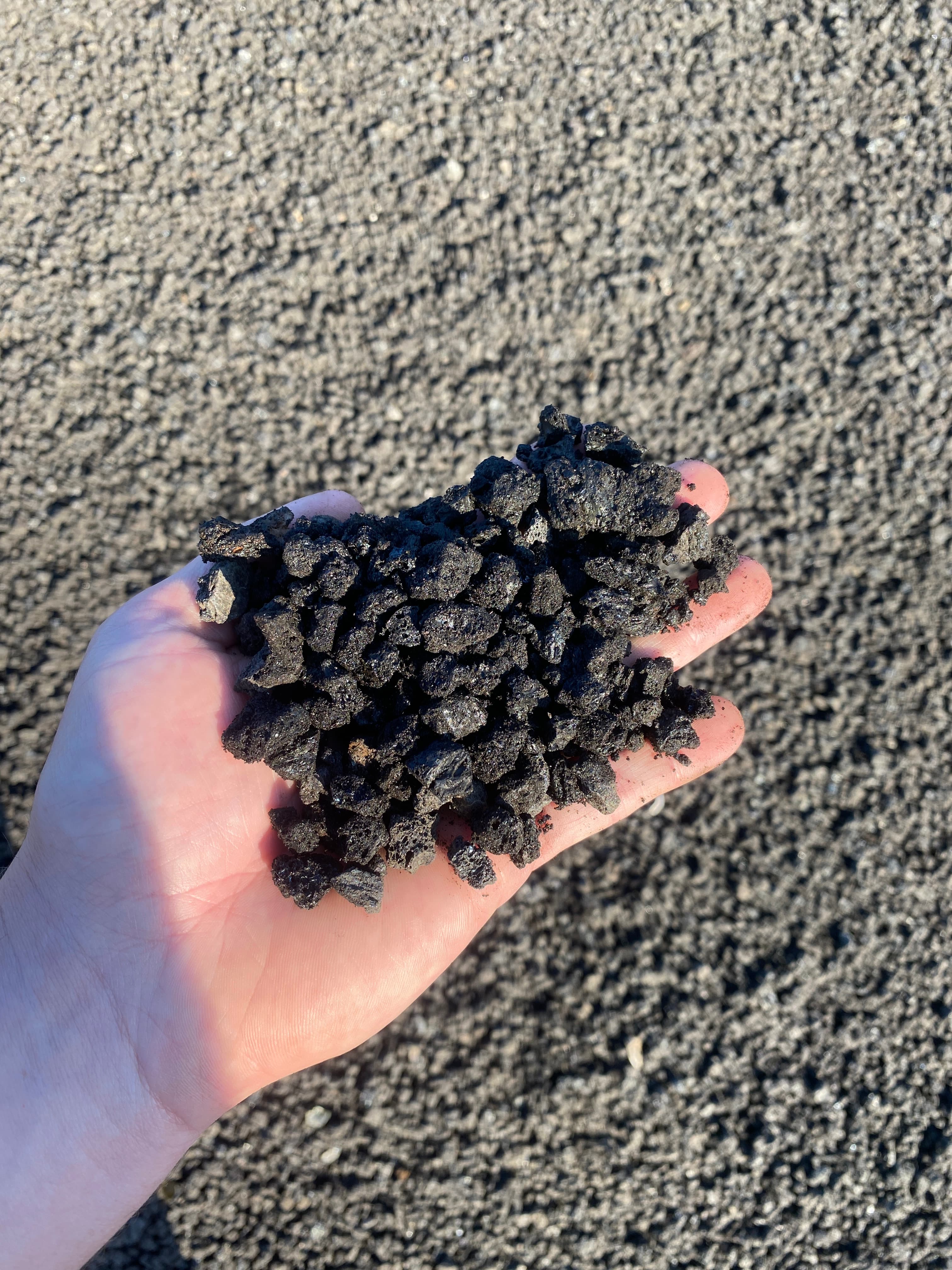
Choose Black Lava Rock for a deep, dark background. Get Gravel’s black product is screened from 3/8 inch to 3/4 inch.
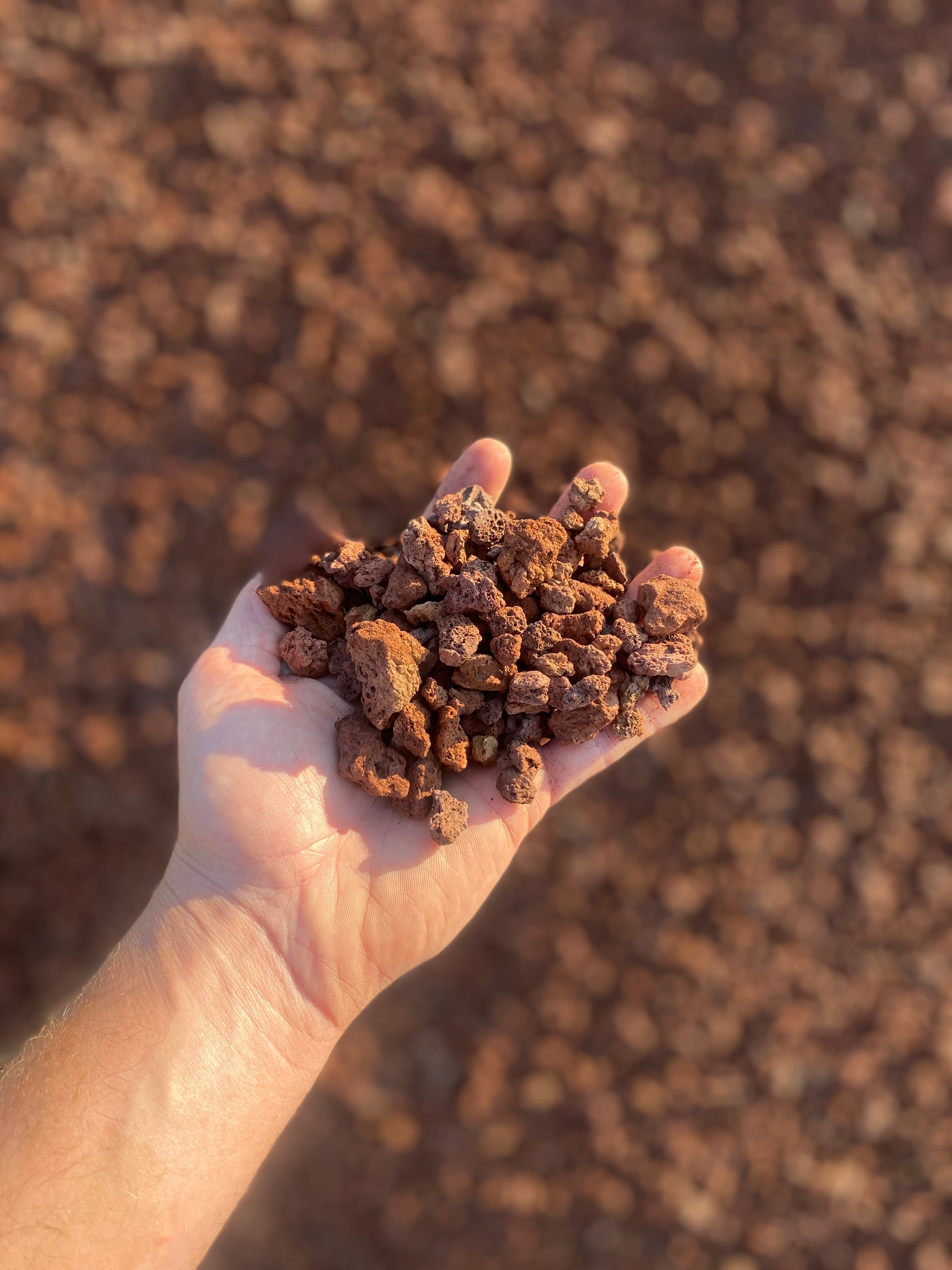
Choose Red Lava Rock for a warmer, natural look. Get Gravel’s red product is screened from 3/8 inch to 1 inch.
Both come from CanLava’s volcanic source near Nazko, BC.
Step 1: Measure the area
Measure the length and width in feet.
For a simple rectangle:
Square feet = length x width
For an area with several sections, measure each section and add the totals together.
Do not subtract every small plant or post. Those little spaces usually balance out with curves, edges, and uneven ground.
Step 2: Choose the finished depth
CanLava recommends installing LavaScape 2 to 4 inches deep.
Use:
- 2 inches for basic decorative coverage
- 3 inches for a fuller, more even bed
- 4 inches for deep coverage and stronger weed suppression
A thin layer may leave soil or fabric showing between pieces.
A much deeper layer costs more, can spill over the edging, and does not fix poor ground preparation.
Step 3: Calculate the amount
Use this formula:
Cubic yards = square feet x depth in inches / 324
Coverage from one cubic yard
| Finished depth | Approximate coverage |
|---|---|
| 2 inches | 162 square feet |
| 3 inches | 108 square feet |
| 4 inches | 81 square feet |
Example
A bed measuring 12 feet by 18 feet covers:
12 x 18 = 216 square feet
At 3 inches deep:
216 x 3 / 324 = 2 cubic yards
That bed needs approximately 2 cubic yards.
Use the product-page calculator when the bed has several sections. It will total them together for you.
Should you add extra material?
Do not add the usual 10 percent compaction allowance.
Decorative lava rock should not be compacted.
A small amount of extra rock may still help with:
- Curved borders
- Uneven soil
- Filling around plants
- Minor handling loss
- Future touch-ups
No fixed extra percentage is required. Add only what the shape of the area calls for.
Step 4: Clear the bed
Remove:
- Existing weeds
- Roots
- Loose bark mulch
- Leaves
- Branches
- Large stones
- Building scraps
- Anything else that will leave a bump
Take the time to remove established weed roots. Covering the leaves and hoping for the best is a short plan.
Avoid placing lava rock directly over thick old mulch. The organic material will continue to break down and may let the rock sink into the bed.
Step 5: Shape and level the soil
Rake the soil into the shape you want before adding fabric or rock.
Create smooth grades rather than deep dips. Make sure water can move away from foundations and buildings.
Lava rock is decorative cover. It should not be used to fill deep holes or correct a drainage problem.
Keep the finished rock height below:
- Siding
- Door thresholds
- Wood fences
- Drain openings
- The top of the edging
Step 6: Install landscape fabric
Landscape fabric is recommended beneath lava rock in most decorative beds.
Fabric helps:
- Keep rock separate from the soil
- Slow weeds coming up from below
- Reduce the amount of rock sinking into soft ground
- Make future changes easier
Overlap fabric seams according to the fabric maker’s instructions.
Cut around plants rather than wrapping fabric tightly against stems. Leave room for growth and watering.
Landscape fabric does not stop every weed. Seeds can still land in dust and organic matter that collect above it.
Step 7: Add edging
Lava rock is lighter than many decorative gravels.
A firm edge helps keep it out of:
- Grass
- Driveways
- Sidewalks
- Garden paths
- Drainage channels
- Neighbouring beds
Useful edging options include:
- Steel
- Aluminum
- Concrete
- Plastic landscape edging
- Stone
- Timbers approved for landscape use
Set the edging high enough to hold the finished rock depth without creating a trip hazard.
Step 8: Place the rock
Have the rock delivered as close to the bed as site access allows, or move it from the pickup point with a wheelbarrow.
Place small piles across the area rather than one large pile at the edge.
Spread the rock with:
- A shovel
- A garden rake
- A landscape rake
- A bucket
- Gloved hands around plants and detailed edges
Work toward the exit so you do not have to walk across the finished bed.
Do not compact lava rock
Black and Red Lava Rock are decorative ground cover.
Do not use:
- A plate compactor
- A jumping jack
- A roller
- A vehicle
- Heavy repeated foot traffic
The porous pieces can break down when crushed or walked on regularly.
Rake the rock level and leave it loose.
Keep space around plants
Do not pile lava rock tightly against stems or tree trunks.
Leave an open ring around each plant so you can:
- Water the soil
- Check the stem
- See new growth
- Remove weeds
- Avoid trapping moisture directly against bark
Dark rock can warm in direct sun. Give sensitive plants enough open soil around the base.
Can lava rock go near a fire pit?
Natural lava rock does not burn like bark mulch.
That does not mean every lava product belongs inside a fire pit.
Do not place Get Gravel’s small decorative Black or Red Lava Rock:
- Inside a gas burner
- Directly over a burner
- Inside a wood fire
- Where an appliance requires certified fire media
Use only the media approved by the fire-pit or appliance maker.
Lava rock is also not the best surface for a seating area with regular walking. Repeated foot traffic can break it down.
Maintenance after installation
Lava rock needs little regular work, but the bed still collects leaves, needles, and dust.
For cleanup:
- Use a leaf blower on a low setting
- Hold the blower farther from the surface
- Pull weeds while they are small
- Rake only when needed
- Replace pieces moved by yard work
- Avoid scraping it with snow shovels
CanLava says its LavaScape rock resists discolouring and deterioration. The supplier also says it does not decompose like organic mulch.
A clean surface lets the natural colour show. The rock cannot do much about three autumns of leaves sitting on top of it.
Black or red, the steps stay simple
Prepare the soil. Lay the fabric. Set the edging. Spread the rock 2 to 4 inches deep.
Then stop.
No compactor. No hidden structural layer. No trade language you need to learn first.
Choose the colour, enter the dimensions, and the calculator will show you how much the project needs.