Give the pipe a smooth place to sit
A buried pipe should rest on an even bed. The sand should support it from below and fill the space around it before heavier material goes back into the trench.
That keeps larger stones away from the pipe and helps hold it in place.
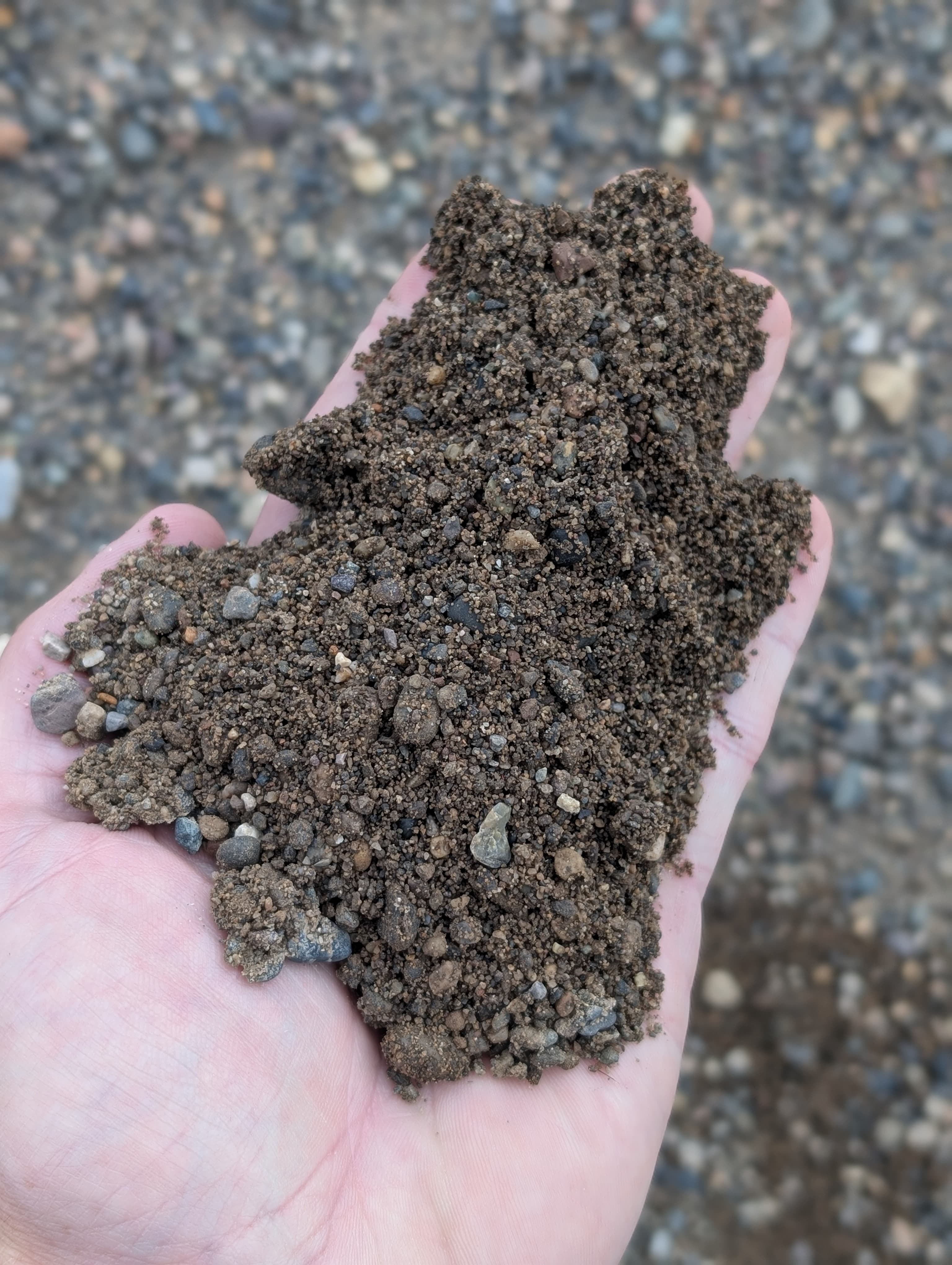
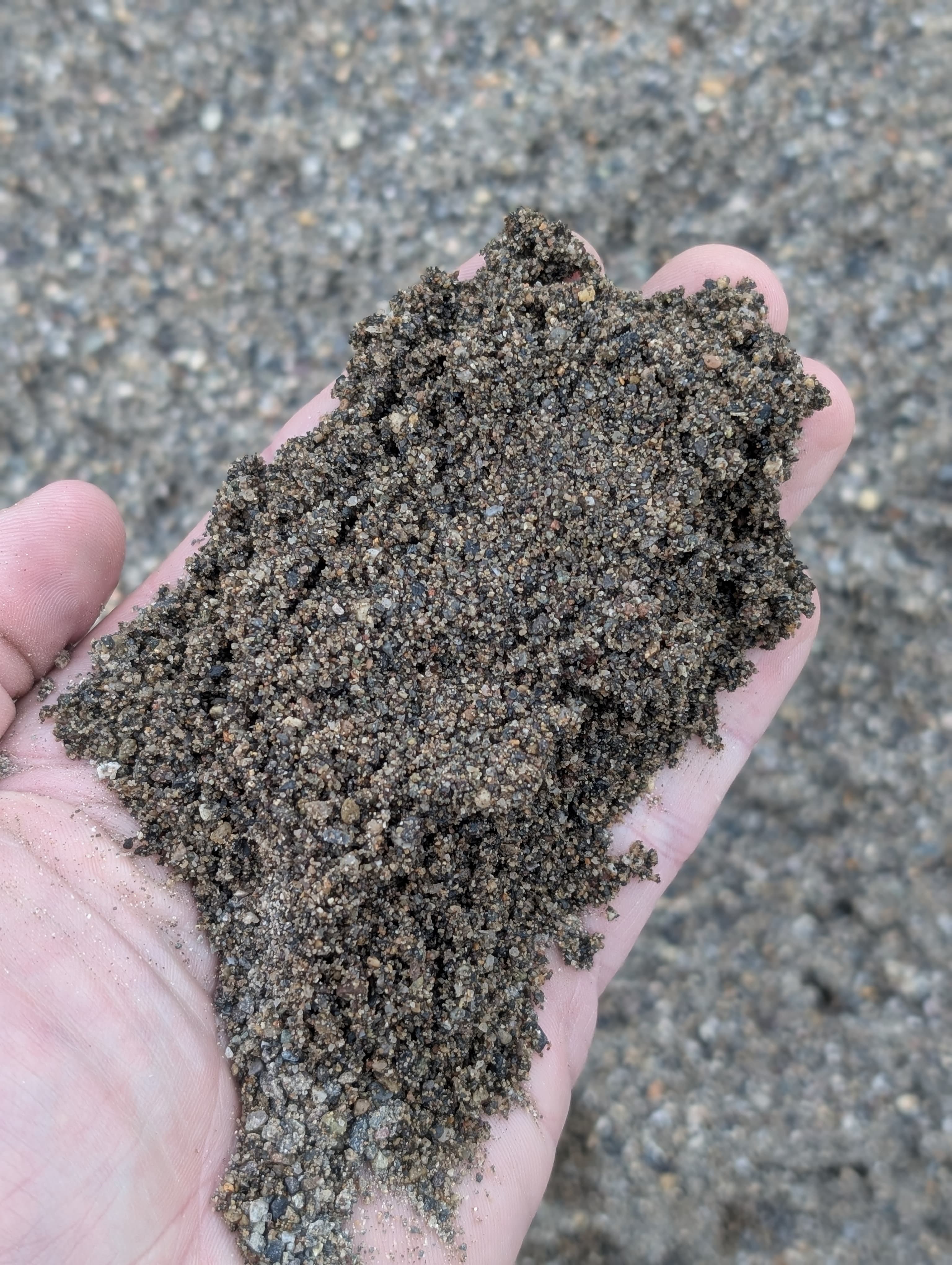
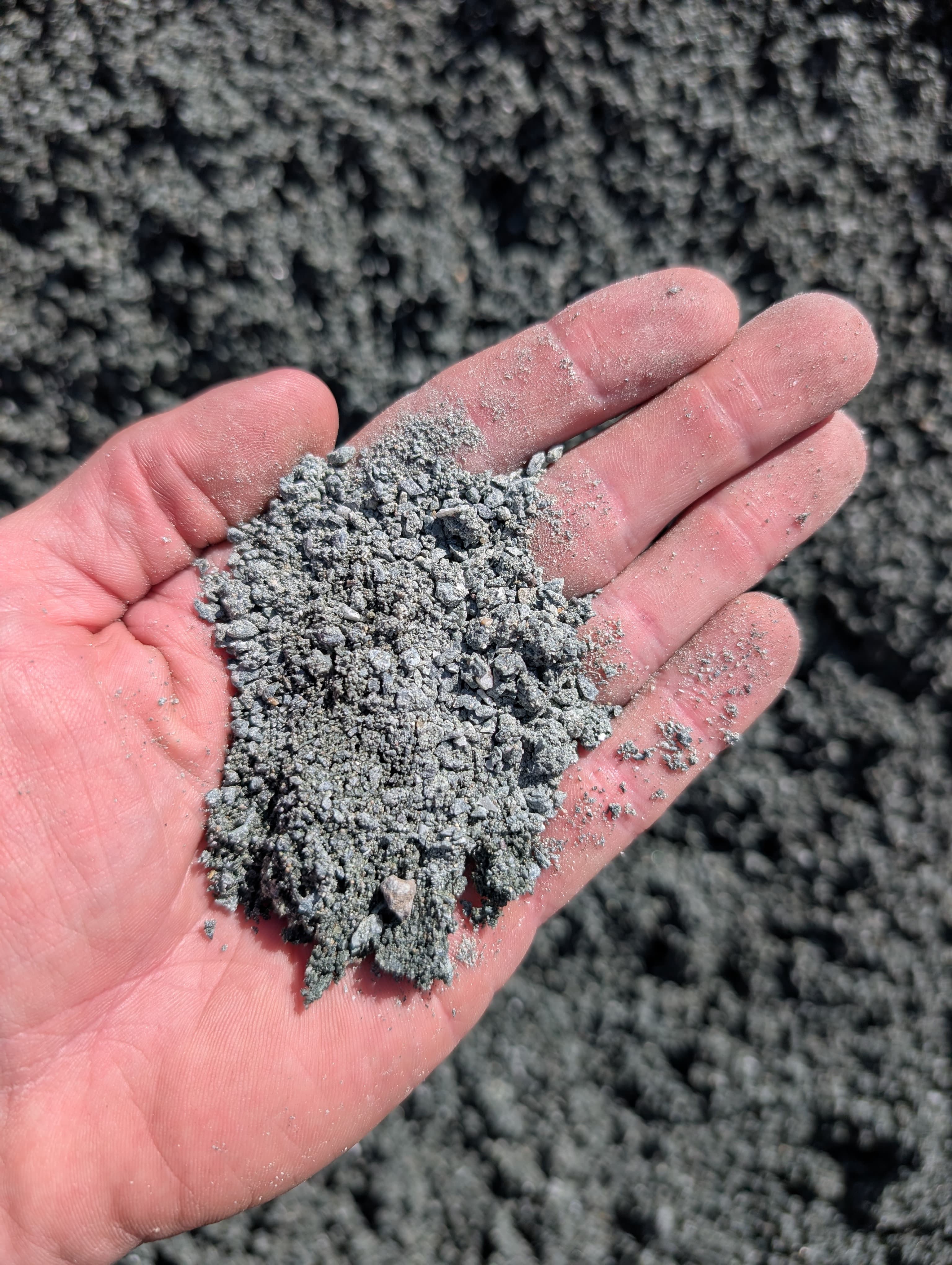
Get Gravel Bedding Sand is natural sand screened to 3/8 inch minus. It contains fine material and rounded stones up to 3/8 inch. It is screened, but it is not washed.
When is Bedding Sand a good choice?
Bedding Sand works well for many general pipe and utility projects around a home.
Common uses include:
- Water-line bedding
- Drainage-pipe bedding
- Utility conduit
- Irrigation lines
- General trench bedding
- Covering pipe before heavier backfill
Some utility and engineered projects require a tested material with an exact grading specification. Do not assume this Bedding Sand meets every City, BC Hydro, utility, or engineering standard.
Check the project documents first when a specification is provided.
How deep should Bedding Sand be below a pipe?
Place 4 to 6 inches of Bedding Sand below the pipe.
The finished bed should be smooth and even. Support the pipe along its full length rather than leaving it resting on a few high points.
The project plan may call for a different depth. When it does, use the plan.
How much sand should go above the pipe?
Place at least 6 inches of Bedding Sand above the pipe before adding heavier backfill.
Work the sand carefully around the sides so there are no large open spaces beneath or beside the pipe.
Do not drop large rocks or heavy backfill directly onto an uncovered pipe. The pipe has already had enough excitement for one day.
How to estimate the quantity
You will need four measurements:
- Trench length
- Trench width
- Pipe outside diameter
- Bedding depth below and above the pipe
Add these three vertical measurements:
- Sand below the pipe
- Outside diameter of the pipe
- Sand above the pipe
This gives you the total height of the sand zone.
Convert that height into feet, then use:
Cubic yards = trench length x trench width x sand-zone height / 27
The pipe takes up some space inside that calculation. Trench shape, compaction, and uneven sides also affect the amount.
For a closer estimate, enter the measurements into the quantity calculator or give them to our staff.
Add material for settling
Bedding Sand contains fine material and will settle or compact.
Add approximately 10 percent to the calculated quantity.
For example:
Calculated amount x 1.10 = order estimate
It is better to have enough to cover the pipe properly than to leave part of the trench open while looking for another small load.
How to place Bedding Sand around a pipe
- Remove loose rock from the bottom of the trench.
- Spread 4 to 6 inches of Bedding Sand.
- Level the bed.
- Place the pipe on the sand.
- Check the pipe height and slope.
- Fill carefully along both sides.
- Compact the sand as the project requires.
- Cover the pipe with at least 6 inches of Bedding Sand.
- Add the remaining approved backfill.
Avoid pushing the pipe out of line while filling one side. Add material evenly where possible.
Is landscape fabric needed?
Landscape fabric is not usually placed directly around the pipe as part of basic Bedding Sand installation.
Some drainage systems use fabric around a larger drainage zone. Follow the full system design when fabric is shown.
Can Bedding Sand be compacted?
Yes. Compact Bedding Sand as the project requires.
The method depends on the pipe, trench, and specification. Be careful around lightweight pipe or shallow installations.
Ask the contractor, pipe supplier, or project designer when the required method is unclear.
Can you pick it up in a truck?
Bedding Sand weighs approximately 2,800 pounds per cubic yard. Moisture can change the actual weight.
As a general loading guide:
- Half-ton pickup: usually no more than 1/2 cubic yard
- 3/4-ton pickup: often 1 to 1.5 cubic yards
- 1-ton pickup: often 1 to 1.5 cubic yards
The vehicle's payload label is the final limit. Truck names do not always tell you how much the truck can legally carry.
Delivery is often the simpler choice for larger pipe projects. The material can be placed close to the trench where access allows.
Before you order
Have these details ready:
- Pipe type
- Pipe outside diameter
- Trench length
- Trench width
- Required sand below the pipe
- Required cover above the pipe
- Any City, utility, BC Hydro, or engineering specification
- Pickup vehicle or delivery location
You do not need to know every trade word. Tell us what you are burying and the size of the trench. We will help you work out the amount.