Start with the job, not the pile
The right sand often disappears under the finished project. The pipe gets buried. The patio stones cover it. The turf rolls over it.
That does not make the choice unimportant.
Bedding Sand, Coarse Washed Concrete Sand, and Shale Sand can look similar from a distance. They feel different, pack differently, and belong in different projects.
Here is the simple way to choose.
The quick answer
Choose Bedding Sand for:
- Pipe and utility bedding
- General trench work
- Small filling jobs
- Some concrete-slab bedding where approved
- Animal areas
Choose Coarse Washed Concrete Sand for:
- Mixing concrete
- Artificial turf
- Formal paver systems calling for washed concrete sand
- Projects requiring a washed, more fractured sand
Choose Shale Sand for:
- Patio stones
- Concrete blocks
- Walkways
- Slab bedding where approved
- Projects where a firmer-packing sand is wanted
For a sandbox or children's play area, choose a product sold as Play Sand or Sandbox Sand.
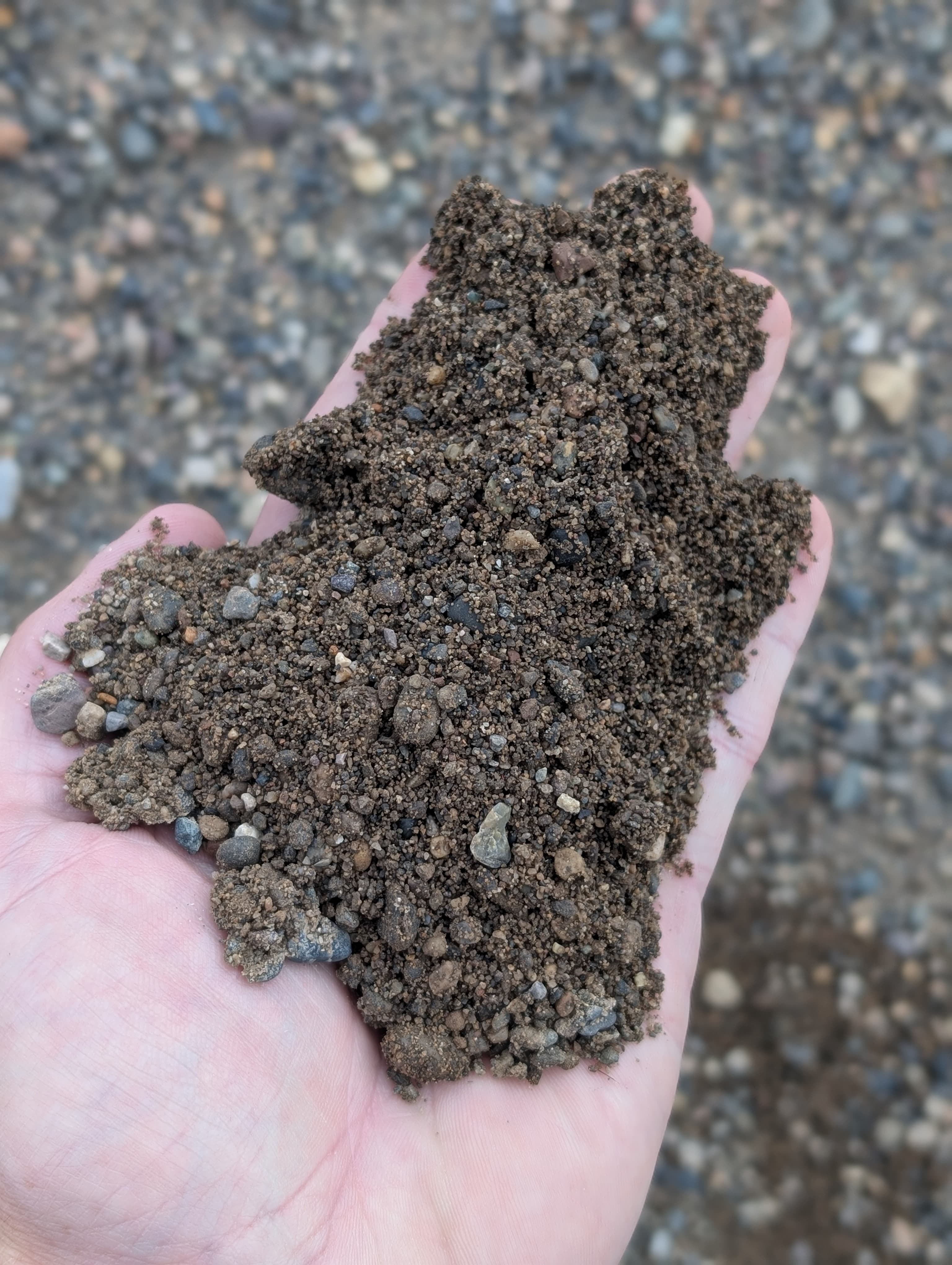
Bedding Sand
Get Gravel Bedding Sand is natural sand screened to 3/8 inch minus.
It contains rounded natural stone and fine material. It is brown-grey in colour and is not washed.
Bedding Sand stays looser than Shale Sand when packed. Its main strength is filling and supporting the space around buried pipe.
Best uses
- Bedding below and around pipe
- Utility conduit
- General trench bedding
- Small low areas
- Animal areas
- Some slab bedding
Not the first choice for
- Mixing concrete
- Formal interlocking pavers
- Artificial turf
- Paver joints
- Sandboxes
- Free-draining areas requiring clean material with no fines
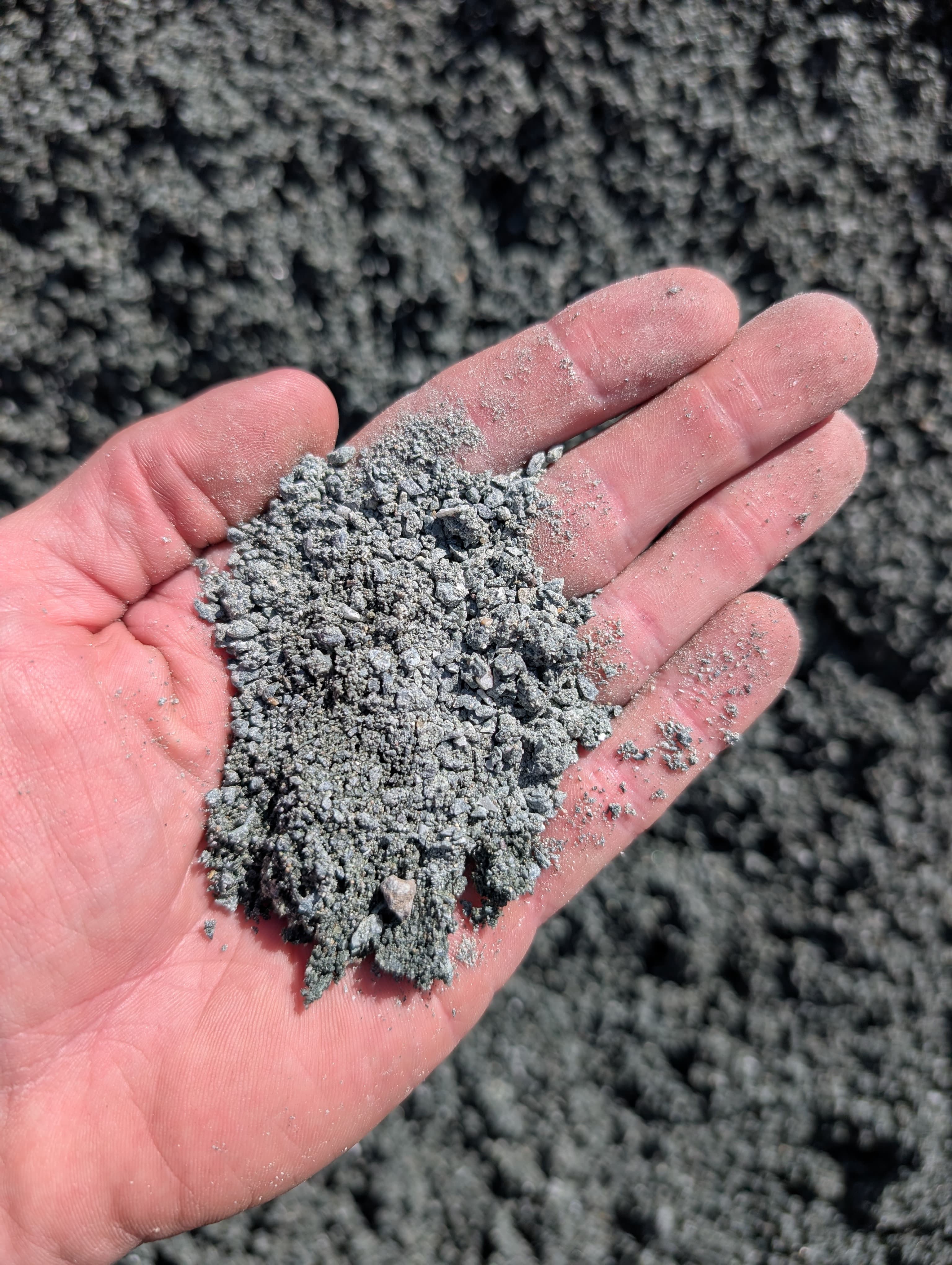
Coarse Washed Concrete Sand
Coarse Washed Concrete Sand is washed and has more fractured particles than Bedding Sand.
It can be used as part of a concrete mix. It is also commonly chosen for artificial turf and paver systems that call for coarse washed sand.
For a specified paver project, confirm that the sand meets the grading requirement named in the instructions.
The word “washed” matters here. Our Bedding Sand is screened, but it is not washed.
Best uses
- Concrete mixing
- Artificial turf
- Interlocking pavers where approved
- Bedding beneath some slabs
- Projects calling for coarse washed sand
Not the first choice for
- Children's play areas unless separately tested and sold for that use
- Jobs calling specifically for a sand with fines
- Utility work with a different named specification
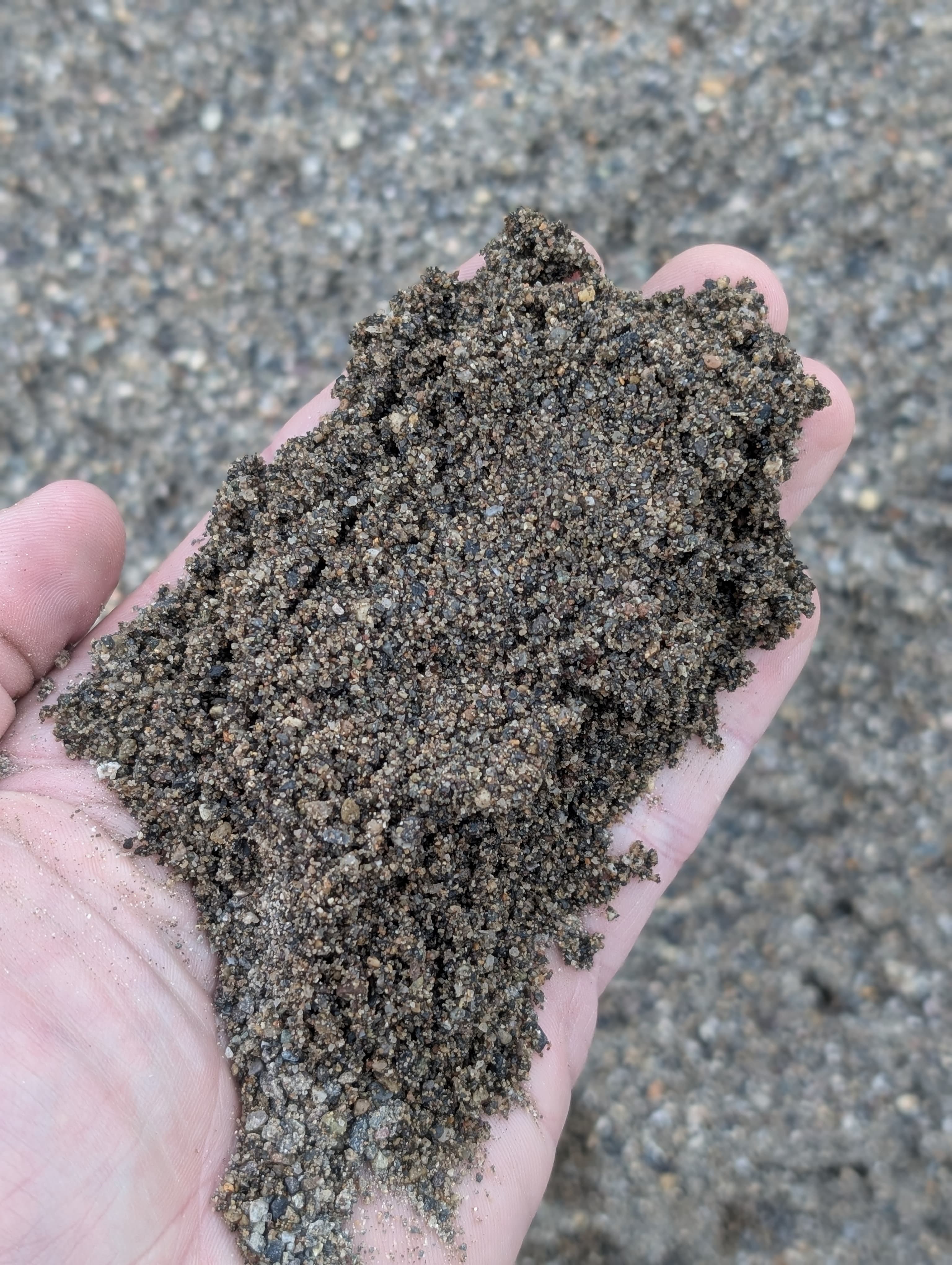
Shale Sand
Shale Sand packs more firmly than Bedding Sand.
We commonly recommend it beneath patio stones and concrete blocks when the project allows it. Its firmer bed can make it easier to hold the finished surface in place.
Check the paver or slab instructions before choosing. A formal system may require washed concrete sand with a set grading.
Best uses
- Patio stones
- Concrete blocks
- Walkways
- Some slab projects
- Projects needing a firmer-packing sand
Not the first choice for
- Mixing concrete
- Pipe work requiring natural screened bedding sand
- Children's play areas
- A named engineered specification without confirmation
Side-by-side comparison
| Product | Processing | How it behaves | Strongest uses |
|---|---|---|---|
| Bedding Sand | Screened to 3/8 inch minus, not washed | Loose, with rounded stone and fines | Pipe bedding, trenches, general fill |
| Coarse Washed Concrete Sand | Washed and more fractured | Coarse and workable | Concrete mixes, turf, specified pavers |
| Shale Sand | Processed shale material | Packs firmer than Bedding Sand | Patio stones, blocks, walkways |
Which sand goes under patio stones?
For common patio stones and concrete blocks, Shale Sand is usually our first local recommendation.
For formal interlocking concrete pavers, check the maker's instructions. If they call for washed concrete sand, Coarse Washed Concrete Sand is the closer choice.
Bedding Sand may be used for some simple projects, but it does not pack as firmly as Shale Sand.
Keep the bedding layer close to 1 inch unless the project instructions say otherwise.
Which sand goes around pipe?
Bedding Sand is the usual Get Gravel recommendation for general pipe and utility bedding.
Place:
- 4 to 6 inches below the pipe
- Sand carefully around both sides
- At least 6 inches above the pipe
Check any utility or engineered specification before ordering. Bedding Sand may not meet every BC Hydro, City, or project standard.
Which sand goes under artificial turf?
Coarse Washed Concrete Sand is usually the better choice beneath artificial turf.
Confirm the full base design with the turf supplier. Turf systems can use several layers, and the sand may not be the main structural base.
Which sand is used to make concrete?
Use Coarse Washed Concrete Sand when sand is needed in a concrete mix.
Do not substitute Bedding Sand or Shale Sand without an approved mix design.
Which sand belongs in a sandbox?
None of these products should automatically be treated as children's play sand.
Use a product sold specifically as Play Sand or Sandbox Sand. We do not claim Bedding Sand is tested or suitable for children's play areas.
How much extra should you order?
Bedding Sand contains fines and will settle or compact. Add approximately 10 percent to the calculated amount.
Other sand products should use their own calculator setting. Do not automatically apply the Bedding Sand allowance to every product.
What should you tell us before ordering?
Start with these questions:
- What are you building?
- Will the sand go under something, around something, or into a mix?
- Is it going around pipe or utility conduit?
- Are you laying patio stones, pavers, blocks, or turf?
- Does the product maker name a required sand?
- Does the project have a City, BC Hydro, or engineering specification?
- How large and deep is the area?
- Are you picking it up or having it delivered?
You do not need to arrive knowing the right product name. Tell us what the finished project is meant to do. We will help you sort out the material.